


Medical treatment in India for NRIs and OCIs: the 2026 guide
Can you get treatment in India on an OCI? Yes — OCIs and NRIs need no medical visa; they travel on their OCI or passport. The 2026 guide to going home for care: why the diaspora does it, the costs (65–90% less than the West), the hospitals, the e-Medical visa for everyone else, insurance, and the catches.


Somewhere over the Arabian Sea most nights, there is a flight carrying someone home to be operated on. A software engineer from New Jersey flying back for his father's heart surgery and his own slipped disc. A retired nurse from Leicester who has decided her knee replacement will happen in Kochi, near her sister, and not on an 18-month NHS waiting list. A family from Dubai timing a parent's cataract operation to the Diwali visit. For a large and growing slice of the Indian diaspora, the question is no longer whether to get major medical work done in India, but when the next trip home is.
This is usually filed under "medical tourism," which is accurate and slightly wrong. India is indeed one of the world's great medical-value-travel destinations — an industry worth, by various 2026 industry estimates, somewhere between $12 billion and $13 billion, powered by the government's "Heal in India" push and by hospitals that court foreign patients directly. India recorded roughly 6.44 lakh (644,000) foreign arrivals for medical treatment in 2024, and the numbers keep climbing. But for the diaspora, the word "tourism" misses the point. They are not sampling a foreign health system. They are going home.
The two things pulling them back
The first pull is money, and it is not subtle. Treatment in India costs, by industry estimates, 65 to 90 per cent less than the equivalent in the United States or Britain. A heart bypass that runs around $123,000 in the US costs roughly $10,000–20,000 in India. A hip replacement priced near $39,000 in America is $7,000–15,000 in India, travel included. For an uninsured or under-insured NRI in the US — where a single surgery can erase a year's savings — or for someone staring down a long public-system queue in the UK or Canada, the arithmetic makes the flight pay for itself many times over.
The second pull doesn't show up in any market report. It is the quiet advantage of being treated in your own language, by people who understand your food and your family, with a mother or a cousin or an old school friend able to sit by the bed. Recovery is easier where the tea is right and the relatives are many. For ageing first-generation migrants especially, the idea of a major operation far from home, in a system that feels transactional, is its own kind of dread; doing it "back home," surrounded, is a relief that has nothing to do with the bill.
The diaspora's quiet advantage: you probably don't need a visa
Here is the practical fact worth printing out, because even seasoned NRIs get it wrong. The foreign medical tourist flying to India from, say, Germany needs an e-Medical Visa — a specific category, which also allows up to two e-Medical Attendant Visas for close blood relatives to accompany the patient.
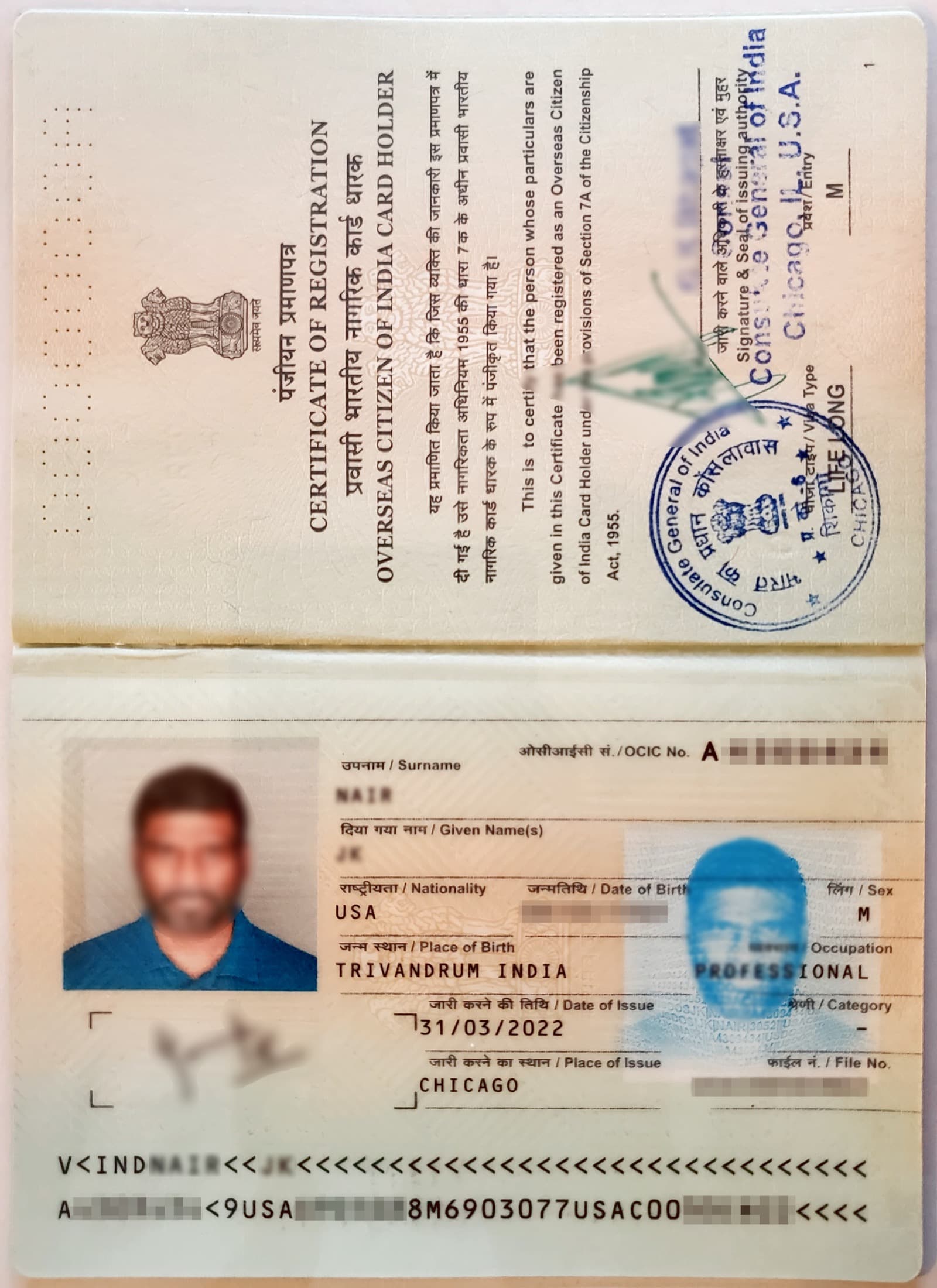
But OCI cardholders and Indian passport-holders do not need a medical visa at all. An OCI card is a lifetime visa; you travel on it, and you can seek treatment in India as a matter of course, with no special permission and no medical-visa paperwork. The only new box to tick, from 1 April 2026, is the free online e-Arrival Card, filed within 72 hours before you land — an arrival declaration, not a visa. (India also runs a separate Ayush visa for those coming specifically for traditional-medicine and wellness treatment.) So the single biggest piece of bureaucracy that complicates medical travel for everyone else simply does not apply to most of the diaspora. If you hold an OCI, your "medical visa" is your OCI. (The rules around that card keep shifting — our guide to the 2026 e-OCI changes is worth a read before you book.)
What India actually offers — and how to choose
The reason the diaspora trusts Indian hospitals is not patriotism; it is accreditation. India has a large stable of hospitals carrying international JCI accreditation and the domestic NABH standard — the same benchmarks used to reassure patients anywhere in the world — across the big private chains in Delhi-NCR, Mumbai, Chennai, Bengaluru, Hyderabad and Kochi. The strongest specialities are precisely the ones the diaspora needs most as it ages: cardiac surgery, orthopaedics (hip and knee replacement), oncology, fertility/IVF, ophthalmology and dental work, along with a large and cheaper tier of elective and cosmetic procedures.
The honest advice is to choose on evidence, not on a cousin's recommendation alone: confirm the hospital's accreditation, the specific surgeon's volume for your procedure, and get the full written estimate — in India, package pricing for a named procedure is normal and you should insist on it.
The catches nobody advertises
Going home to heal is a genuinely good option, but it is not a free lunch, and the brochures skip the hard parts.
Insurance usually won't follow you. Most US, UK, Canadian and Australian health plans do not cover elective treatment undertaken in India. You will typically pay out of pocket — still far cheaper, but it's your cash, not your insurer's, so budget for complications and a longer stay than planned. (On moving the money, mind the limits and paperwork — see our guide to sending funds in and out of India.)
Continuity of care is the real risk. A surgery is a day; recovery is months. If a complication appears after you've flown back to Toronto or London, your Indian surgeon is ten time zones away and your local doctor inherits a chart they didn't write. Plan the follow-up before you plan the flight: who manages your care back home, what records travel with you, and how long you can realistically stay for post-operative checks.
"Home" can also be far from your support. The same distance that puts you near your Indian family puts you away from your spouse, your job and your settled life abroad. For a big operation, that trade-off is worth thinking through honestly rather than romantically.
None of this is a reason not to go. It is a reason to go with your eyes open — to treat a trip home for treatment as a medical decision with a passport attached, not a holiday with a hospital stay bolted on. For millions in the diaspora, done carefully, it remains one of the best deals in their two-country lives: world-class care, at a fraction of the price, in the one place that still feels like home.
Sources: India medical-value-travel market size and foreign medical-arrival figures per 2026 industry estimates (Mordor Intelligence, market.us and related reports) and the Government of India's "Heal in India" initiative; cost comparisons per published industry estimates; visa and e-Arrival Card rules per India's e-Visa framework and Bureau of Immigration guidance. This is general information, not medical or financial advice — confirm hospital accreditation, costs and your own insurance and visa position before travelling.
Related from Visas & Law
Green cards reopen for Indians: the October 2026 visa bulletin
OCI new rules 2026: the e-OCI digital card, explained

Greece's €250,000 Golden Visa: what it really costs an Indian family