


The NRI film: how DDLJ taught Bollywood to love its diaspora
In 1995, Dilwale Dulhania Le Jayenge made the non-resident Indian Bollywood's hero — and the diaspora its most valuable audience. How the 'NRI film' was born, and the movies it made.
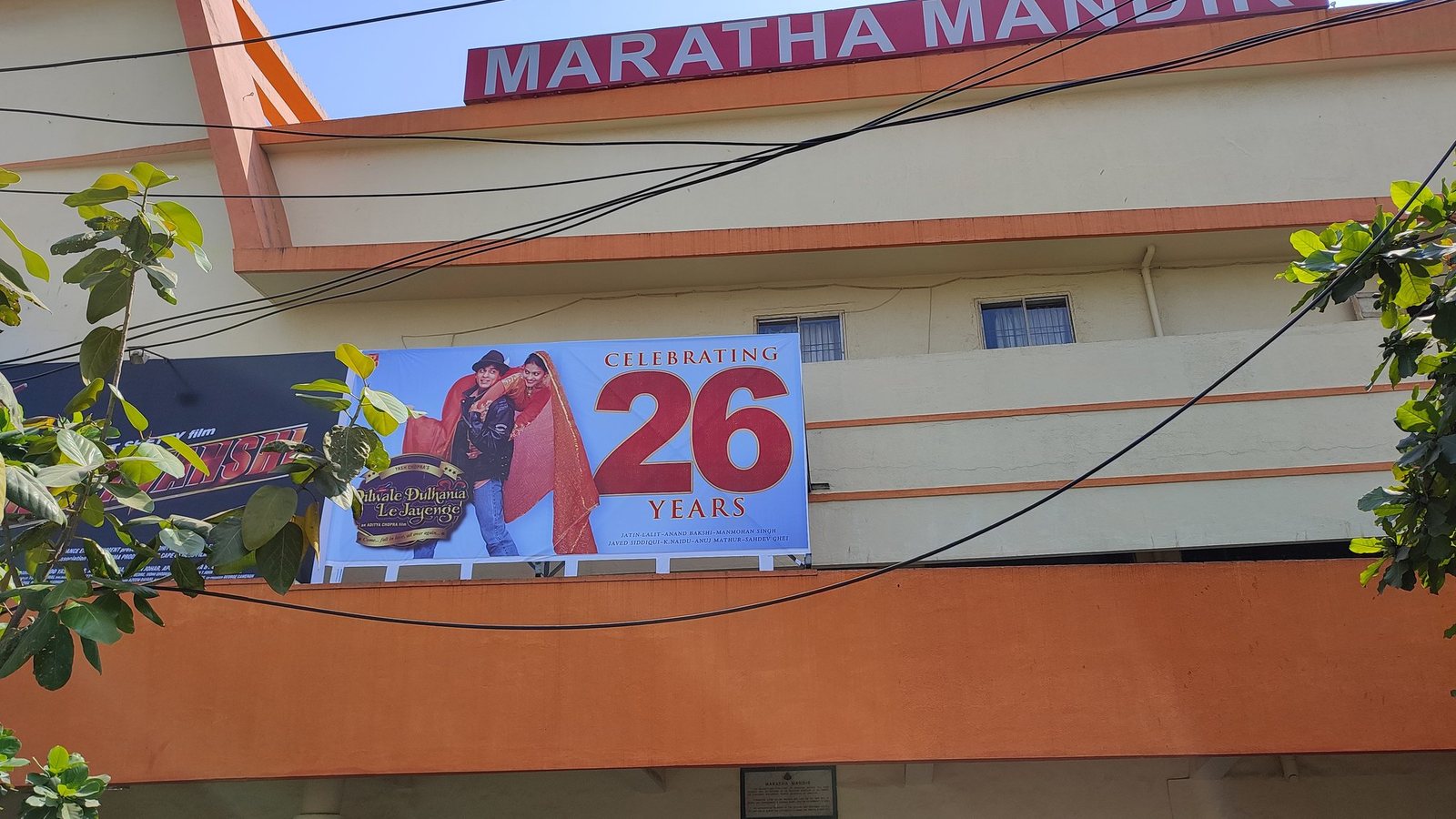
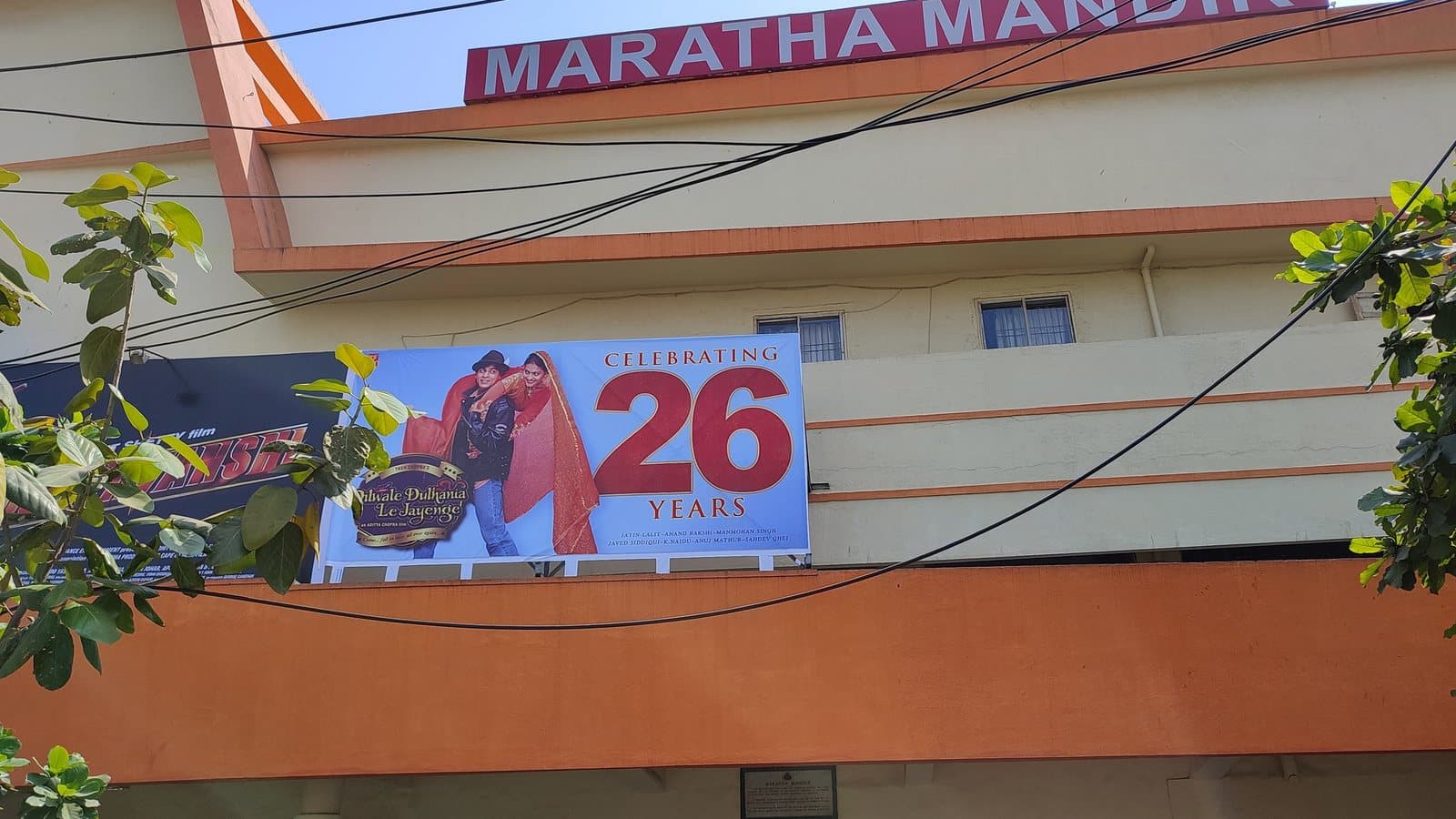
Every day since 20 October 1995, at the Maratha Mandir cinema in central Mumbai, a screen has lit up with the same film. Dilwale Dulhania Le Jayenge — DDLJ — has run there daily for three decades, the longest continuous cinema run in Indian history. Tourists go to watch it. So do couples on anniversaries, film students, grandparents showing grandchildren the movie that, more than any other, taught Bollywood who it was really making films for: not only the audience in the stalls, but the one that had left.
The film that changed the address
Before DDLJ, the non-resident Indian was a bit player in Hindi cinema — usually a figure of suspicion, the deracinated cousin who had lost his values on a foreign shore. Dilwale Dulhania Le Jayenge made him the hero. Raj and Simran, its young leads, are the children of Indian immigrants in London; the film's first act unfolds in Europe, its emotional climax in Punjab, and its whole argument is that you can be raised abroad and remain, in the ways that count, Indian.
It was, as the film's history records, the first Hindi blockbuster to put NRIs at the centre of the story — and it started a trend for films built around the diaspora, with foreign locations woven into the plot rather than pasted on as song backdrops. Crucially, it also established the diaspora as a market: the overseas audience, the industry realised, was not a rounding error but a revenue stream — and a steadier, more affluent one than the volatile domestic box office.
The scenes at the theatres abroad
The proof arrived at the door. DDLJ opened to sold-out shows worldwide; in Mumbai, every show in every theatre save one was full for the first week. Abroad, the reception was startling. At San Francisco's 720-seat Naz theatre, a thousand people turned up for the first screening, and the staff had to add a late show that night to cope.
For a diaspora that had spent decades watching Hindi films on grainy pirated VHS tapes passed hand to hand, or at occasional community-hall screenings, the arrival of a movie made partly about them — and released in their cities, on their weekends — was a homecoming of a peculiar kind. You did not have to fly back to India to sit in the dark with a few hundred other Indians and cry at the same wedding.
The villain the NRI used to be
To measure what DDLJ changed, look at what came before it. In films like Manoj Kumar's Purab Aur Paschim (1970), the Indian who went West was a cautionary tale — a character who had traded saris for miniskirts and reverence for rootlessness, and who had to be reformed, usually by a virtuous visitor from the motherland, before the credits rolled. The diaspora, in that older grammar, was a moral warning: this is what happens to Indians who leave. DDLJ inverted it. Raj's family has been in London for years and is no less Indian for it; the film's tension comes not from the diaspora's corruption but from a father's fear of it — a fear the film gently proves unfounded. That reversal, from suspicion to celebration, is the whole revolution.
The genre it built
DDLJ was not a one-off; it was a template. Through the late 1990s and 2000s a whole cycle of "NRI films" followed, each turning on the pull between the country left and the country lived in: Pardes (1997), Kabhi Khushi Kabhie Gham (2001), Kal Ho Naa Ho (2003), Hum Tum (2004), Salaam Namaste (2005), Kabhi Alvida Naa Kehna (2006). The settings moved — London, New York, New Jersey, Sydney — but the grammar was constant: gleaming diaspora affluence, a soundtrack that travelled, and a moral centre that stayed stubbornly, sentimentally Indian.
Karan Johar and Aditya Chopra, the film-makers most associated with the genre, understood something their predecessors had missed. The diaspora did not want to be scolded for leaving. It wanted to be told that it had carried India with it. That was a far more comfortable story — and a far more bankable one.
The money followed the sentiment
The economics hardened the trend. Yash Raj Films, the studio behind DDLJ, built its own overseas distribution arm rather than leave the diaspora market to middlemen, and other big producers followed. As the overseas audience grew through the 2000s, a glossy family film's fate could turn on how it played in the diaspora's cinemas — London's cineplexes, the multiplexes of New Jersey and the Bay Area, the halls of the Gulf. Distributors began reporting "overseas" as a distinct territory with its own weekend numbers, and for the big-budget films that territory was often the margin between a hit and a flop. The NRI in the audience had become the NRI the film was written for.
That carried costs as well as rewards. Critics argued the NRI film sold a sanitised, consumerist India — all designer lehengas and Swiss chalets, the poverty and friction edited out — and that it flattered the diaspora's nostalgia rather than testing it. The charge was fair. But the genre also did something no government outreach had managed: it kept three generations of overseas Indians emotionally tethered to a country many of them had never lived in.
Why it still runs
The Maratha Mandir run is the genre's monument. Thirty years on, DDLJ still plays to a small, faithful morning audience — a piece of living cinema history, and a reminder of the moment Bollywood turned to face the world outside India and saw, for the first time, a paying audience that looked like home.
The NRI film has faded as a distinct genre; streaming and a more confident, globally-minded Indian cinema have moved past its formula. But its central discovery — that the diaspora is not on the edge of the Indian story but increasingly at the box-office centre of it — has only deepened. Every Indian film now released simultaneously in Mumbai and Melbourne, every streaming series pitched at the second-generation viewer in Toronto, is working ground that DDLJ broke.
It began with a train, a girl, and a boy who turned out to be Indian enough after all. The diaspora has been in the frame ever since.
The diaspora exports more than cinema: read how Indian-origin singers reached the world's biggest stages. This is Part 1 of The Diaspora Screen — the parts to come profile the diaspora's own film-makers, its actors in global cinema, and the stories the screen tells about migration.
Continue the series · The Diaspora Screen
Related from Culture

Robin Leo Hoffmann: the German who went looking for an Aghori — and found a way to live

Captain Smit Machchhar: the Mumbai pilot who saved 174 on a Tel Aviv flight

Ashina Singh: three countries, one crown