


From Apu to authenticity: how the diaspora took back its image on screen
For decades the most famous Indian on American TV was Apu — a white actor's cartoon accent. The story of how the diaspora went from caricature to controlling its own image is the story of this whole series.
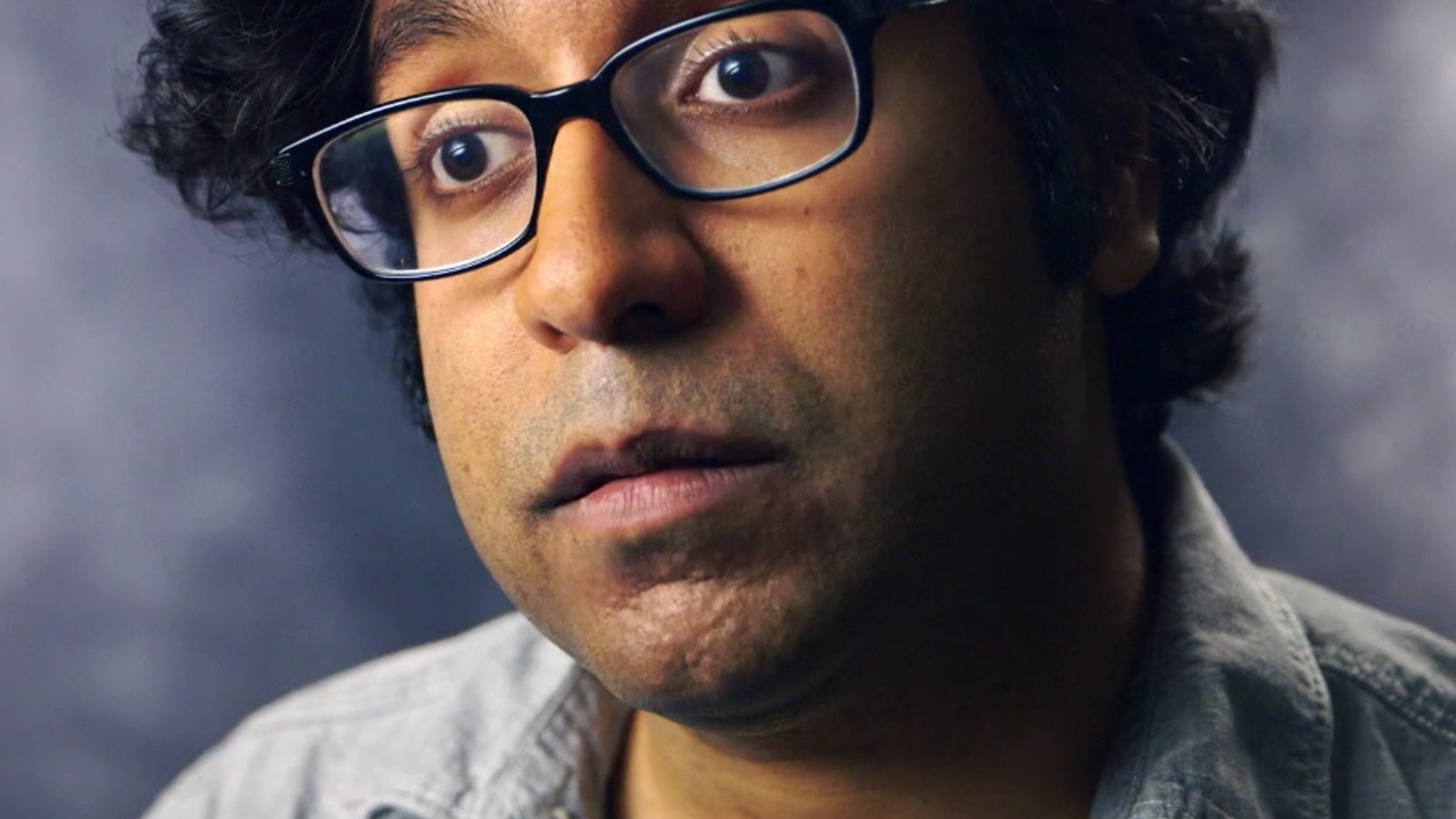
For a long stretch of American television, the most famous Indian in the country was not a person. He was a cartoon. Apu Nahasapeemapetilon, the convenience-store owner on The Simpsons, voiced by the white actor Hank Azaria in a sing-song, exaggerated accent, was for years the only Indian character to appear regularly on mainstream American TV. Millions of Americans learned what an Indian sounded like from him.
The harm in the accent
Apu's comedy sprang almost entirely from that accent — a mugging caricature of how many Americans already saw the immigrant behind the shop counter. It was, as the comedian Hari Kondabolu argued, minstrelsy by another name: a white performer putting on a brown voice for laughs. And it did real damage. In Kondabolu's 2017 documentary The Problem with Apu, he asks a room of young South Asian performers whether they were ever bullied by people quoting the character at them; nearly every hand goes up. For a generation of diaspora kids, Apu was the taunt that followed them down the school corridor. After 2001, the range narrowed further still: the two dominant images of brown people on American screens became the convenience-store owner and the terrorist.
The token years
Apu did not stand alone; he stood at the head of a long line of thin parts. For most of the last century the Indian on the Western screen was a function, not a person — the cab driver who delivered a line and vanished, the software engineer who supplied the exposition, the spelling-bee prodigy, the wise doctor with the careful accent, the arranged-marriage subplot. The role existed to be brown, to tick a box or land a joke, and then to get out of the way of the real story. Representation, such as it was, meant being visible without being seen — present in the frame, absent from the plot.
The reckoning
The Problem with Apu forced the issue into the open. Under sustained criticism, Hank Azaria said he would be "perfectly willing to step aside," and in 2020 he stopped voicing the character altogether and publicly apologised for the harm it had done. The Simpsons quietly retired Apu from speaking roles. Not everyone accepted the argument — the show's creator, Matt Groening, initially waved it away, complaining that "people love to pretend they're offended" — but the character's monopoly on the Indian image was broken, and the culture had shifted underneath it.
More than one caricature
Apu was never the whole problem; he was its most visible node. Behind him stood a long history: Peter Sellers browning his face for laughs in the 1960s, the endless bit parts as cab drivers and IT technicians, and the fierce argument over Slumdog Millionaire (2008) — a film adored in the West and resented by many Indians who felt it sold foreign audiences a spectacle of Indian squalor, "poverty porn" dressed as triumph. The lesson of all of it was the same: being represented was not the same thing as being represented well. Visibility, on someone else's terms, could wound as easily as it flattered.
The answer was authorship
The fix, in the end, was not better casting alone. It was authorship — the diaspora seizing the pen. You cannot be reduced to an accent by someone else if you are the one writing the lines. When the diaspora auteurs insisted the immigrant was a serious subject, when British Asian cinema filmed Southall from the inside, when Mindy Kaling and Aziz Ansari created their own shows and Dev Patel and Priyanka Chopra became leads rather than sidekicks, the caricature lost its grip. Apu could only exist as long as no Indian held the microphone. The moment the diaspora did, he became unspeakable.
Who gets to tell it
The Apu argument was, underneath, an argument about authorship — about who holds the pen. Slumdog Millionaire was directed by a Briton, Danny Boyle, working from an Indian novel; its critics were not saying the film was made in bad faith, but asking why the definitive global image of India kept being drawn by outsiders. The same question shadowed every well-meaning film about the diaspora made by people from outside it: however sympathetic, it was still someone else's version. The only durable answer was for the diaspora to make its own — to move from being the subject of the sentence to being its author.
The fight is not over
None of this is settled. Brown roles are still occasionally handed to non-brown actors; accents are still sometimes played for cheap laughs; the "diversity" checkbox can still stand in for the harder work of a real character. But the ground has shifted decisively. There are now enough diaspora writers, directors, showrunners and stars that no single caricature can define the community, and enough of an audience to answer back when one tries. The caricature has not vanished. It has simply lost its monopoly — and that, after Apu, is a revolution.
The distance travelled
That is the thread running through this whole series. Bollywood's NRI film told the diaspora who it was (Part 1); the auteurs and the British Asian film-makers told the world; Hollywood's Indians and the streaming creators (Part 7) told the diaspora's own story back to itself, in its own voice. The journey from Apu to authenticity is the journey the diaspora made on screen in a single generation — from being a joke that someone else told, in an accent that belonged to no one, to being the author of its own image. It is not finished. But the microphone, at last, is in the right hands. The measure of the change is not that the stereotypes have disappeared — they have not — but that they no longer get the last word, because the people they once reduced to an accent are now the ones telling the story.
The final part of The Diaspora Screen*. Start at Part 1: the NRI film, or read Part 4: Hollywood's Indians.*
The first Indian-origin actor to reach the top of that ladder did it by changing his name: Sir Ben Kingsley, born Krishna Pandit Bhanji.
Continue the series · The Diaspora Screen
Related from Culture

Robin Leo Hoffmann: the German who went looking for an Aghori — and found a way to live

Captain Smit Machchhar: the Mumbai pilot who saved 174 on a Tel Aviv flight

Ashina Singh: three countries, one crown