

The stadium diaspora: what Modi's Melbourne rally was really for
Thirty thousand people filled Marvel Stadium for 'Melbourne Meets Modi'. The rally was not a sideshow to the India-Australia summit that produced it - the uranium deal, the trade pact, the defence pledge. It was the same instrument, seen from the other side. A decade on from Madison Square Garden, the Indian diaspora has become both the audience and the argument of India's foreign policy - and in Australia, for the first time, the numbers to back it.
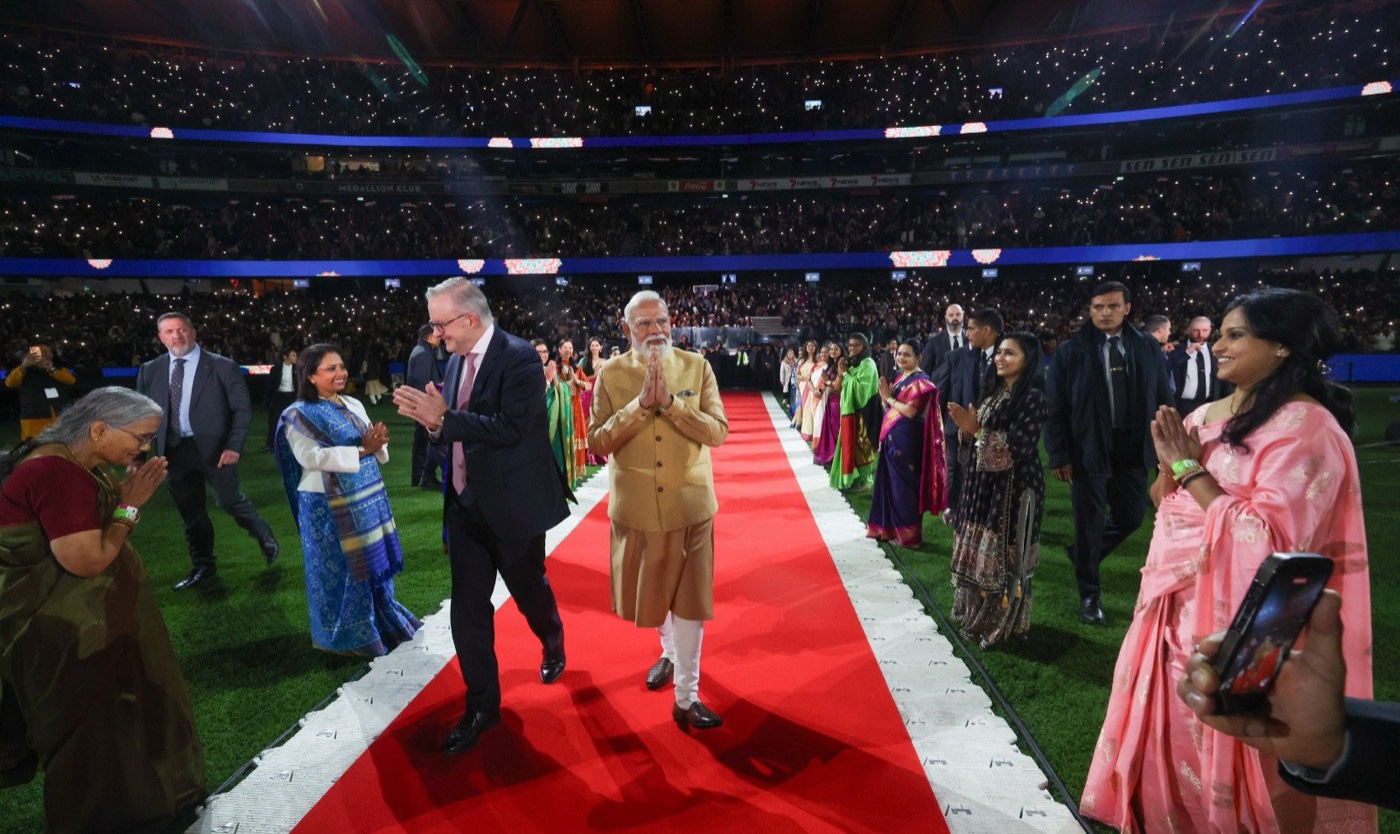
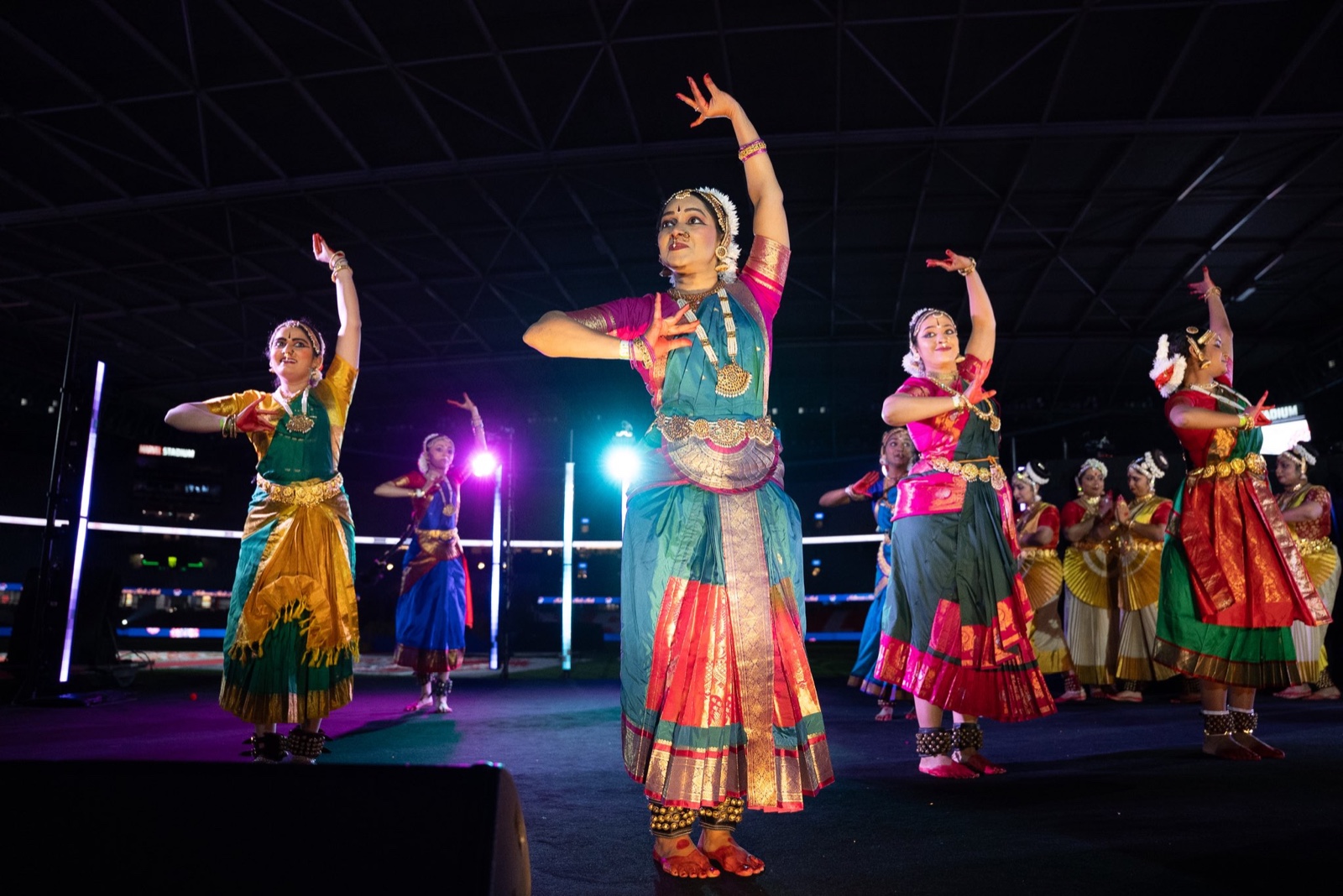
Thirty thousand people do not fill a stadium for a policy readout. They came to Melbourne's Marvel Stadium on the evening of 9 July for the spectacle - the phone lights, the chants of "Modi, Modi", the tricolour rangoli laid across an Australian Football League pitch - and the Prime Minister gave them the line they wanted. "It wasn't Modi," he told them of the India-Australia relationship. "It was all of you."
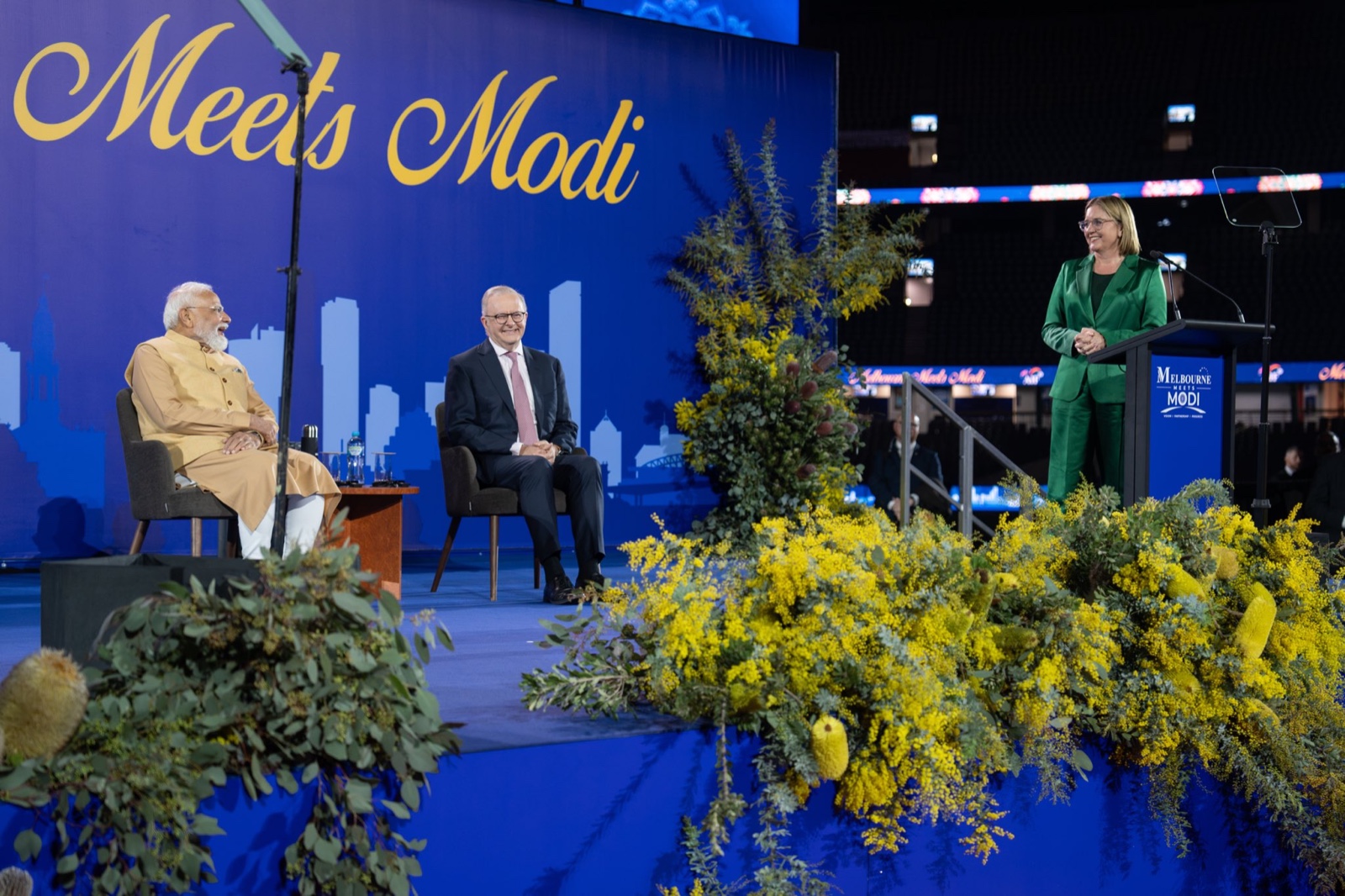
It is tempting to file the rally under theatre and move on to the substance: the summit with Anthony Albanese earlier that day, the 18 outcomes across defence, energy, critical minerals and trade. But that division - spectacle here, statecraft there - misreads what a Modi stadium event is. The rally is not a break from the diplomacy. It is the diplomacy, addressed to a different room.
A decade of stadiums
The template is now a decade old. It began at Madison Square Garden in September 2014, months into Modi's first term, where a newly elected prime minister filled a New York arena with Indian-Americans and a rock-concert stage set. Wembley followed in 2015, "Howdy, Modi" in Houston in 2019 - 50,000 in an NFL stadium, an American president in attendance. Sydney had its own version in 2014, and again in 2023. Melbourne in 2026 is simply the newest node in a circuit that no other Indian leader had ever built, and few world leaders anywhere can match.
What makes the format so useful is that a single evening speaks to three audiences at once. There is the crowd in the room - the diaspora, told that it is seen, courted, claimed. There is the audience back in India, watching clips of their prime minister feted abroad, a spectacle of national arrival that plays as well in Uttar Pradesh as in Melbourne. And there is the host government, shown in one camera pan the size, the wealth and the political weight of the community it hosts. The stadium is a message written in three languages simultaneously.
The substance behind the show
The temptation to dismiss the rally as pageantry collapses the moment you look at what the same visit produced. This was the third India-Australia Annual Summit, and its deliverables were not ceremonial. The two governments finalised administrative arrangements under their civil nuclear agreement, clearing the way for Australia to export uranium to India for peaceful use - a genuine shift in a country that spent decades refusing to sell uranium to a non-signatory of the Non-Proliferation Treaty. They issued a Joint Declaration on Defence and Security Cooperation, renewing a security compact first signed in 2009. And they recommitted to finalising the Comprehensive Economic Cooperation Agreement, the trade deal that has been inching toward completion for years, alongside memoranda on critical minerals, maritime security, clean energy, skills and even filmmaking.
Uranium, defence, critical minerals, a trade pact: this is the architecture of a serious strategic relationship, the kind two countries build when they have decided China's rise requires them to stand closer together. The rally and the readout are two faces of one coin. The stadium supplies the emotional legitimacy - the sense that this partnership rests on a living community, not just on ministers' signatures - and the summit supplies the content that makes the emotion worth monetising.
The new thing: the numbers are real now
For most of the stadium decade, the diaspora spectacle ran ahead of the diaspora's actual weight. The crowds were real but the demographic argument was aspirational. In Australia, that gap has closed.
In 2026, for the first time, Indians became Australia's single largest migrant group. Some 971,020 Australian residents were born in India - about 5.2% of the entire population - narrowly overtaking the 970,950 born in England, a symbolic passing of the torch from the country's colonial founder to its newest major community. The India-born population has grown by roughly 522,000 since 2015, the fastest-growing of any large migrant group, and the youngest, with an average age of 34. Chinese-born residents, at 732,000, are a distant third.
That changes what a Melbourne stadium means. When Modi tells a crowd that they built the India-Australia relationship, it is, in Australia's case, close to literally true: Indians are now the largest foreign-born community in the country, disproportionately young, skilled and economically active. A government in Canberra negotiating uranium and trade with Delhi is also governing the largest migrant bloc in its own electorate. The spectacle and the demography have finally converged.
Audience, or instrument?
There is a harder question underneath the celebration, and this magazine would be failing its readers not to ask it.
To be the "stadium diaspora" is to be addressed as a single, grateful, unified body - a community that exists to affirm the mother country and to be leveraged in its diplomacy. Real diasporas are messier than that. The Indians in Marvel Stadium included citizens and temporary-visa holders, recent students and second-generation Australians, people who left India in flight from its politics and people who fly its flag with pride. The rally flattens them into one roaring crowd, and the flattening is the point: a diaspora that can be gathered and broadcast is an asset; a diaspora that argues with itself is merely a population.
Most who attended would say the pride is genuine and theirs to feel, and they would be right. But it is worth holding two things at once. A stadium full of Indian-Australians is a moving assertion that a scattered people has arrived, permanently, in a country that once would not have had them. It is also a carefully staged instrument of a foreign government's statecraft, and the two facts do not cancel. The diaspora is being celebrated and used in the same evening, under the same lights.
When the stadium emptied on 9 July, the phone lights went dark and the rangoli was rolled up. What remained was more durable than the spectacle: a uranium agreement, a defence declaration, a trade deal edging closer - and 971,020 Australians who were born in India, going back to work the next morning in the country that is now, by the numbers, as much theirs as anyone's. The rally was for a night. The diaspora it performed is for good.