


What the diaspora kitchen already knew about wholesome eating
Holistic nutrition is the West's wellness obsession. For Indian families abroad, much of it was already on the thali — if the move overseas didn't quietly leave it behind.

For the better part of a decade, the word wellness has been doing brisk business in the West. Holistic nutrition — the idea that food should nourish the whole person rather than merely fix a symptom — fills bookshelves, clinics, and feeds. Yet for many Indian families living abroad, there is a quiet irony in watching this wisdom sold back to them as a discovery. Much of it was already on the table they grew up around. The question for the diaspora is not how to find wholesome eating. It is how not to lose it.
The plate that was already balanced
Consider the ordinary Indian thali. A serving of dal for protein and fibre. A vegetable sabzi, often two. Roti or rice for grains. A spoon of dahi — fermented, alive with the kind of bacteria the wellness aisle now bottles and sells as probiotics. A pickle or chutney for the sour and the bitter. Turmeric, cumin, ginger and garlic folded into almost everything. Long before anti-inflammatory diet became a phrase, the everyday Indian kitchen was assembling one without thinking about it.
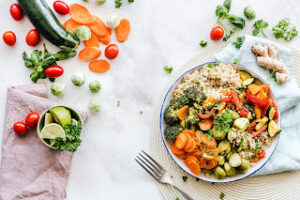
This is not nostalgia. The traditional South Asian plate is plant-forward, high in fibre and legumes, rich in fermented foods, and built around home cooking rather than packaging — close to what nutrition researchers describe when they describe eating well. Ayurveda, for all that has been overclaimed in its name, framed food holistically long before the word existed: six tastes on a plate, eating with the season, attending to digestion rather than counting calories alone.
Why it matters more for this community
There is a harder reason the diaspora cannot afford to drift from these habits. People of South Asian descent carry a well-documented, elevated risk of type 2 diabetes and heart disease — and they tend to develop it at lower body weights than other populations. The pattern is consistent enough that the World Health Organization and several national bodies, including India's own, recommend lower body-mass-index thresholds for South Asians than the global default: a number that reads as merely "overweight" for the general population can already signal real metabolic risk in an Indian body.
Migration compounds this. Public-health researchers have long described a nutrition transition — the slow shift, over a generation or two abroad, from home-cooked, plant-heavy meals toward the calorie-dense, processed, convenient food that surrounds a busy immigrant life. The first generation arrives cooking the way their mothers did. The second grows up between a tiffin and a drive-through. The grandmother's knowledge — what goes with what, how much, when to stop — is rarely written down, and so it is the easiest thing to leave behind in the move.
Wholesome eating, translated for a life abroad
None of this argues for rigidity, or for pretending a kitchen in New Jersey or Nairobi is a kitchen in Patna. It argues for translation. A few principles travel well:
- Keep the structure, swap the ingredients. The logic of the thali — a grain, a legume, vegetables, something fermented — survives a foreign supermarket even when the exact vegetables don't.
- Treat whole foods as the default, not the diet. Fruit, vegetables, whole grains, lentils and beans were never a "plan" at home; they were just dinner. Abroad, they have to be chosen on purpose.
- Protect the fermented things. Dahi, idli, dosa batter, pickles, kanji — the diaspora's probiotics are older and cheaper than the supplement.
- Cook more than you think you have time for. The single biggest lever, every nutrition framework agrees, is the home meal versus the packaged one.
- Pass it down out loud. Recipes survive in cookbooks. Judgement — the grandmother's eye — survives only if it is spoken while someone watches.
Holistic nutrition, in the end, was never only about food. It is about attention: to the body, to the seasons, to the people you feed. That is not a Western import the diaspora needs to acquire. It is closer to an inheritance it needs to keep packing every time it moves.
This article is general in nature and is not medical advice. Anyone with specific health concerns or symptoms should consult a qualified healthcare professional.
Related from Culture

From Merle Oberon to the red carpet: a century of Indian-origin women in the spotlight

Asmi Aderay, the Hyderabad-to-LA singer who refuses to pick one genre
From Apu to authenticity: how the diaspora took back its image on screen