

Nikita Thakrar: ‘I looked Indian, but I didn’t know where I came from’
At eighteen she flew to Mumbai alone to claim a heritage she had only ever looked like — and spent two decades turning it into a life in Kathak. The British-Indian dancer, teacher and TEDx speaker on identity, the school she built and gave away, and her journey “from karma to dharma.”
By Diaspora Dreams Newsroom · Interview by Chandan Kumar Singh ·
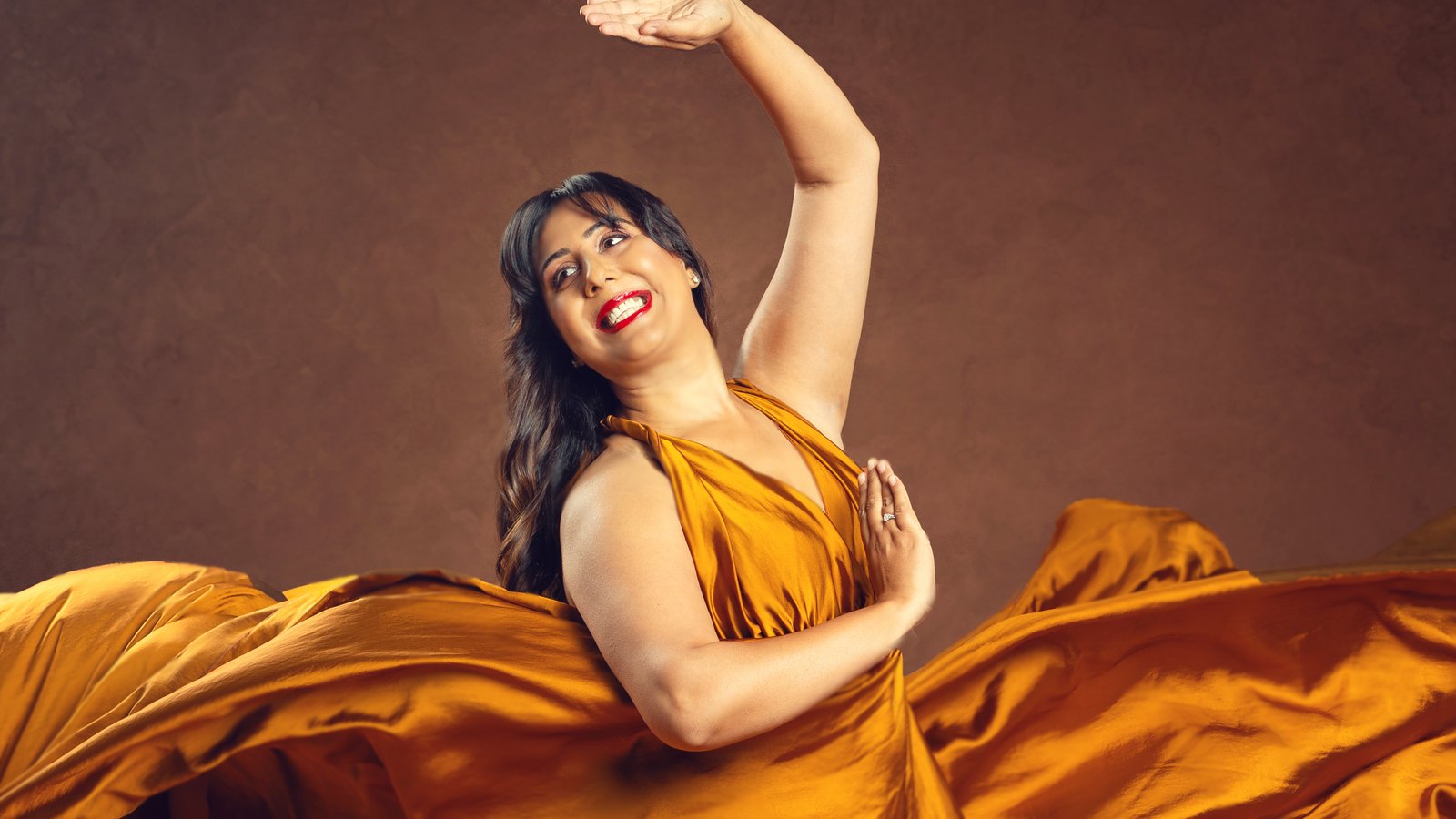
At eighteen, instead of taking up the expected place at university, Nikita Thakrar flew to Mumbai alone. She had grown up in Slough, in a British-Indian family — looking Indian, but living a largely British life — and India, for all that it was her heritage, was a country she had never quite stepped into. She went to find out what it meant to her.
What she found there became a life. Over the next decade she trained in Kathak under a Mumbai guru, travelling back and forth between India and Berkshire, and in 2005 she started a dance company in Slough that grew, over roughly twenty years, into an award-winning dance and yoga studio. She taught thousands of students, was named a winner at the 2024 Women Who Achieves Awards, and this June stood barefoot on a TEDx stage in Cornwall to talk about why she walked away from all of it.
We spoke to her about identity, inheritance, and a journey she calls — in the title of a book due next year — one "from karma to dharma."
You were born and raised in the UK. When did India stop being an inheritance and start being yours?
"I was born and raised in the UK, in a British Indian family. India was my heritage, but for many years it was not somewhere I felt deeply connected to. Growing up, I often felt caught between two identities. I looked Indian, but my everyday life was largely British. At school, I experienced racism and was sometimes told to 'go back to where you came from.' The difficulty was that I did not really know where I came from.
"At eighteen, instead of following the expected route to university, I travelled alone to Mumbai. On the surface, I thought I was exploring dance, acting and the creative industries. Beneath that, I was looking for belonging. India was an intense awakening — the heat, noise, poverty, beauty and devotion overwhelmed me at first. Yet over the next decade, travelling between India and the UK, it did not simply teach me about my heritage. It helped me form a relationship with myself."
You trained in Kathak. Who taught you, and what did it give you?
"I trained for ten years under the guidance of Shila Mehta in Mumbai, returning regularly between India and the UK. Through her, I came to understand Kathak as a living tradition — a language, a lineage and a devotional practice. Every gesture carried meaning. Every rhythm had an architecture.
"I had been drawn to the beauty of Indian dance, but the training taught me discipline. I was not naturally rhythmic, so I had to work patiently and repeatedly. That became a life lesson. We sometimes imagine our purpose will be the thing that comes most easily to us. My experience taught me it may first appear as the thing we are willing to devote ourselves to, even before we are any good at it. Kathak became a bridge between my British upbringing and my Indian roots."
And you brought that bridge home. Tell us about the school.
"I founded the Dancing Nikita Company in 2005. What began as a teaching practice gradually grew into a dance and yoga studio in Berkshire. Over roughly two decades I taught thousands of students, created performances and built a community around movement, culture and wellbeing, with Indian dance at its heart.
"It became an important cultural space, particularly for British Indians who wanted a living relationship with Indian dance. It showed me that culture stays alive not simply because we preserve it, but because each generation is given a meaningful way to take part in it."
So why leave? What was the turning point?
"There was not one turning point, but a series of moments. The most dramatic came through my health. In 2011, I became seriously ill and was later diagnosed with a rare autoimmune condition. I had spent years building a dance career and working towards opening my own studio, and my body suddenly interrupted the momentum.
"I adapted and kept the school going. From the outside, my life still looked successful. But inwardly, I was beginning to feel that the identity I had built could no longer contain who I was becoming. For a long time I thought purpose meant finding the right role and committing to it. What I came to understand is that even a role born from purpose can become a pattern. I had become deeply identified with being the teacher, the founder, the capable one."
You eventually closed the studio you'd spent twenty years building. What did that feel like?
"It was one of the hardest decisions of my life. The school was not just my work — it was my identity, my community and the visible expression of my purpose. Letting go left me in an identity void. I was no longer the person I had been, but I did not yet understand who I was becoming. I even caught myself recreating parts of the old model in my new work, because I had released the external structure before fully releasing the internal pattern.
"Over time I realised that transformation is not always about adding another identity. Sometimes it is an unbecoming — the gradual release of the roles and expectations that once held us together but no longer reflect the truth of who we are. That is really what the journey from karma to dharma means to me. Karma, as I came to see it, is not simply fate; it is the patterns, roles and inherited expectations that quietly shape our lives. Dharma is the movement back towards what is true and alive within us."
That became your TEDx talk this year.
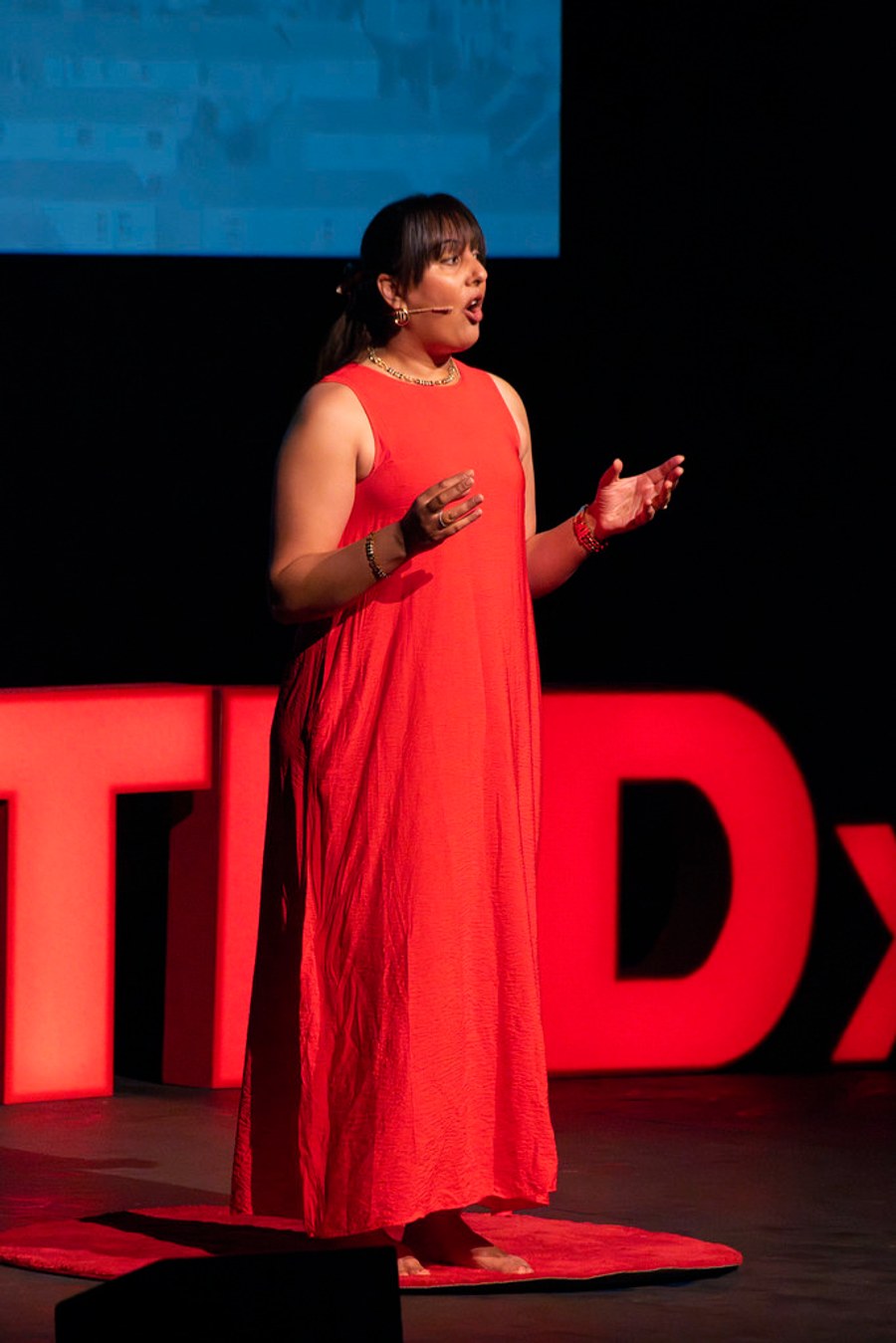
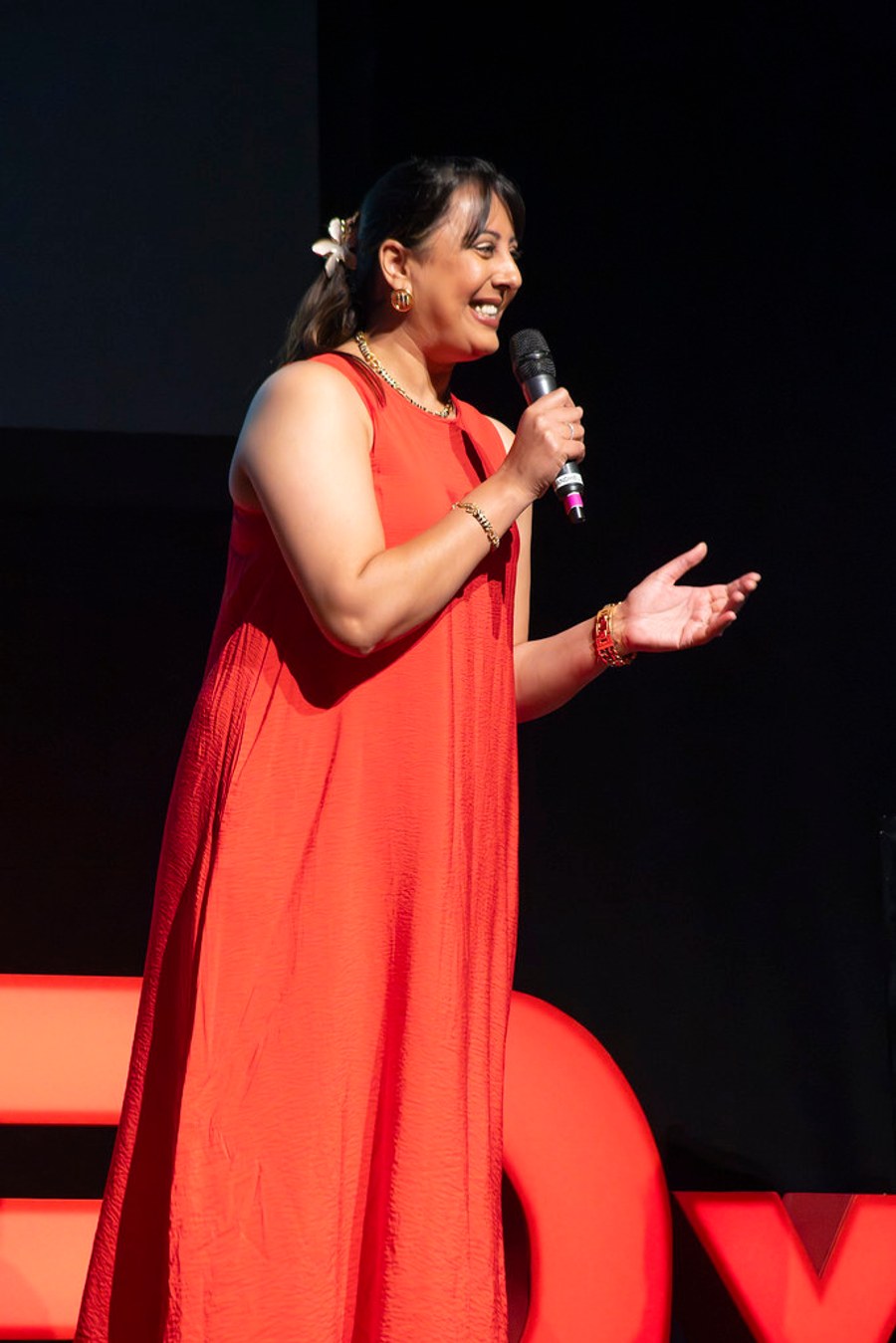
"Yes — my talk at TEDxTruro in June was called 'Dance with your dharma: Creativity as the bridge from chaos to clarity.' I shared how dance first helped me navigate the question of whether I was British or Indian, and how it later became a metaphor for the patterns we repeat in life.
"The central message was that karma keeps us repeating familiar movements — through duty, conditioning, obligation or fear — while dharma reconnects us with what makes us feel alive. When we feel lost, the answer is not always to think harder. Sometimes we need to move, create, write or dance what has not yet found words."
For diaspora families trying to hold on to their heritage, what would you say?
"I would say: do not only hold on to your heritage. Enter into a relationship with it. Learn its stories, languages, philosophies, music and rituals — but also ask what they mean to you personally. Culture cannot survive through guilt and obligation alone. If younger generations experience heritage only as a set of rules they must follow, they may struggle to form a living relationship with it.
"Staying rooted is not the same as remaining unchanged. You are allowed to be shaped by more than one culture, to carry forward what gives you depth and belonging, while releasing what asks you to abandon yourself. For me, the journey was never really about deciding whether I was British or Indian. It was about becoming whole enough to carry both."
Nikita Thakrar's book, "Journey from Karma to Dharma," is due to be published in January 2027. Her TEDxTruro talk is available on YouTube.
The interview was conducted over email and has been edited for length and clarity. Biographical details — her training under Shila Mehta, the founding of her Berkshire studio, her 2024 Women Who Achieves Award and her June 2026 TEDxTruro talk — were verified against public records and UK press reporting.
Related from Culture

The diaspora on your feed: the Indian-origin names to follow right now
From Merle Oberon to the red carpet: a century of Indian-origin women in the spotlight
Asmi Aderay, the Hyderabad-to-LA singer who refuses to pick one genre