

Five of Indian origin are elected to the US National Academy of Medicine
On 19 October the US National Academy of Medicine elected 100 new members to its class of 2026 — among them five scientists and physicians of Indian origin, from gene-editing at Penn to running Medicare in Washington.
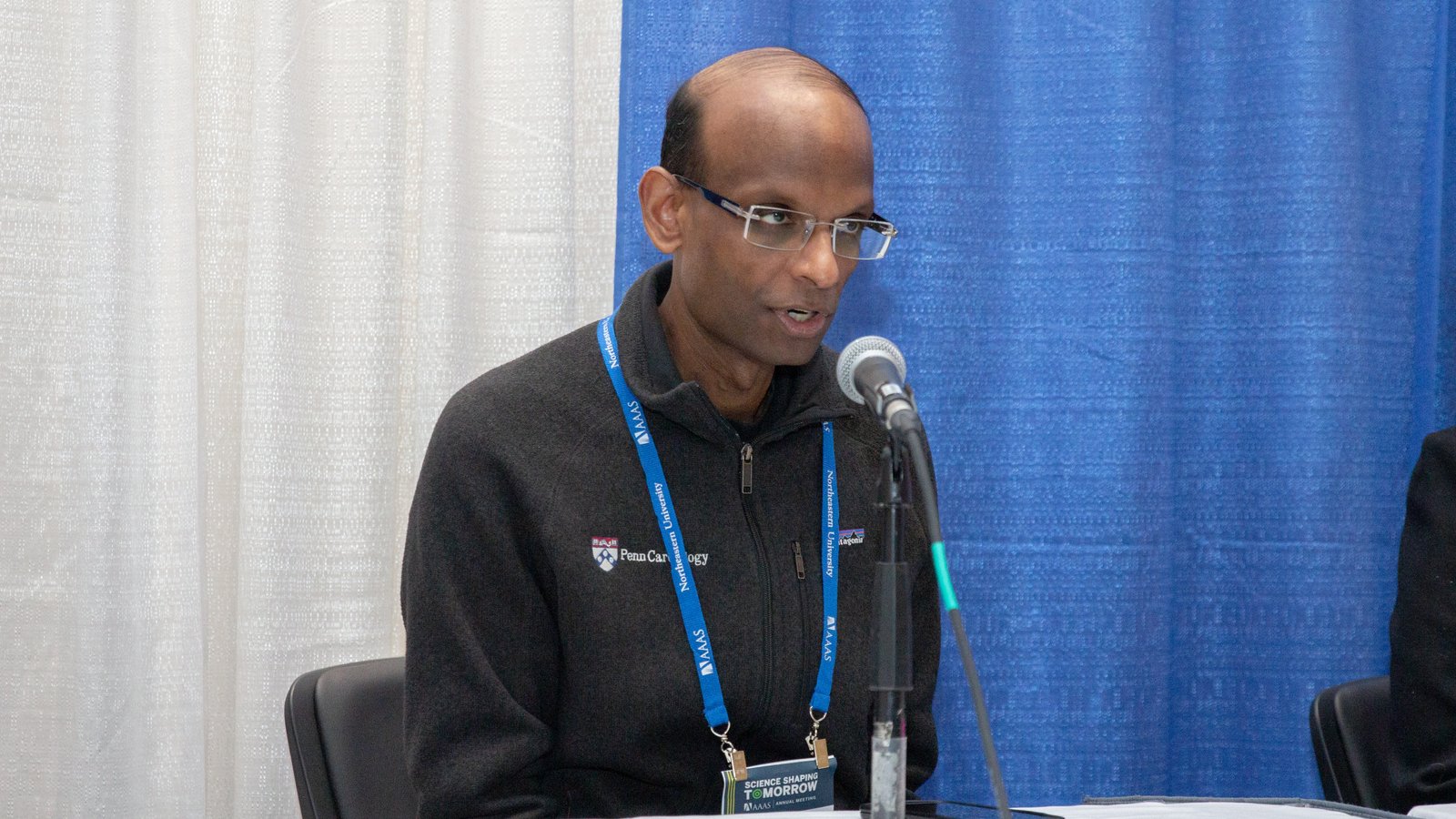
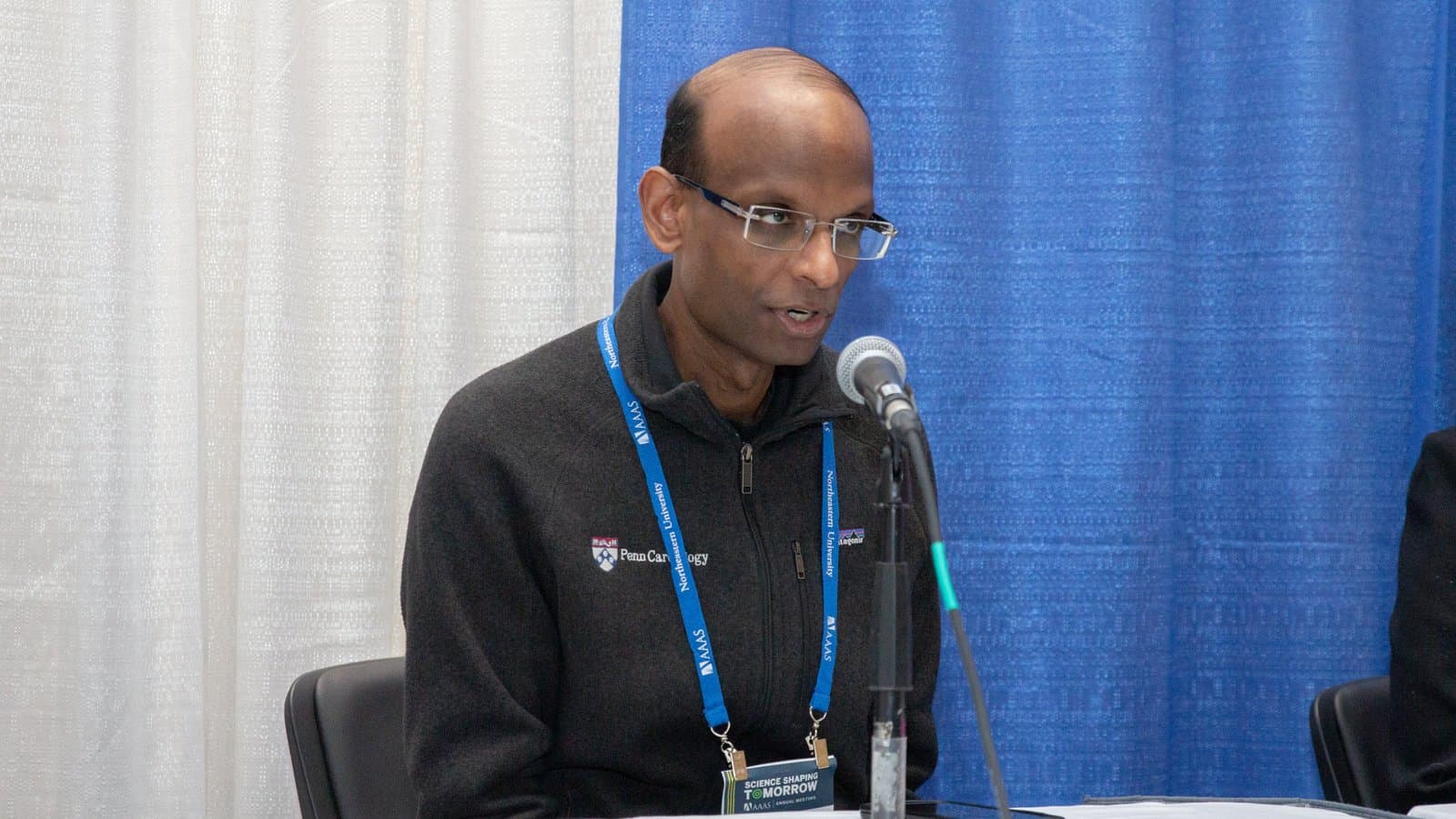
On 19 October, at its annual meeting in Washington, the National Academy of Medicine named the 100 new members it had elected to its class of 2026. Election to the Academy is counted among the highest honours in American medicine. Five of the hundred are of Indian origin.
They do not work in the same field or the same state. Ashutosh Chilkoti is a biomedical engineer at Duke. Kiran Musunuru is a cardiologist and gene-editing researcher at the University of Pennsylvania. Vikhyat Bebarta runs the emergency medicine department at the University of Colorado. Kasisomayajula Viswanath studies how health information moves through a population, at Harvard. Meena Seshamani is Maryland's health secretary, and until recently was one of the most senior officials in charge of Medicare, the federal health programme for older Americans. What they share is the election, and a lineage.
What the Academy is, and why the vote matters
The National Academy of Medicine began in 1970 as the Institute of Medicine and took its present name in 2015. It sits alongside the academies of sciences and of engineering inside the National Academies of Sciences, Engineering, and Medicine — the body the United States government turns to for independent advice on health. Its members are not appointed by anyone; they are elected by the people already inside, which is part of what gives the honour its weight. It is a verdict passed by peers.
The Academy describes membership as recognition of "outstanding professional achievement and commitment to service." This year's intake of 90 American and 10 international members brings the total membership past 2,600, more than 300 of them from outside the United States. Monica Bertagnolli, the Academy's president, framed the class in the institution's preferred language of evidence and service. "Their extraordinary talent and commitment to advancing evidence-based guidance and solutions for our country's greatest health care challenges will strengthen our efforts to improve health for all," she said.
The five
Chilkoti, the Alan L. Kaganov Distinguished Professor of Biomedical Engineering at Duke, was elected for work at the seam between engineering and medicine: new ways to deliver drugs inside the body, to purify proteins, and to build diagnostic tests.
Musunuru, the Barry J. Gertz Professor for Translational Research at Penn's Perelman School of Medicine, was recognised for discoveries in cardiovascular disease and gene-editing therapies — the attempt to treat heart disease by rewriting the DNA that drives it, rather than managing it with a lifetime of pills.
Bebarta, chair of emergency medicine at the University of Colorado Anschutz Medical Campus and founding director of its COMBAT research centre, was honoured for research spanning emergency, trauma and brain-health care, and for building partnerships between military and civilian medicine.
Viswanath, the Lee Kum Kee Professor of Health Communication at the Harvard T.H. Chan School of Public Health and the Dana-Farber Cancer Institute, was elected for his work on communication science and on health inequities — the question of why reliable medical information reaches some communities and bypasses others.
Seshamani is the useful outlier. A physician with a doctorate in health economics, she is now secretary of the Maryland Department of Health, and before that served as director of the Center for Medicare, running payment and policy for a programme that covers tens of millions of older and disabled Americans. Her citation is for Medicare, payment reform and public health — a career spent less at the lab bench than in the machinery that decides who gets care and who pays for it.
A line that runs back decades
Five names on a list of a hundred is a figure worth sitting with. People of Indian origin are a small fraction of the American population and a much larger fraction of its doctors and medical researchers. That imbalance is not the accident of a single year. It is the long tail of a migration that began in earnest after 1965, when the United States scrapped the national-origin quotas that had all but shut the door on Asia, and a generation of Indian physicians and scientists arrived to train — and stayed to practise.
Their children, and the students who followed them, now fill faculty chairs, run hospital departments and, increasingly, get the call from the Academy. The spread of this year's five tells the same story geographically: Durham, Philadelphia, Aurora, Boston, Baltimore — not a single cluster but a distribution across the country's research map, which is what a settled, second-generation presence looks like rather than a recent arrival.
The diaspora's visible successes tend to be the chief executives and the founders, the names that trend — this month alone, the Alexa architect who took over Boston Dynamics and the Hyderabad engineer now running OpenAI's data centres. Election to the National Academy of Medicine is a quieter kind of arrival. None of the five is a household name. Their work lives in journals and clinics and policy memos, not product launches. But the Academy is the profession's own measure of who has shaped it, and this year that measure points, five times over, at someone of Indian descent.
The timing has an edge
There is a sharper note underneath the honour. The same months that produced this list have produced a harder climate for the pipeline that built it: tighter scrutiny of the work visas and the student routes that carried many of these scientists, or the teachers who trained them, into American laboratories in the first place. Diaspora Dreams has tracked that squeeze in detail — the visa bulletin that only just cracked back open for Indians is one small sign of how tight the system has become.
The Academy's class of 2026 is, among other things, a record of what that pipeline has already delivered to American medicine. Whether the next class is built as freely is a separate question, and an open one. For now, five more of the diaspora's own have been written into the register of American science — not as immigrants to be counted, but as the people the country's doctors chose to honour.
Sources: National Academy of Medicine announcement of its class of 2026 (19 October 2026) and the Academy's membership figures; The ASCO Post's published list of the 100 new members, with their institutional affiliations and citations; Duke University, the University of Pennsylvania's Perelman School of Medicine, the University of Colorado Anschutz Medical Campus, the Harvard T.H. Chan School of Public Health / Dana-Farber Cancer Institute, and the Maryland Department of Health on their respective electees; the quotation from NAM president Monica Bertagnolli per the Academy's statement. Historical note on the 1965 US Immigration and Nationality Act per the public record.
Related from Business
Rohit Prasad: the man who built Alexa now runs the world's most famous robots
Uday Ruddarraju: OpenAI hands its data centres to a Hyderabad engineer
The $127 billion homecoming: how NRIs became India's financial backstop