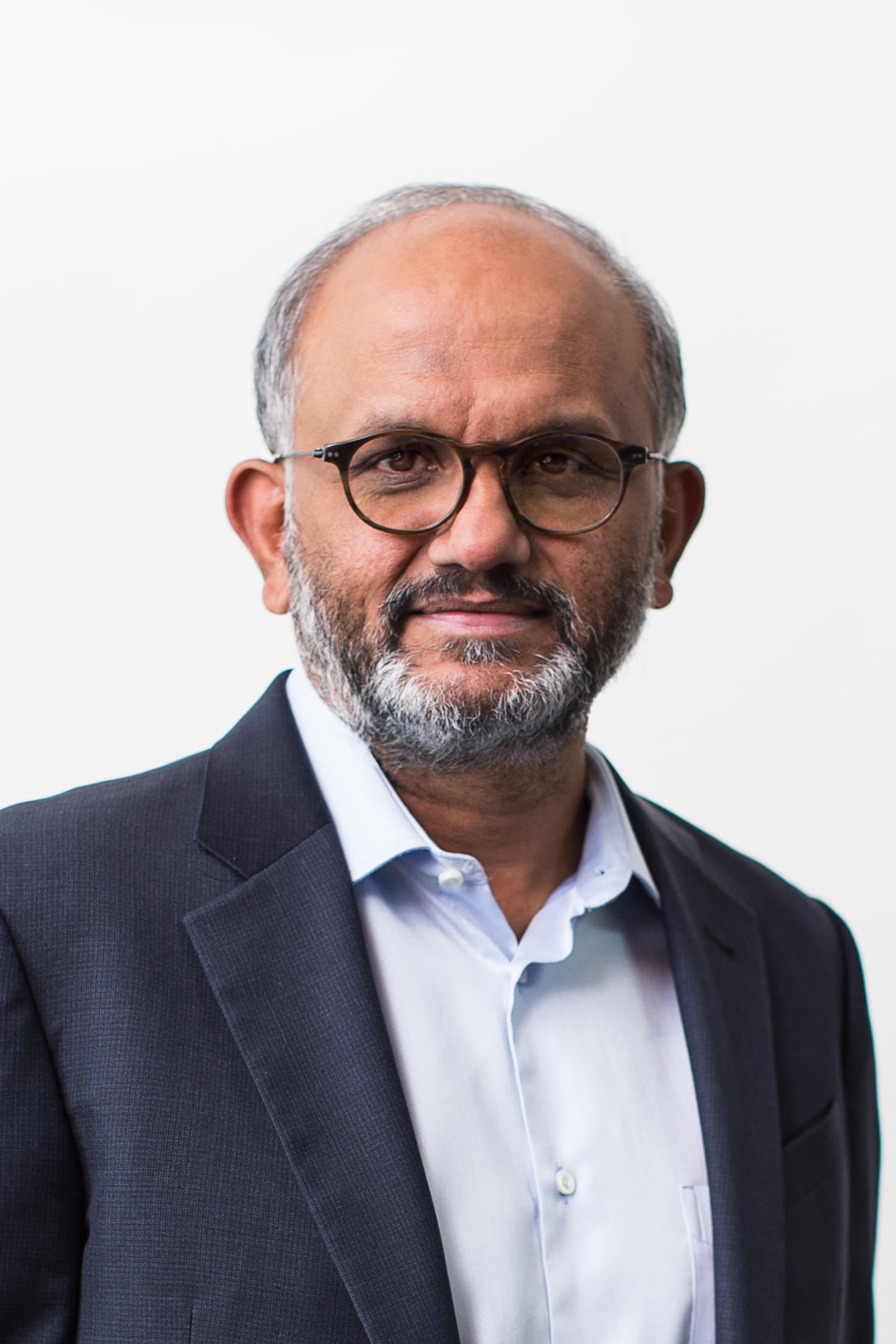


Rohit Prasad: the man who built Alexa now runs the world's most famous robots
The engineer from Ranchi who built Amazon's Alexa is now CEO of Boston Dynamics, the world's most famous robot-maker — a bet that the next chapter of AI happens in the physical world, and that one of the diaspora's own should lead it.
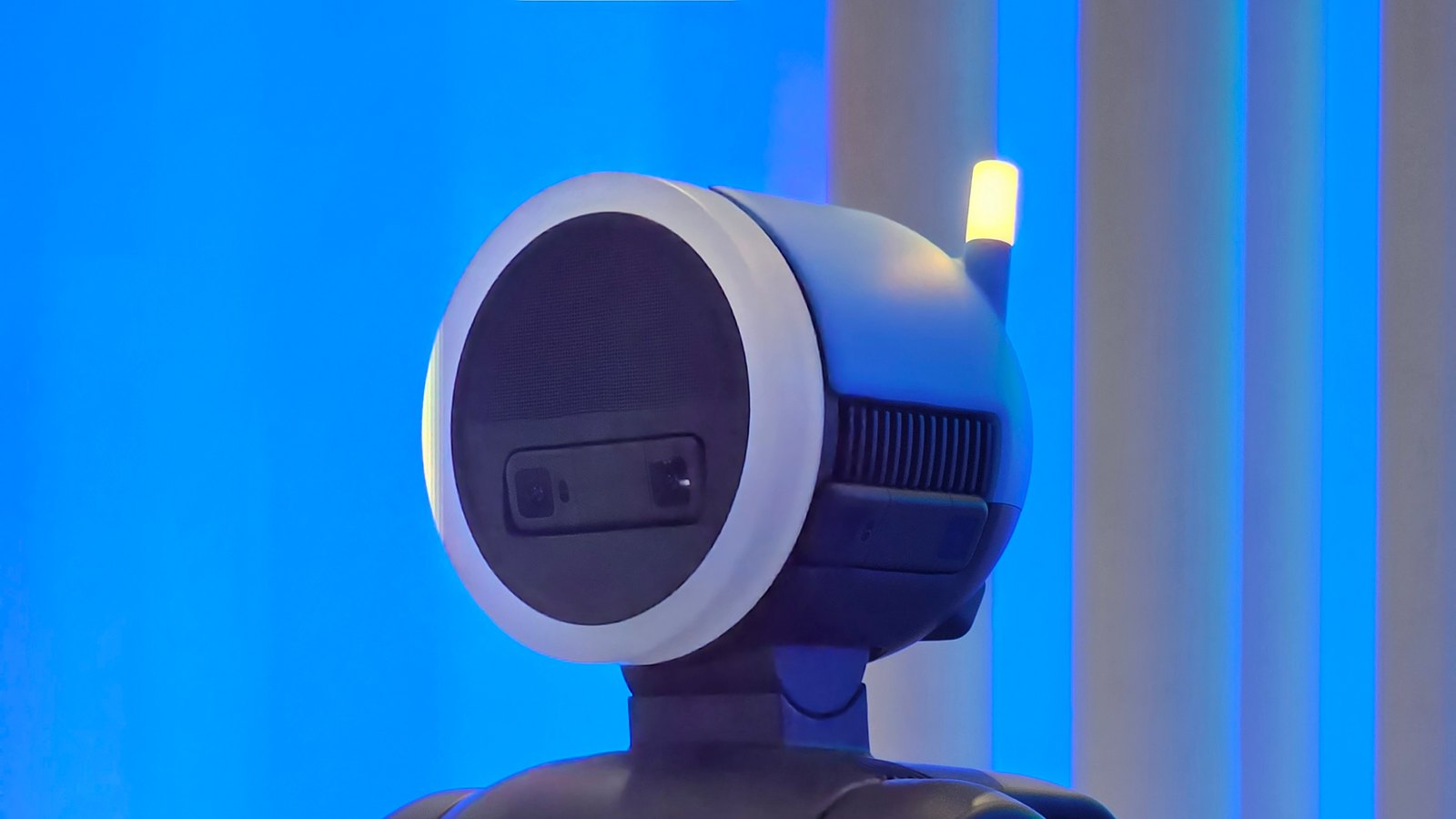
On 7 October, a boy from Ranchi took charge of the company whose robots the world knows by sight. Boston Dynamics — maker of the backflipping humanoid Atlas and the dog-shaped Spot, the machines that have logged hundreds of millions of views doing parkour, opening doors and dancing to the Contours — named Rohit Prasad its chief executive. He arrives from Amazon, where for twelve years he was the scientist behind Alexa, the voice that answers from tens of millions of kitchen counters. The appointment, reported by Bloomberg and the Boston Globe, says a good deal about where artificial intelligence is heading next — and about who is being trusted to take it there.
For most of the past decade the AI story has lived inside a screen: chatbots, image generators, the voice in a speaker. Boston Dynamics is betting the next chapter happens in the physical world, and it has hired a man who spent his career teaching machines to understand us to now help them move among us. The company, controlled by South Korea's Hyundai Motor Group and based in Waltham, Massachusetts, said Prasad would accelerate its "physical AI" strategy — the marriage of robotics with the kind of large-model intelligence that has upended software — with the aim of commercialising intelligent machines at scale. He is expected to join the board.
From the Alexa lab to the robot that does backflips
Prasad is not a surprise hire so much as a telling one. He spent twelve years at Amazon, rising to senior vice-president and head scientist for Alexa, and latterly leading the company's artificial general intelligence effort — the push to build systems that reason across tasks rather than answer narrow commands. Before Amazon recruited him in 2013, he had spent fourteen years at Raytheon BBN Technologies in Cambridge, the storied research shop, working on speech recognition and machine learning when both were unfashionable and hard. He left Amazon late in 2025, when chief executive Andy Jassy announced his departure in a leadership reshuffle.
What he inherits at Boston Dynamics is a brand far larger than its revenues. Founded out of the Massachusetts Institute of Technology, the company has spent years as the internet's favourite robotics act — the viral clips of Atlas vaulting over obstacles, of Spot trotting through a construction site — while the harder question of how to actually sell robots at a profit went largely unanswered. Prasad takes over from Robert Playter, the long-serving chief executive who left the post in February, and his mandate is plainly commercial: turn the spectacle into a business, and fold in the AI that has arrived since the clips first went viral.
Ranchi to Waltham
The arc that ends in a corner office in Waltham begins in Ranchi, the Jharkhand city better known for cricketers than roboticists. Prasad attended DAV Public School there and took his engineering degree in electronics and communication at the Birla Institute of Technology, Mesra, graduating in 1997. He then did what a particular generation of ambitious Indian engineers did: he flew to the American Midwest for a master's, in his case in electrical engineering at the Illinois Institute of Technology, drawn by a professor's work on how humans and machines might speak to each other. Much later, in 2008, he added an MBA from MIT's Sloan School.
It is a route worn smooth by now — the small-city school, the Indian engineering college, the American graduate programme, the slow climb through a research lab into the executive floor. The particulars are specific to him; the shape is shared by a cohort that has come, over twenty years, to run a startling share of the industry that defines the age.
The corner offices the diaspora now holds
Prasad joins a roster that has stopped being remarkable only because it has become so long. Satya Nadella runs Microsoft; Sundar Pichai runs Alphabet. In the past year alone, Diaspora Dreams has reported on the transition at Adobe, on Bhavesh "Bob" Patel taking the helm at Sempra Infrastructure, and on six Indian-origin leaders named to a global tech-diplomacy list. The pattern is no longer that Indians advise the people who run American technology. Increasingly, they are the people who run it.
What makes the Boston Dynamics appointment worth pausing on is the frontier it sits at. Software leadership by the diaspora is by now established fact. Robotics — the greasy, mechanical, physical business of machines that lift and walk and grip — is a different and harder thing, and until recently a separate world from the AI labs. Prasad's hire is a wager that those worlds are converging, and that the person to run the convergence is someone who taught a disembodied voice to understand a sentence, and now has to teach a body to understand a room.
The harder problem
None of this guarantees success. Boston Dynamics has been a research marvel and a commercial puzzle for its entire life; viral fame has never been the same thing as a market. Spot sells to industrial inspection and the odd police department, to predictable controversy. Atlas remains, for now, a demonstration more than a product. The "physical AI" pitch — robots that learn from large models the way chatbots do, rather than being painstakingly programmed for each task — is the industry's favourite phrase of the moment, and favourite phrases have a way of outrunning what the machines can actually do.
But the direction of travel is clear enough, and the big technology companies are all now racing toward machines that act in the world rather than merely talk about it. That Hyundai reached for a man from Ranchi who built one of the most widely used AI products on earth — and that this barely counts as surprising — is itself the story. The diaspora's engineers spent a generation building the voice. The job now is to build the body. One of their own has been handed the task.
Sources: Bloomberg and the Boston Globe on the 7 October 2026 appointment and its terms; The Robot Report and Manufacturing Dive on Boston Dynamics' physical-AI mandate and the Playter succession; Business Today, The Better India and Illinois Tech on Prasad's early life in Ranchi, his degrees from BIT Mesra, the Illinois Institute of Technology and MIT Sloan, and his years at Raytheon BBN and Amazon. Photo credit below.
Related from Business
Uday Ruddarraju: OpenAI hands its data centres to a Hyderabad engineer
The $127 billion homecoming: how NRIs became India's financial backstop
In the AI age, an Indian Africa specialist bets on human expertise