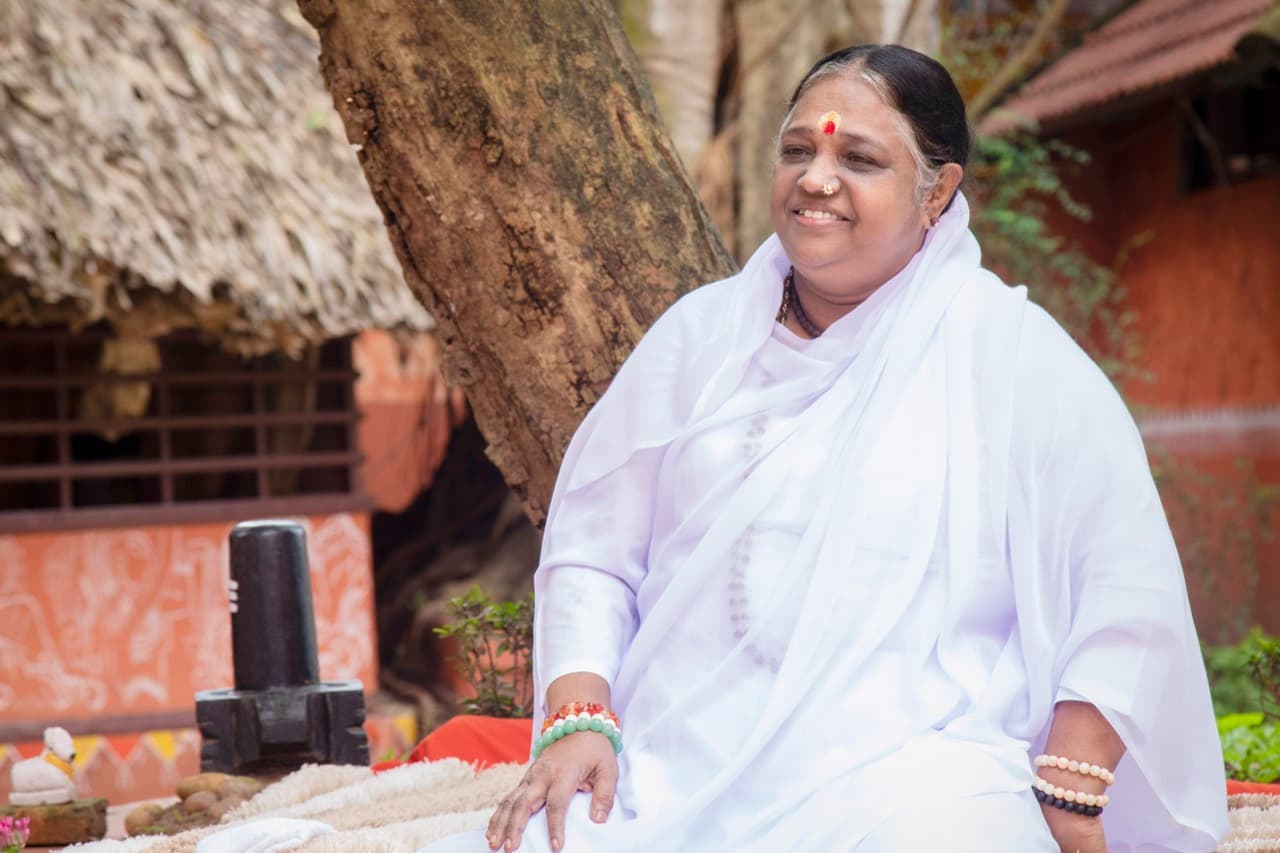


Baba Ramdev: the yoga guru who built an empire, and the controversies that trail it
Part 6 of The Living Gurus. He put a nation on its mat before breakfast and turned pranayama into a mass movement, then parlayed the fame into Patanjali, a consumer-goods giant. Baba Ramdev democratised yoga for hundreds of millions - and became one of India's most divisive figures. The diaspora has watched both halves.
For a stretch of the 2000s, the most-watched man in India was a saffron-robed yogi doing breathing exercises at dawn. Every morning, on the devotional channel Aastha TV, Baba Ramdev led a two-hour session of pranayama - kapalbhati, anulom vilom, the rapid bellows-breathing that became his signature - and, by some estimates, more than 25 million people watched on an average morning. He did for yoga in India what no ashram had managed: he made it a mass, free, television habit, practised by grandmothers in small towns who would never have set foot in a studio.
Ramdev was born on 25 December 1965 in Ali Saidpur, a village in the Mahendragarh district of Haryana. As a child he suffered partial paralysis, which - in the story he tells - he cured through yoga, an origin myth perfectly matched to the message he would later sell. He studied Sanskrit, Ayurveda and yoga at Gurukul Kangri in Haridwar, took monastic vows under his guru Swami Shraddhanand, and became Swami Ramdev. In the early 1990s he began running free yoga camps around Haridwar, open to anyone; the television deal in 2003 turned a regional teacher into a national phenomenon.
From breath to business
Ramdev never confined himself to the mat. In 1995 he co-founded the Divya Yoga Mandir Trust with his close associate Acharya Balkrishna, and in 2006 the two launched Patanjali Ayurved, a consumer-goods company built on Ayurvedic and "swadeshi" (indigenous) branding. Within a decade Patanjali had grown into one of India's fastest-rising FMCG firms, selling everything from toothpaste and ghee to biscuits and shampoo, explicitly positioned against the multinational giants - Unilever, Colgate, Nestlé - as the Indian, natural alternative. Ramdev became not just a guru but a businessman-celebrity, his face on packaging in millions of Indian kitchens.
For the diaspora, this was a familiar and complicated figure. Aastha TV and its successors beamed him into NRI living rooms from Toronto to Dubai; his camps drew overseas Indians home; and Patanjali products began appearing on the shelves of Indian grocery stores abroad. To many in the diaspora he represented a proud, self-reliant India reclaiming its own traditions of health and enterprise from Western corporations - a swadeshi story that plays especially well among Indians who left and want to believe the homeland is rising.
The controversies
But Ramdev's legacy is genuinely contested, and a publication that admires the democratisation of yoga owes its readers the other half of the ledger. He has been a serially controversial figure. In 2020, at the height of the pandemic, Patanjali marketed a product called Coronil as a treatment for COVID-19, a claim that drew official complaints, regulatory scrutiny and a rebuke from India's medical establishment for misleading the public. He has made inflammatory public statements on medicine, sexuality and politics - including remarks widely condemned as homophobic - and his company and foundations have faced a long trail of legal cases and disputes.
His close alignment with Hindu-nationalist politics has sharpened the divide. To supporters, he is a patriot who revived Indian tradition and built an Indian champion; to critics, he is a businessman who wrapped commercial ambition and political partisanship in saffron, and whose claims have sometimes crossed from optimism into misinformation. The diaspora is split along the same line: for every NRI who stocks Patanjali ghee with pride, there is another who winces at the Coronil episode and the political rhetoric.
The political yogi
Ramdev's ambitions were never only commercial. In June 2011, at the height of India's anti-corruption ferment, he staged a mass hunger strike at Delhi's Ramlila Maidan, demanding action against black money and overseas illicit wealth - a cause with obvious resonance for a diaspora forever hearing about money spirited out of India. The protest ended in chaos when police cleared the ground in a midnight crackdown, and Ramdev was filmed fleeing the stage in disguise, an episode his opponents never let him forget. It confirmed him as a political actor, not merely a yoga teacher, and over the following decade his sympathies aligned increasingly with the Hindu-nationalist right.
That political turn is inseparable from the diaspora's ambivalence about him. The same swadeshi pride that makes Patanjali a point of NRI loyalty also ties Ramdev to a partisan project that a large part of the diaspora rejects. He is proof that in modern India the line between guru, businessman and political operator can dissolve entirely - and that a figure can be, at once, a genuine populariser of an ancient practice and a lightning rod for the country's fiercest arguments about medicine, money and faith.
The scrutiny has not eased with time. In 2024, India's Supreme Court took up a case against Patanjali over misleading health advertisements, and Ramdev and Balkrishna were compelled to issue public apologies - a rare humbling for a man accustomed to setting the terms of his own story. For a diaspora that had watched him rise from a village mat to a corporate boardroom, it was a reminder that the empire, for all its scale, still answered to a courtroom.
What he actually changed
Strip away the empire and the controversy, and one achievement remains undeniable: Ramdev, more than any single figure, made yoga an ordinary, daily, cost-free practice for hundreds of millions of Indians who would otherwise never have encountered it. Where an earlier guru like Maharishi Mahesh Yogi had exported meditation to a Western elite, Ramdev worked the other direction, at home and at scale. Before him, English-language "yoga" abroad was often disconnected from the pranayama-and-discipline tradition he broadcast; after him, kapalbhati was something an entire subcontinent, and its diaspora, could do from memory.
That is the paradox the diaspora holds when it thinks about him. He is at once the man who gave a global Indian population its morning breathing routine and the man whose company sold a fake COVID cure. Both are true. The Living Gurus series does not exist to canonise; it exists to understand the figures who shaped the diaspora's spiritual life, and few shaped it more, or more controversially, than the yogi from Haryana who turned a breath into a business, and a business into a battleground.
Continue the series · The Living Gurus
Related from Yoga & Spiritualism
Siddheshwar Brahmrishi Gurudev: the 'Siddhguru' who built a following online
Sister Shivani: the engineer who became the diaspora's calm voice
Swami Chidanand Saraswati: the guru who made the Ganga a global cause