


Rahul Mishra's 'Devi' carves India's goddesses into Paris couture
At Paris Haute Couture Week, Rahul Mishra's 'Devi: The Eternal Muse' turned the apsaras of Ajanta and a 12th-century Karnataka stone dancer into couture - with Cardi B and Isha Ambani front row, and a Tanishq diamond first.
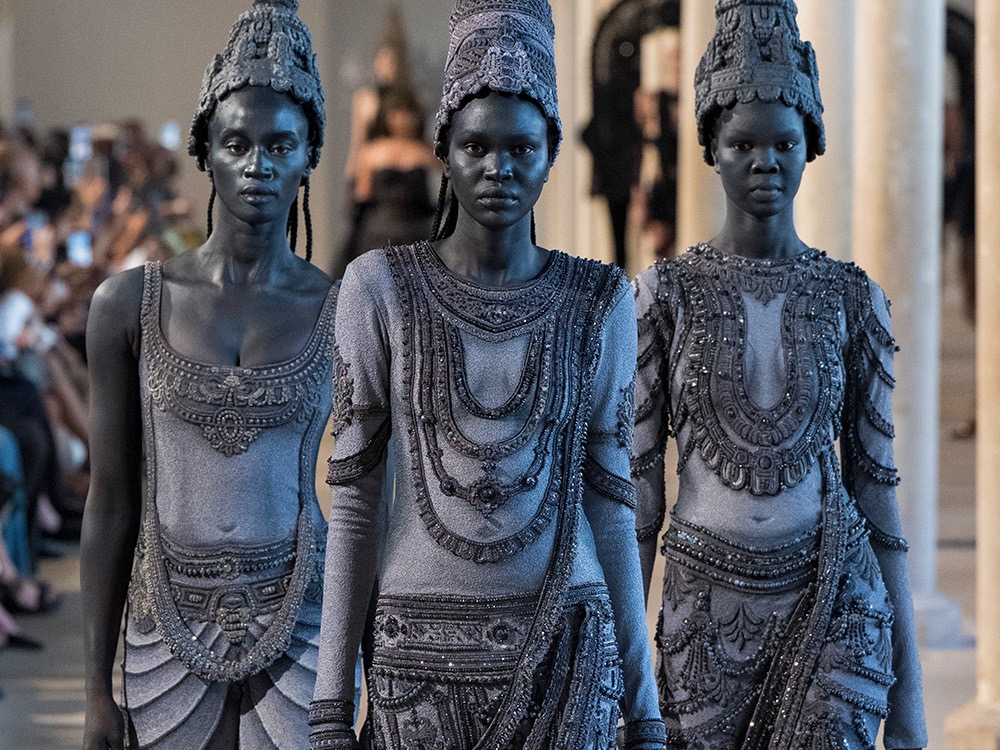
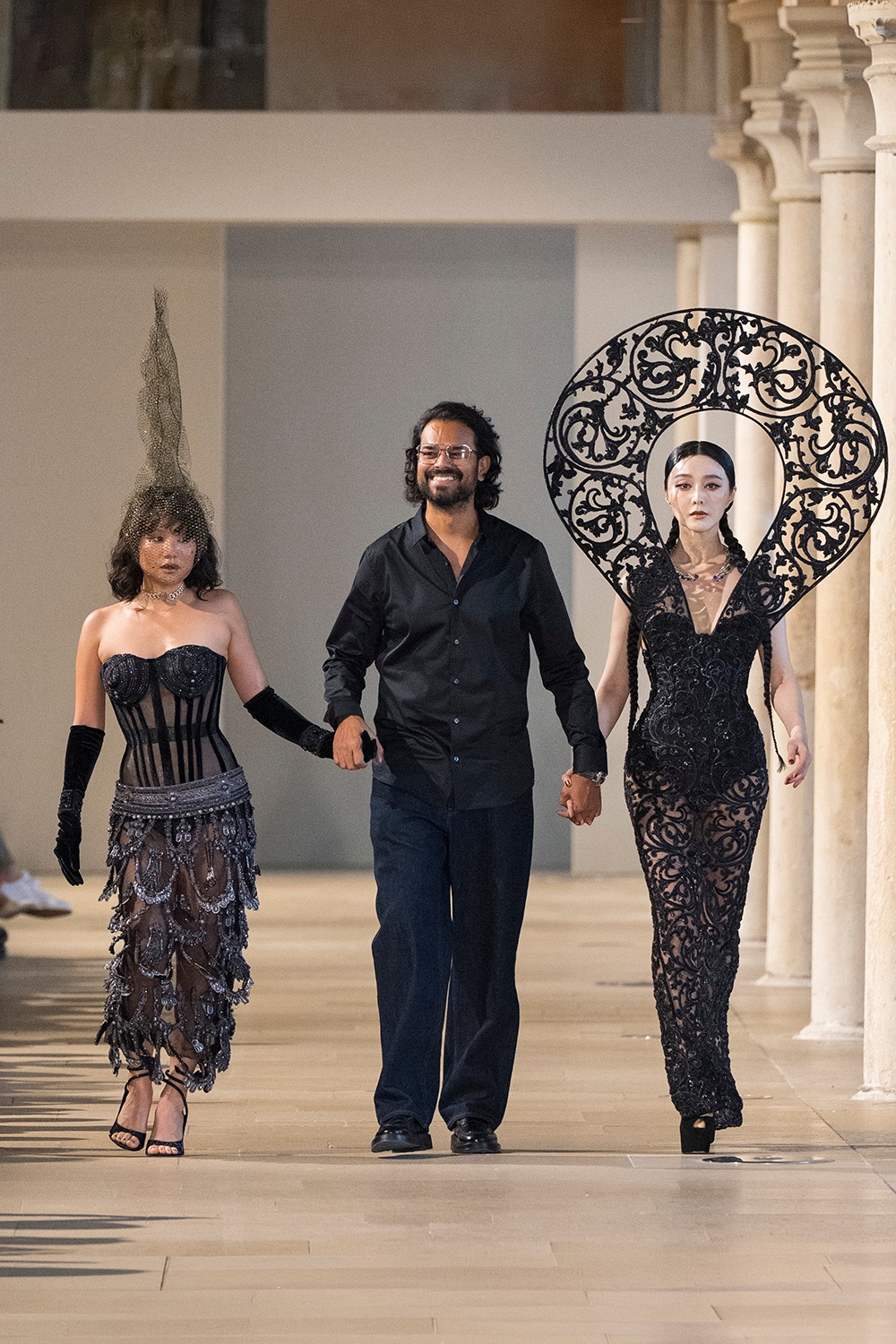
On Monday evening in Paris, inside the vaulted stone nave of the Collège des Bernardins, models walked as though they had stepped down from a temple wall. The occasion was "Devi: The Eternal Muse", Rahul Mishra's autumn-winter 2026-27 haute couture collection, shown on 7 July on the official Paris calendar - 16 looks engineered to read as living sculpture rather than clothing.
Mishra has called it "the most India-inspired collection" he has ever made. That is a strong claim from a designer whose entire Paris career has been built on Indian craft, and the sourcing backs it up. The collection's vocabulary came from three places, all of them stone: the painted caves of Ajanta and Ellora in Maharashtra, a twelfth-century stone dancer from Karnataka, and the murals and architecture of the Tarakeshwara Temple, according to Business Today. "It's almost like time travel," Mishra said of working from the Ajanta paintings, which date back as far as the second century BCE. His show notes framed the collection around the figure of the devi herself - an eternal muse who, as the notes put it, has travelled across centuries and keeps returning to the artist's imagination, from the apsaras and celestial attendants carved into temple stone to the woman commissioning a gown in 2026.
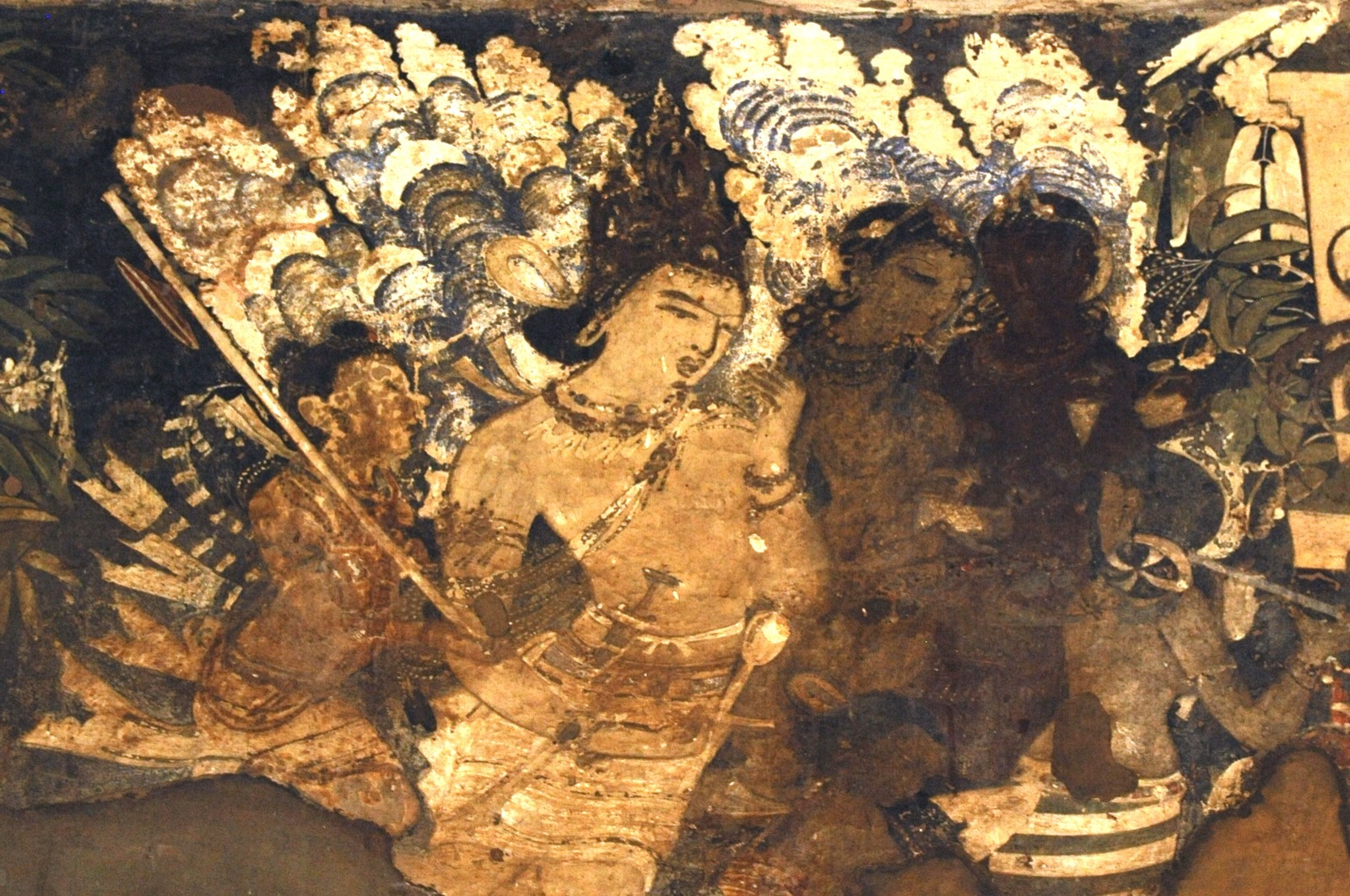
Making cloth behave like granite
The technical problem Devi set itself was an odd one: how do you make featherweight couture look like it weighs several tonnes? The answer, per Business Today's account of the show, was density - metallic zardozi, dabka work, pearls, crystals and bugle beads embroidered so closely that the surface of a gown took on the texture of a weathered cave wall. Skin-toned bodysuits blurred the line between fabric and body, so that a model appeared to be emerging from her own garment the way a relief figure emerges from rock. The palette held the same discipline: stone grey, jet black, stark ivory, beige and antique gold.
The headpieces carried the conceit further. Mishra commissioned ceremonial crowns from Sumant Kumar, a murtikar - a traditional idol-maker - working from the crown carvings on temple deities, alongside sculptural millinery by Stephen Jones, the British milliner who has worked with practically every major Paris house. Even the soundtrack was archaeological: composer Jayant Luthra recorded traditional instruments inside the Ajanta caves themselves, so the show's music carried the acoustics of the rock it was honouring.
The front row, and a diamond first
The show pulled a front row that said something about where Indian couture now sits. Cardi B attended in a custom Rahul Mishra ivory look, continuing the rapper's run of couture-week appearances in the designer's work. Isha Ambani sat beside her in a sculpted grey custom creation.
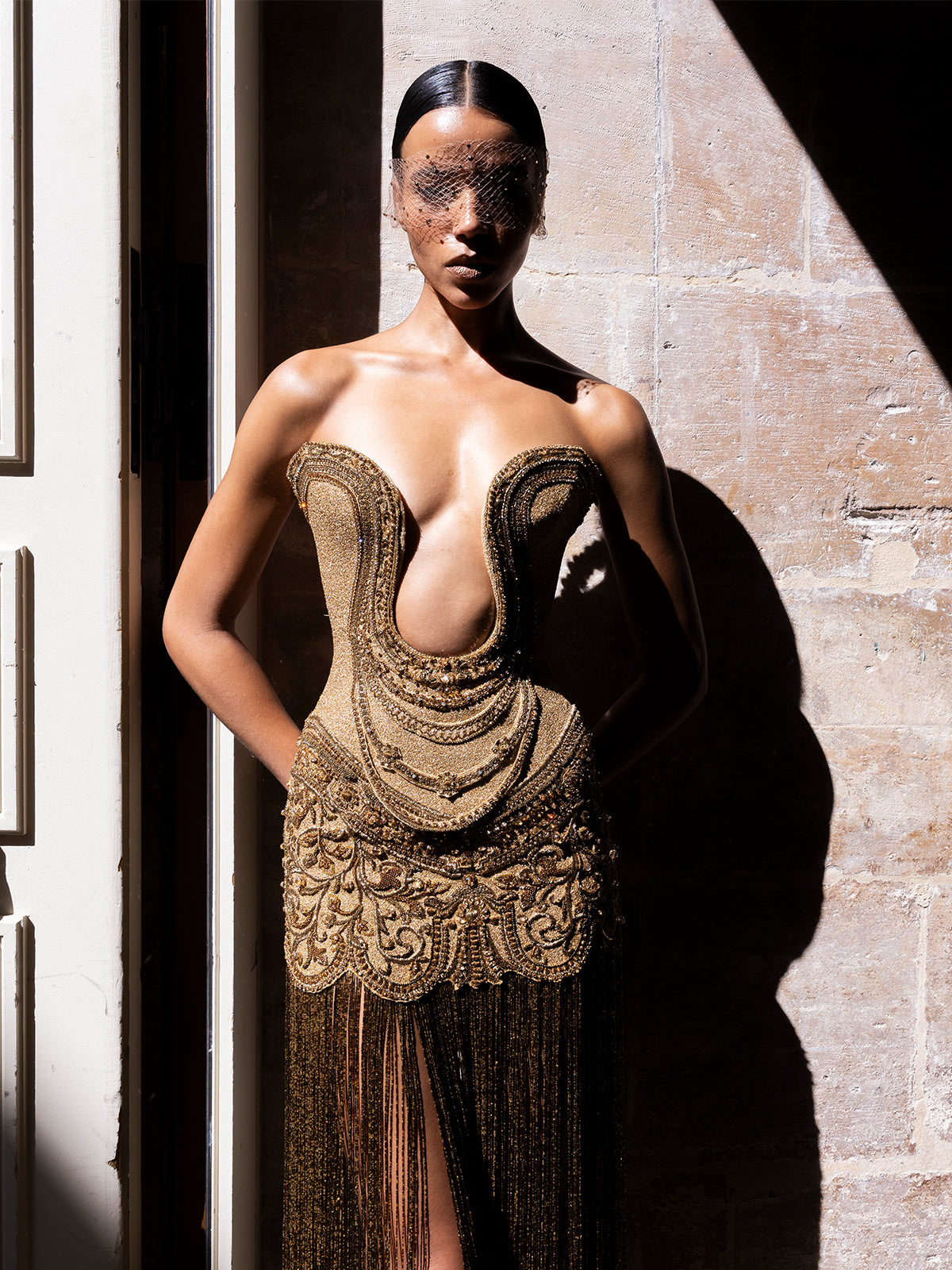
The commercial news sat in the vitrines: Mishra showed the collection alongside high jewellery co-designed with Tanishq, the Tata-owned jewellery house - the first collaboration of its kind between an Indian jeweller and an Indian couturier on the Paris couture stage. Sculptural diamond necklaces echoed the architectural lines of the garments. For two of India's most globally ambitious luxury names to launch that partnership in Paris, rather than in Mumbai or Delhi, is its own statement about where they believe the customer is.
From Malhausi to the Marais
Mishra's biography remains the sharpest version of the story Indian fashion tells about itself. He grew up in Malhausi, a village about 85 kilometres from Kanpur in Uttar Pradesh, studied physics before design school, and in 2014 became the first Indian designer to win the International Woolmark Prize, taking the award at Milan Fashion Week with The Lotus Effect, a capsule of Chanderi fabric handwoven with merino wool and finished with woollen zardozi by craftsmen in Kolkata.
In January 2020 the Fédération de la Haute Couture et de la Mode invited him to show on the official haute couture calendar - the first Indian designer ever asked. Six years on, that invitation looks less like a door opening for one man and more like the start of a procession. His practice runs on what he calls slow fashion: hand-weaving and hand-embroidery that gives work to more than 1,000 artisans across Indian villages, many of them in the embroidery belts of West Bengal and Uttar Pradesh. Every Devi gown that looked like carved basalt was, in fact, months of that labour - the show's programme credited the artisan communities by name, a practice still rare enough in Paris to be worth noting.
The week India stopped being a guest
Devi landed in the middle of the most Indian couture week Paris has ever staged. Four days before Mishra's show, Manish Malhotra made his haute couture debut - only the fourth Indian designer invited onto the official calendar, following Mishra in 2020, Vaishali Shadangule in 2021 (the first Indian woman) and Gaurav Gupta in 2023. Malhotra arrived by a different road entirely: three decades dressing Bollywood, a ready-to-wear line launched in 2005, a Met Gala debut in 2025, and a clientele that already spans the Gulf, London and New Jersey wedding circuits. That two such different Indian careers now converge on the same Paris calendar is the point. One Indian name on the schedule was a novelty. Four is a bloc.
For the diaspora, this is not an abstract milestone. The imagery Mishra sent down the runway - apsaras, temple crowns, the goddess as sculpture - is the same visual language that anchors the diaspora's own temples, from Batu Caves to Neasden, and it is now being priced as global luxury rather than exoticism. It is the fashion-world echo of what this magazine tracked at this year's Grammys, where diaspora musicians stopped being a category and started being the mainstream. The couture client buying a Devi gown in Paris or New York is, increasingly, a diaspora client; the zardozi she wears was stitched in the villages her grandparents may have left.
There is also a harder economic point underneath the romance. Couture at this level is one of the few luxury businesses where the value genuinely cannot leave India - the embroidery hands do not exist anywhere else. Mishra has spent a decade arguing that this is India's real luxury export, worth more than any label licensing deal. On Monday night, with a fifth-century painter's apsara walking through a thirteenth-century French monastery in front of Cardi B, the argument looked settled.