

The Hill Country Tamils: two centuries on Sri Lanka's tea, and a citizenship that came late
Brought from Tamil Nadu to pick Ceylon's tea two centuries ago, Sri Lanka's Hill Country Tamils built the island's greatest export — then spent more than fifty years stateless, citizens of no country at all. How one of the diaspora's most wronged communities finally won a home.
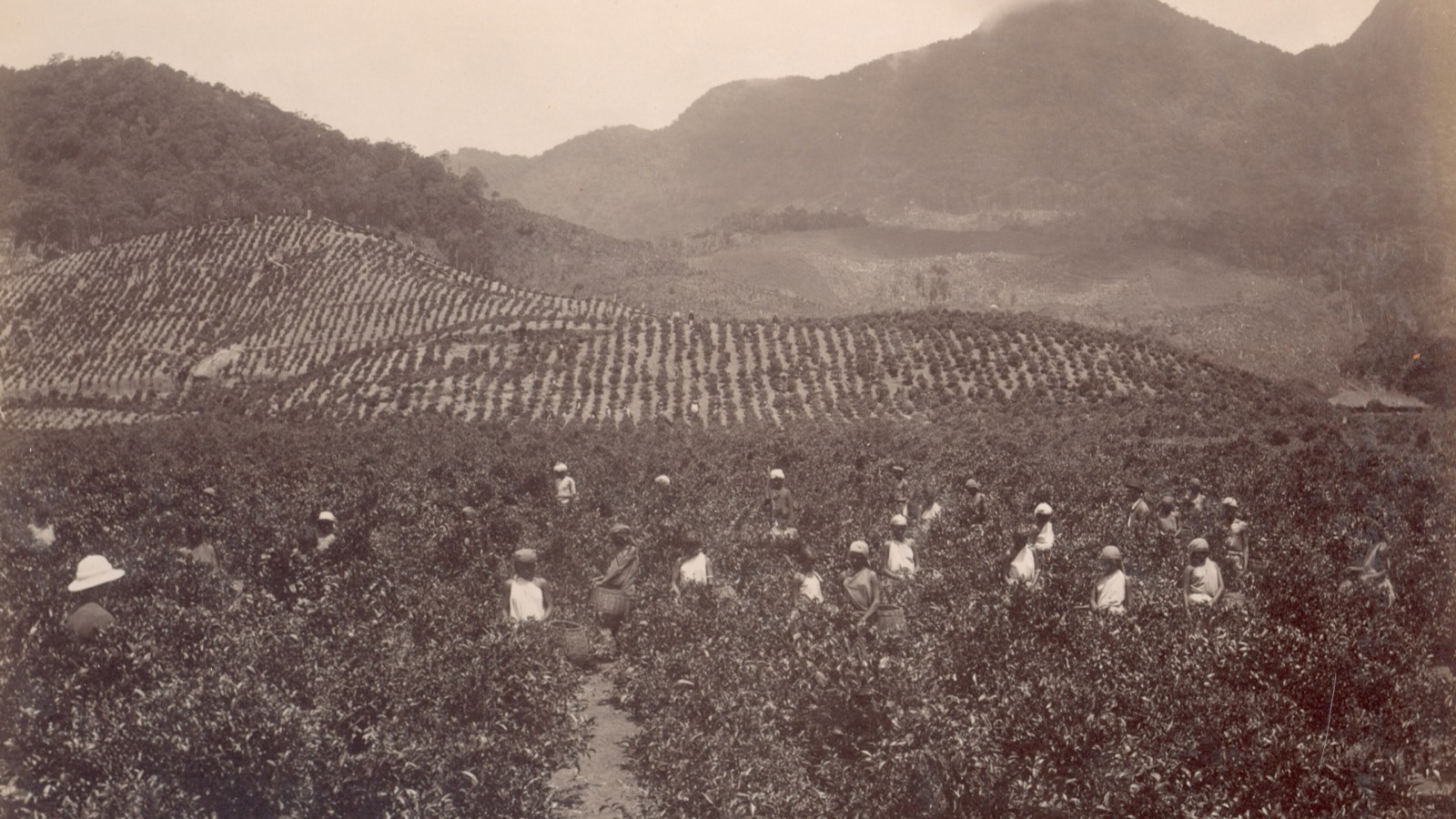
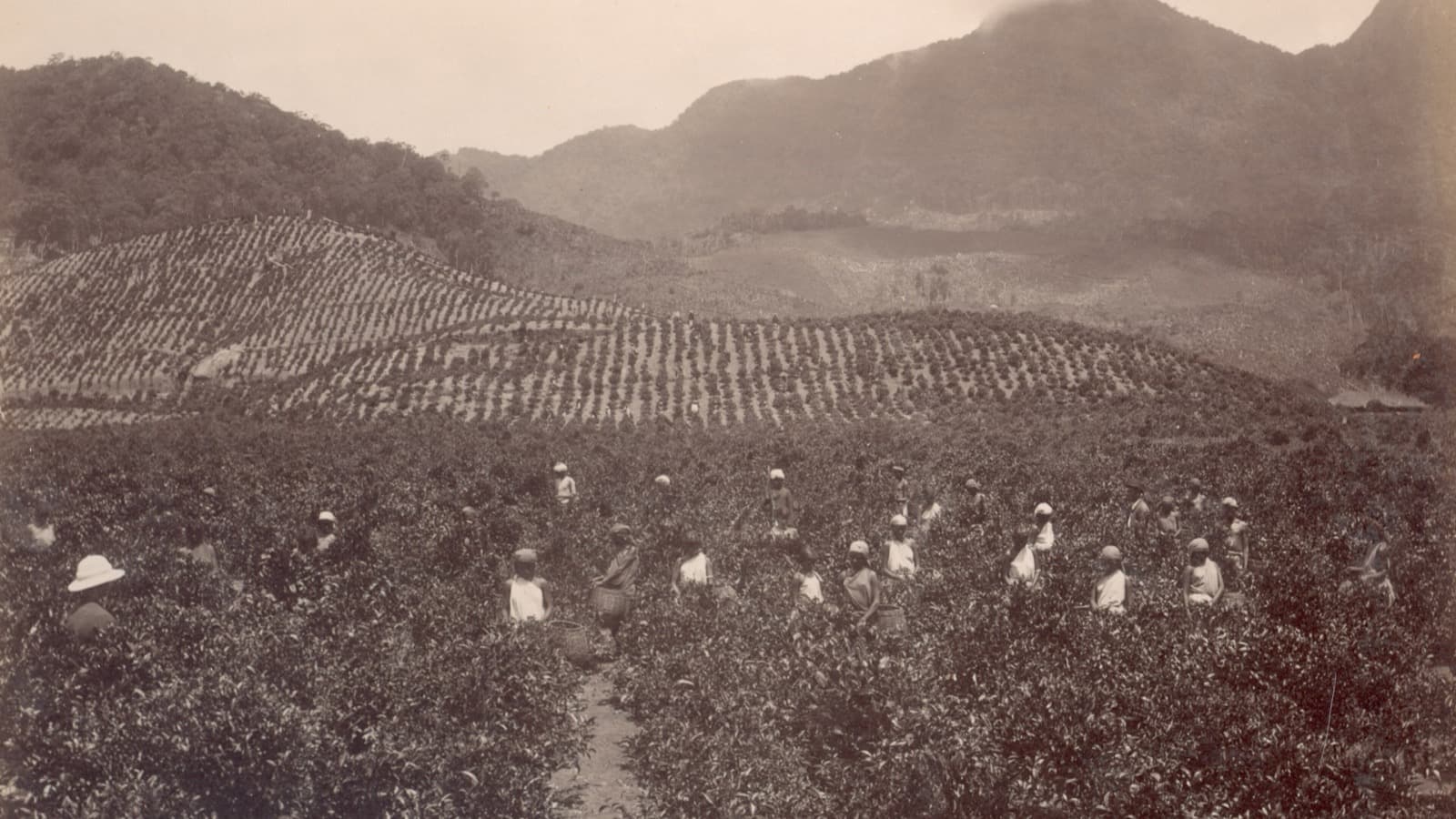
The tea terraces of Sri Lanka's central highlands are among the most photographed landscapes in Asia — rolling green staircases above Nuwara Eliya and Hatton, plucked leaf by leaf by women in bright saris. The world drinks what they pick. Almost no one abroad knows who they are. They are the Hill Country Tamils — also called the Up-Country or Malaiyaha ("of the hills") Tamils — the descendants of labourers brought from South India two centuries ago to build Ceylon's tea, and for most of a century afterwards, citizens of nowhere at all.
In 2024 the community marked two hundred years of that labour. It is not, for them, an unambiguous anniversary.
The kangani and the leaf
It began with coffee. From the 1820s, British planters in the Ceylon highlands recruited workers from the poorest districts of what is now Tamil Nadu, through the kangani system — a labour broker who was part-recruiter, part-overseer, and often part-debtholder. When a leaf blight destroyed the coffee estates in the 1870s, the planters switched to tea, and the Tamil workforce switched with it. Whole families lived and died on the estates in cramped "line rooms," barrack housing that in many places has barely changed since. They were the engine of the colonial economy and, by design, its most powerless part — migrant labourers tied to the plantation by debt and distance.
Citizens of nowhere
Then independence turned them into a people without a country. Ceylon's Citizenship Act of 1948 granted citizenship only to those who could prove they had been born on the island before 1948 and that their father or grandfather had been born there too — an almost impossible bar for a community whose paperwork was thin and whose grandparents lay buried in India. At a stroke, the law recognised only about 17 per cent of the Indian-origin Tamils. The rest — close to a million people who had known no other home — were rendered stateless, and stripped of the vote that had briefly made them a political force.
The vote, lost and regained
Statelessness was not only a matter of documents; it was a matter of power. Before independence the estate Tamils were a political bloc — they could vote, and in the hill districts their numbers mattered. The citizenship law of 1948 and the franchise act that followed in 1949 stripped almost all of them of the ballot at once, and with it their leverage in a young democracy. Rebuilding that leverage took a generation and a formidable leader: Savumiamoorthy Thondaman, who turned the Ceylon Workers' Congress — a trade union rooted in the tea estates — into a political force strong enough to sit inside governments and bargain from within. It was through decades of such pressure, union and ballot together, that citizenship was slowly clawed back.
The pact that tore families apart
The two governments then tried to bargain the problem away. Under the Sirimavo–Shastri Pact of 1964, signed by the Sri Lankan and Indian prime ministers, more than 525,000 Malaiyaha Tamils were designated for "repatriation" to India, with a smaller number promised Sri Lankan citizenship. On paper it was tidy. In practice it was a catastrophe: people who had been in Ceylon for three or four generations were shipped to a Tamil Nadu they had never seen, where they were strangers; families were split down the middle, some members "returned," others staying, parents parted from children. It was less a repatriation than an uprooting.
Where "repatriation" led
Many of those marked for India did go. They were resettled across Tamil Nadu — a good number on the tea slopes of the Nilgiris, where the familiar work at least eased the strangeness — rebuilding, once again, the only life they knew, this time as returnees no one had asked to return. But large numbers never left at all: their paperwork stalled, the quotas lapsed, the promised citizenships on either side never arrived. That is why, as late as the turn of the millennium, a substantial residue of Hill Country Tamils were still stateless in the land of their birth — and why the 2003 law, when it finally came, felt less like a gift than a debt repaid.
Not the Tamils you have heard of
It is worth being clear about who they are not. The Hill Country Tamils are a distinct community from the Sri Lankan Tamils of the north and east — the Jaffna Tamils whose long war with the state made global headlines. The Malaiyaha Tamils are Indian-origin, concentrated in the central hills, poorer and historically less organised, and they were often caught in between: subjects of the citizenship laws, and at times victims of the same anti-Tamil violence, without being party to the northern conflict. Theirs is a separate and quieter tragedy.
A home, at last
Statelessness for the Hill Country Tamils lasted, astonishingly, more than half a century. Only through a sequence of laws — culminating in the Grant of Citizenship to Persons of Indian Origin Act of 2003 — did Sri Lanka finally extend citizenship to the remaining stateless, ending one of the longest episodes of mass statelessness anywhere in the modern world. The United Nations refugee agency called it a model for resolving such cases.
Still on the estates
Citizenship did not bring prosperity. The Hill Country Tamils remain among Sri Lanka's poorest people, still concentrated on the tea estates, still often in the old line rooms, and still fighting over wages — the campaign for a living daily wage for tea pluckers has been one of the island's most stubborn labour disputes of recent years. The women who pick the leaf that earns Sri Lanka much of its foreign exchange are frequently paid a pittance for it.
Two centuries on, that is the paradox the bicentenary exposed. The Malaiyaha Tamils built a nation's signature export and were made, in return, foreigners in the only country they knew — handed citizenship half a century late, and dignity later still. They are the Indian diaspora's most patient community, and among its most wronged. Their story rhymes with another forgotten neighbourhood diaspora next door, in the Indians of Burma.
Related from Heritage
Kundanlal Gupta: the Indian who saved Jewish families from the Nazis
The Lunatic Line: the Indians who built East Africa's railway
‘Girmitiyalogy’: an online symposium on India's indentured migration (10–12 September 2026)