

The Indians who became Israelis: the Bene Israel, Cochin and Baghdadi Jews
Around 85,000 Jews of Indian origin live in Israel — the Bene Israel of Maharashtra, the Cochin Jews of Kerala, the Baghdadi Jews of Bombay and Calcutta. This is the story of a diaspora that ran in reverse.
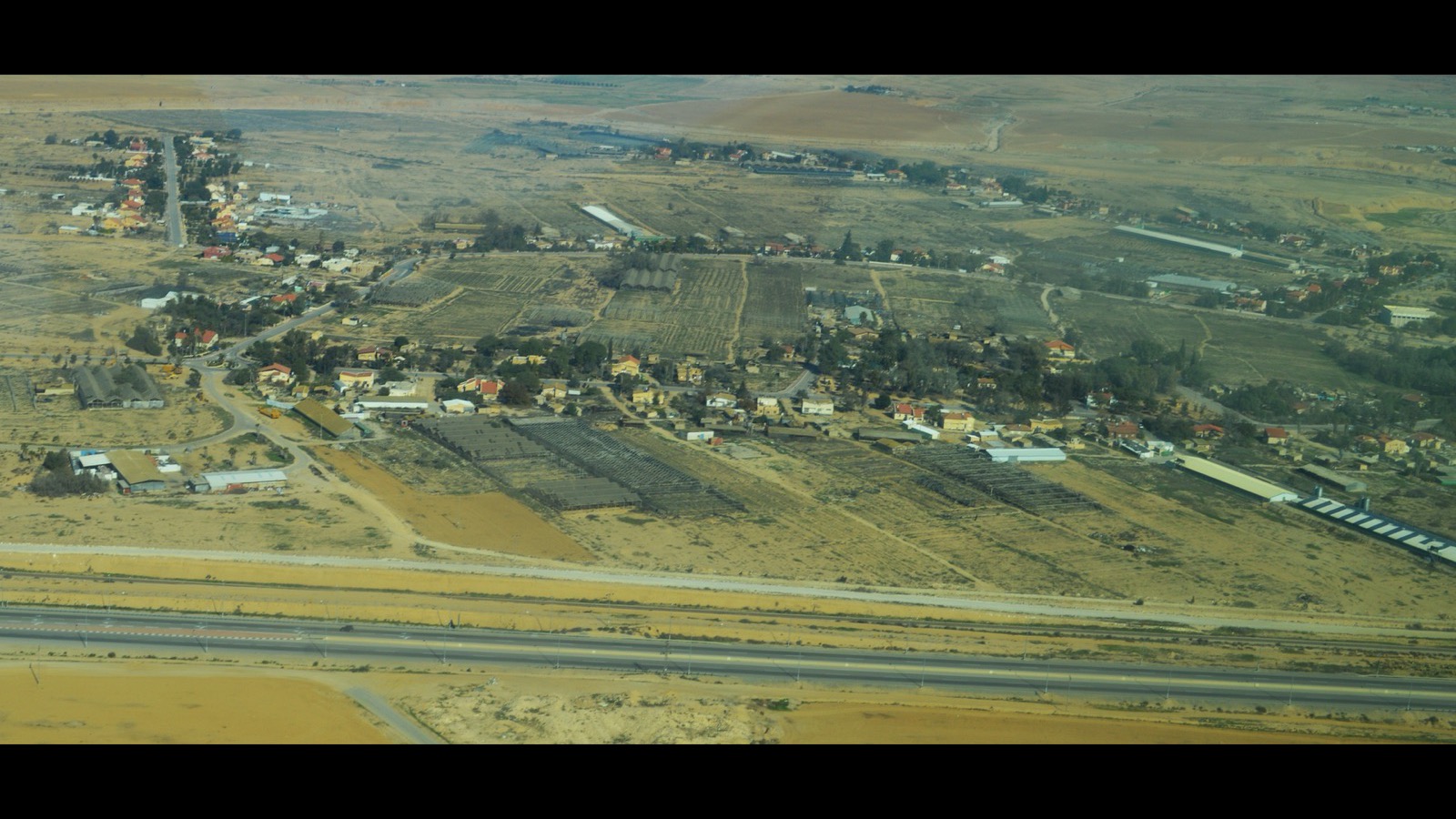
In the Negev desert, a farming village called Nevatim keeps a Kerala accent. Its founders were Cochin Jews — Malayalam-speaking Jews from India's spice coast — who arrived in the 1950s and rebuilt their world in the sand: the synagogue, the recipes, the Judeo-Malayalam prayers. They are one strand of a remarkable community. Around 85,000 Jews of Indian origin live in Israel today, more than one per cent of the country's population — a diaspora that ran, uniquely, in reverse.
For most of the Indian diaspora the direction of travel is outward from India. The Indian Jews went the other way. After two thousand years on the subcontinent, they "went up" — aliyah, the Hebrew word for migration to Israel — and took their Marathi and their Malayalam with them.
Three communities, three Indias
They were never one people. India's Jews were three distinct communities that barely overlapped.
The Bene Israel — "Children of Israel" — are the largest. Their own tradition holds that their ancestors were shipwrecked off the Konkan coast, south of Bombay, some two millennia ago. Cut off from the wider Jewish world, they forgot much of the religion but kept its spine: the Sabbath, circumcision, the Shema prayer. Their Hindu neighbours knew them as the Shanwar Telis — the "Saturday oil-pressers," because they would not work their oil presses on the Jewish sabbath. Over generations they built synagogues across Maharashtra and spoke a Judeo-Marathi of their own.
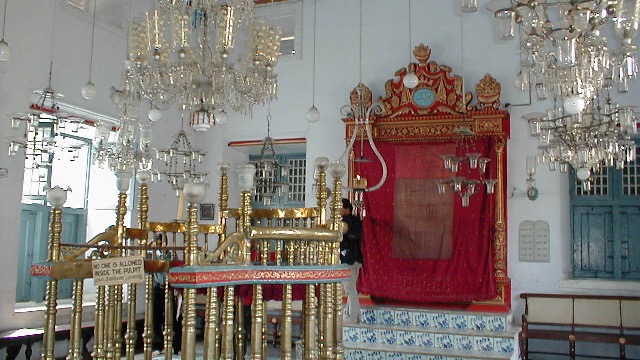
The Cochin Jews of Kerala trace an even older lineage, to the spice ports of the Malabar coast. Their Paradesi Synagogue in Mattancherry, built in 1568, is the oldest active synagogue in the Commonwealth. They spoke Judeo-Malayalam and lived alongside Kerala's traders for centuries.
The Baghdadi Jews came last and richest — Arabic-speaking merchant families who settled in Bombay and Calcutta from the eighteenth century. The greatest of them, the Sassoons, grew so wealthy in cotton and trade that they were called the Rothschilds of the East, and left behind Bombay's grand Magen David and Keneseth Eliyahoo synagogues. (A fourth group, the Bnei Menashe of Manipur and Mizoram, won recognition and began migrating only much more recently.)
Older than memory
The Cochin Jews' antiquity is not only legend. On a set of engraved copper plates still preserved in Kerala, a Hindu ruler of the Malabar coast granted a Jewish leader remembered as Joseph Rabban a bundle of hereditary privileges — honorific titles, the right to collect certain tolls, and a measure of self-rule over the Jews of Cranganore — a grant that scholars place around a thousand years ago. For centuries the Malabar Jews governed their own affairs under the protection of Kerala's kings, trading pepper and cardamom and weaving their story into the coast.
The Bene Israel's return to mainstream Judaism has its own hinge moment. By tradition it was an eighteenth-century teacher remembered as David Rahabi who recognised the Konkan oil-pressers as long-lost kin, tested their faith, and began restoring to them the Judaism their ancestors had half-forgotten — reconnecting a community that had kept the Sabbath for centuries without quite remembering why. When they finally left for Israel, both communities carried these long memories with them into a new and modern state.
The going-up
When Israel was founded in 1948, almost all of them left. Between 1948 and 1952, some 2,300 Bene Israel made the journey; through the 1950s and 60s the trickle became an exodus that all but emptied India's ancient Jewish communities. What is striking is the reason. They did not flee. India, its Jews say with pride, was one of the few places on earth where they had never faced antisemitism — no pogroms, no ghettos, no expulsions. They left not from fear but from faith: the pull of a Jewish state, not the push of a hostile one.
The arrival was not always easy. The Cochin Jews were steered to hardscrabble moshavim — cooperative farming villages — in the Negev: Nevatim, Shahar, Yuval, Mesilat Zion, where they learned to coax crops from the desert. And in the 1960s the Bene Israel had to fight for their standing, when parts of the religious establishment questioned whether they were fully Jewish. After protests and a public campaign, the Israeli parliament affirmed their complete equality. The community had crossed an ocean only to prove itself again; it did, and stayed.
Keeping India in Israel
Two thousand years of India did not evaporate at the border. In Nevatim, the Cochin community runs a heritage centre and still cooks the coconut-rich food of Kerala; its elders pray in a Malayalam-inflected Hebrew. Bene Israel families in Beersheba, Dimona, Ramla, Yeruham and the Katamon neighbourhood of Jerusalem kept their Judeo-Marathi songs and their taste for Maharashtrian spice. Indian weddings, Bollywood evenings and Indian-Jewish associations knit the community together. To be an Indian Jew in Israel is to be doubly rooted — fully Israeli, and unmistakably, proudly, Indian.
A living bridge
That double identity has quietly become an asset. As India and Israel have grown close — in defence, technology and now labour — the 85,000 Indian-origin Israelis are a ready-made bridge: a population that speaks the languages of both countries and carries the memory of Bombay and Cochin into the Knesset, the army and the moshav. They are not the only Indians in Israel; a newer, very different community of caregivers and construction workers has arrived in recent years, whose story we tell in India's caregivers in Israel. But the Jews of India were the first, and theirs is the older claim.
It is, in the end, a diaspora with a singular boast. Of all the Jewish communities scattered by history, the Indian Jews are almost the only one that can say it never once fled its host country in fear — that it left India not because India drove it out, but because a new country called it home.
Related from Heritage
Kundanlal Gupta: the Indian who saved Jewish families from the Nazis
The Lunatic Line: the Indians who built East Africa's railway
‘Girmitiyalogy’: an online symposium on India's indentured migration (10–12 September 2026)