

History remembers the ships. This memoir remembers the woman.
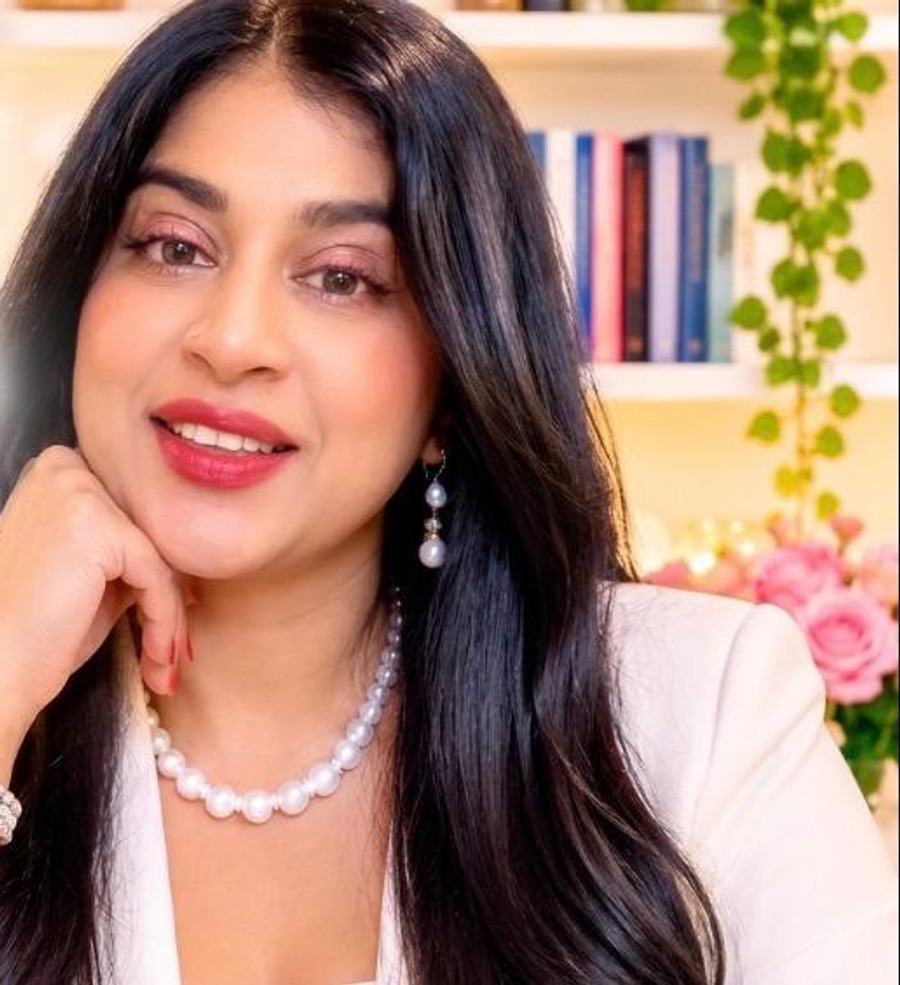
My great-grandmother crossed the kala pani under indenture and became one of Pietermaritzburg's most formidable women. Writing her life —being suggested for use as reference text at Lucknow University, for scholars and students studying Indian Diaspora — was how I turned a name back into a woman.
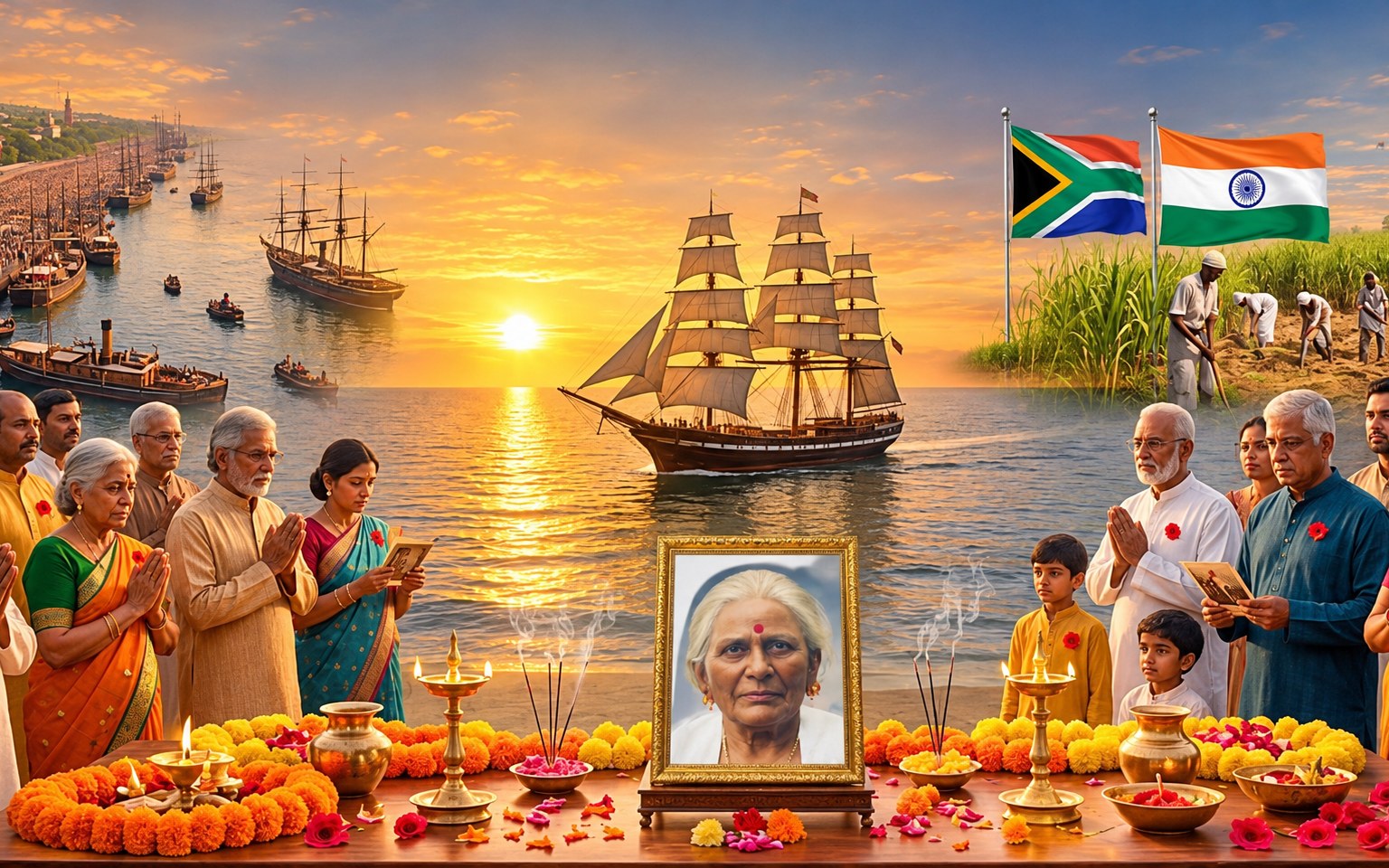
Some dates carry more than a moment. The sixteenth of November 1860 is one of them. That morning the SS Truro sailed into Port Natal — today's Durban — from Madras, carrying 342 Indians recruited to cut cane on the colony's sugar estates. They were the first indentured labourers to reach Natal. By the time the system ended in 1911, 152,184 Indians had made that crossing, bringing their languages, their faith, their customs and their hopes for the generations who would follow.
I grew up inside the long aftermath of that voyage. My great-grandmother, Annamma, was part of it. For years she was, to me, little more than a name and a few family stories. Writing her life — the book I called Annamma Vather Moodley: The Matriarch — was how I set out to turn that name back into a woman.
A woman of Madras, a life in Pietermaritzburg
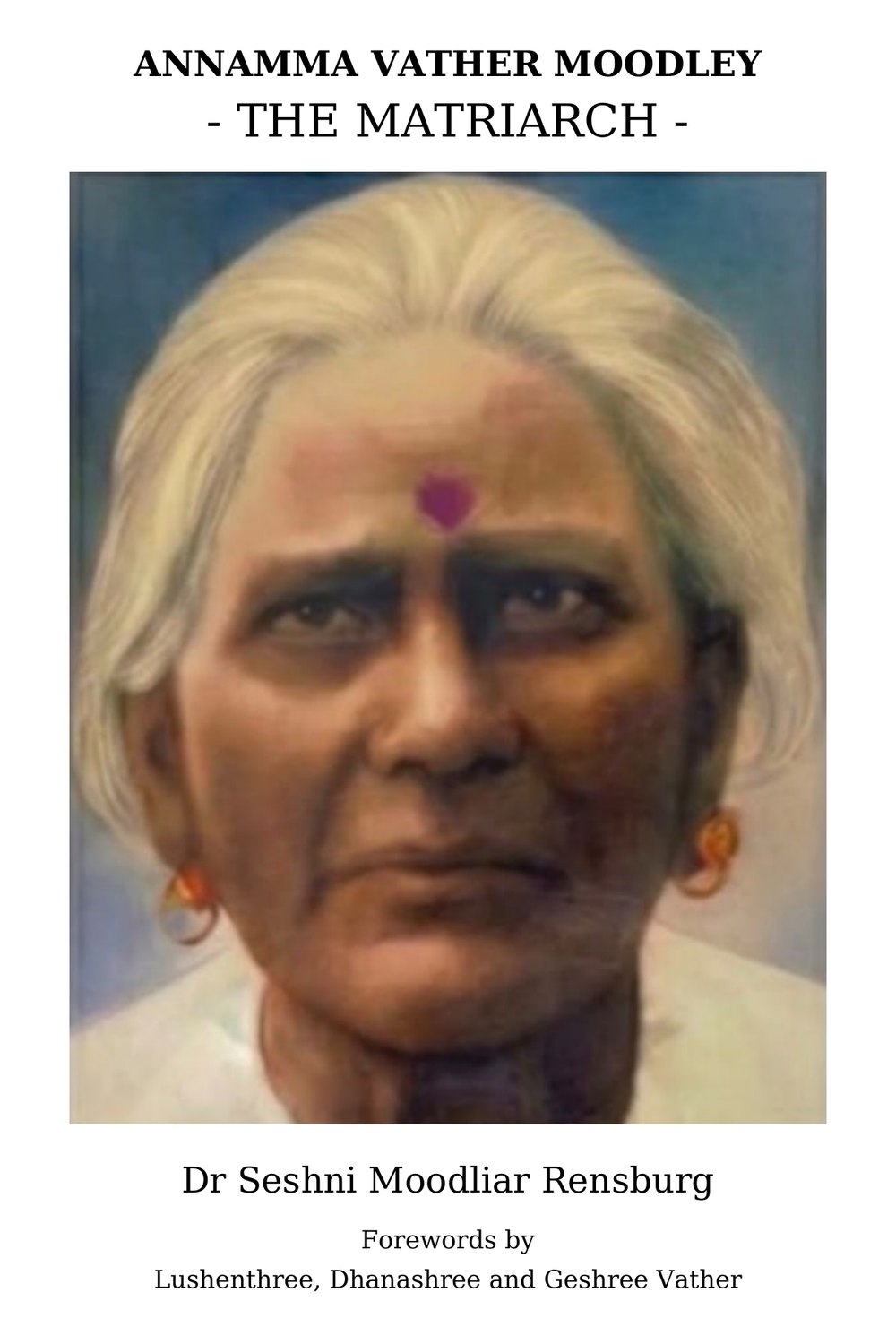
Annamma was born in the Madras region of India, with Tamil roots in the Chingleput country near the city. Like so many others, she left what she knew and crossed the kala pani to South Africa, arriving first in Durban before making her life inland, in Pietermaritzburg.
What she built there still astonishes me. A woman who entered the country through the indenture system became a businesswoman, a property owner and a moneylender — and, in our family's history, the second-highest ratepayer in the city of Pietermaritzburg. She had a sharp head for enterprise and a reputation for helping others. She was also a builder of temples; her life is bound up with the Angaleeswari temple and with the religious and cultural traditions she kept alive for those who came after her.
Hers was not a straight line. Annamma raised ten children across two marriages. From her first marriage, to Aronaghiry, came the Moodley branch of the family; from her second, to Memchand Kesaojee Vather, came the Vather branch. Those two names — Vather and Moodley — travelled out from Pietermaritzburg into the world, and her descendants now live across many countries.
Tamil and Gujarati, both
Researching Annamma also meant researching myself. Our family carries two inheritances: a Tamil one, linked to Madras, and a Gujarati one, connected to Rajkot and Hadmathia — Rajkot, the town where a young Mohandas Gandhi grew up before he too sailed to Natal. I often joke that I am the perfect mixture of the two: a little Tamil, a little Gujarati, and a wonderful blend of both.
The work took me to India — to Chennai in Tamil Nadu, and to ancestral places in Gujarat — and it brought together family memories, photographs, documents and the stories of relatives and others connected to Annamma's life. Around two hundred people are named in the book. Many more helped carry her history further than our family ever could.
From a family story to a reference text
What began as a private act of preservation has reached further than I imagined. Annamma Vather Moodley: The Matriarch is suggested for use as a reference book at Lucknow University, for scholars and students studying Indian diaspora and Girmitiya history — and I am grateful to Professor Onkar Upadhyay for recognising that one family's story could speak to that wider field. From there the book has travelled to libraries, museums and heritage institutions in several countries, carrying Annamma's name into archives far from Pietermaritzburg.
The first printed copy reached me on 7 November 2026, after months of writing and research — during the Diwali weekend, just before the Gujarati New Year. Diwali is the triumph of light over darkness and knowledge over ignorance, and the timing felt like a quiet instruction: let the stories of earlier generations light the way for those who follow.
Heritage is people, not only monuments
I have come to believe that preserving heritage is not only about buildings and records. It is about recording lives — the journeys, the sacrifices, the achievements and the family memories that disappear when no one writes them down. India's prime minister, Narendra Modi, has pressed the same point. In a Mann Ki Baat address he said: "To keep our traditions, our heritage alive, we have to save it, live it, teach it to the next generation." He speaks of Vikas Bhi, Virasat Bhi — development as well as heritage — and of heritage as "a shared consciousness of humanity." Annamma's story is a small part of that shared consciousness.
Remembering also means honesty. Indenture was hard, and the generations that followed carried the weight of social change and apartheid. I have tried to honour Annamma's resilience without romanticising what she and others endured. Both things are true at once: the injustice and the achievement.
More than a biography
The book is not only a record of dates and names. Alongside the history there are colour photographs, poetry, and reflections on the things this kind of inheritance stirs up: identity and belonging, ancestral and intergenerational healing, trauma and resilience, forgiveness, gratitude and reconciliation. The forewords were written by my cousin sisters, Lushenthree, Dhaneshree and Geshree Vather, so that different branches of the family speak in it, not only me. Writing it taught me that recovering a family's past is also, quietly, a kind of repair — for the people doing the remembering as much as for the remembered. My hope is that younger readers will meet Annamma in these pages and be moved to ask after the people in their own families before those memories are gone.
Their journey, our legacy
This book is very much mine, but it does not only belong to me. It belongs, as I have said, "to Annamma, her families, my late parents, our wider family, my own family and everyone who supported me along the way." It belongs to my late parents, Premla Vather and Thirupathi Deena Moodliar, through whom this history reached me. And it belongs to the 152,184 indentured Indians who travelled to Natal, and to all the indentured and their descendants across the world.
History remembers the ships. We must remember the people. Their journeys became our history, and their legacy lives on through the generations.
My thanks go to Chandan Kumar Singh of Diaspora Dreams and to Dr Prof. Shardhanand Harinandan Singh (GIGA, the Netherlands), who have helped carry Annamma's story into the wider world of Girmitiya scholarship.
Annamma Vather Moodley: The Matriarch by Dr Seshni Moodliar Rensburg is available to order at drseshni.co.uk/order/the-matriarch — £15.99 plus postage, or R350 in South Africa. More about the author's work is at drseshni.co.uk.
Related from Heritage
Patel at 150: the diaspora, a bust in Atlanta, and the hero of unity
What was the girmit? The indenture system that built a diaspora
Noor Inayat Khan: the princess, the wireless set, and the word she took to Dachau