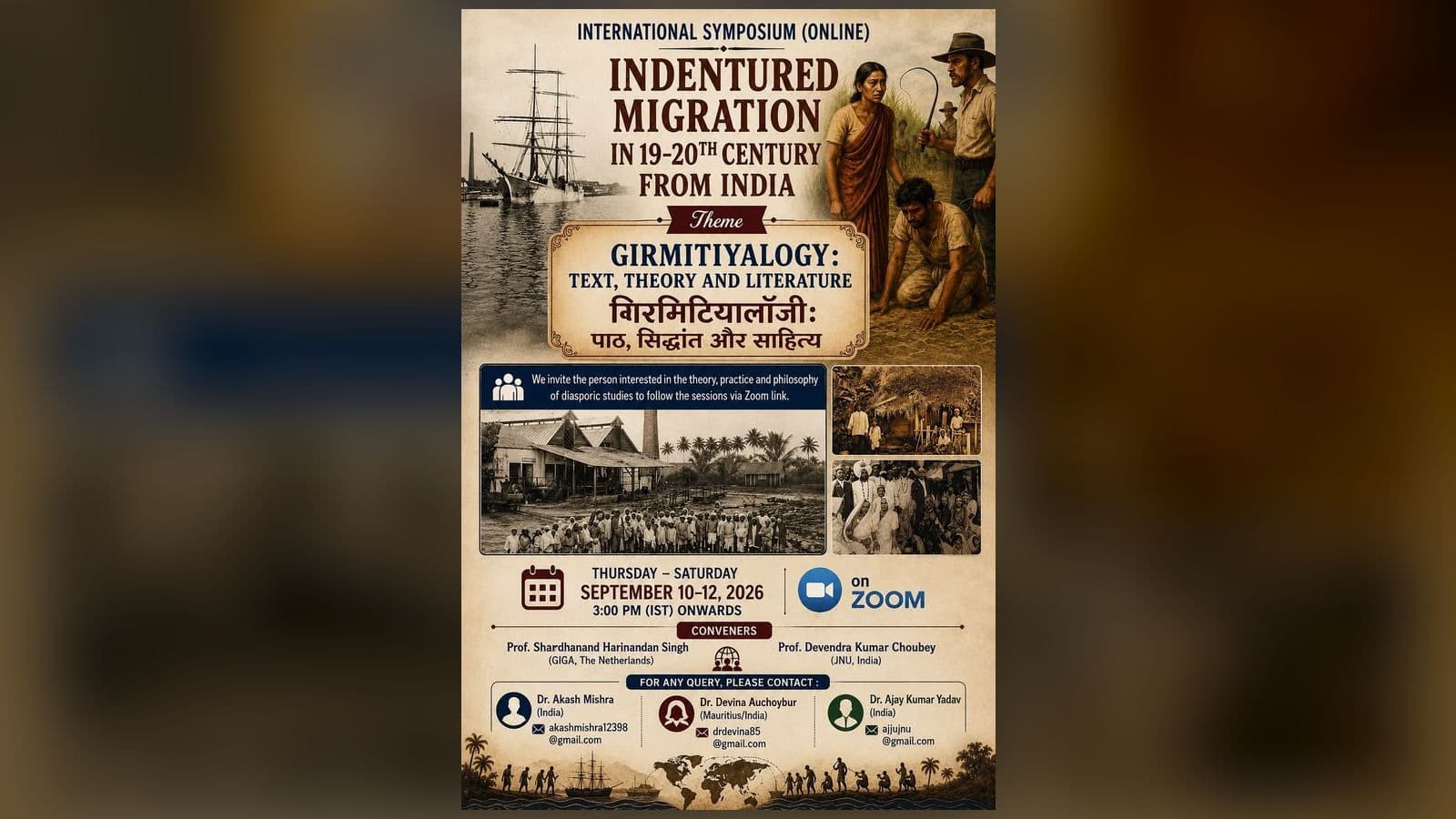


What was the girmit? The indenture system that built a diaspora
The 'girmit' was the agreement — a five-year labour contract that carried more than 1.3 million Indians across the British Empire between 1834 and 1917. How the indenture system worked, from the recruiter's lie to the cane field, and the diaspora it built.
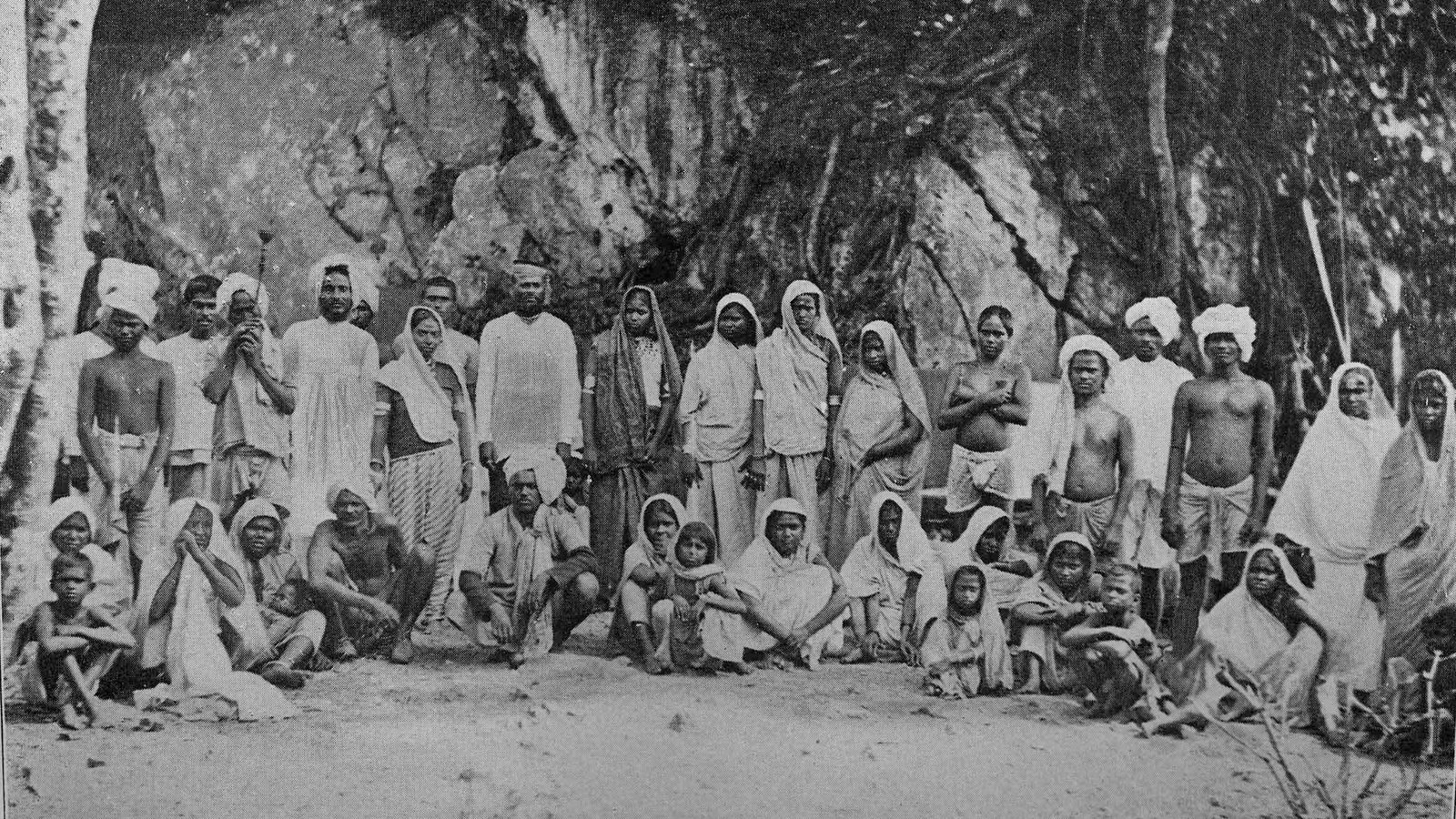
The word is a mistake. "Girmit" is how labourers who spoke no English heard the English word "agreement" — the five-year contract that bound them, and that gave a whole diaspora its name. The people who signed it, or more often pressed a thumbprint to it, became the girmitiya. Between 1834 and 1917 more than 1.3 million of them were carried out of India to cut cane and carry loads in sugar colonies most Indians today could not find on a map. Their descendants now number in the millions, run countries, and win Nobel Prizes. This is the system that sent them.
Why it began: slavery ended, the plantations did not
The girmit was born the moment slavery died. Britain abolished slavery across its empire in 1834, and the sugar planters of Mauritius, the Caribbean and, later, Fiji and Natal were left with vast estates and no bound labour to work them. They needed a replacement that looked legal. India — poor, populous, and under British rule — became the supply. The first indentured Indians reached Mauritius in 1834, in what the colonial authorities called, without irony, the "Great Experiment." It worked, from the planters' point of view, and it spread: across the Indian indenture system's long life the ships ran to roughly nineteen colonies, British, French and Dutch.
How people were recruited: the arkati and the lie
Recruitment was the system's dirtiest joint. Agents called arkatis worked the villages of the Bhojpuri-speaking belt — Bihar and eastern United Provinces — and the Tamil and Telugu south, finding people whom famine, debt or a bad harvest had pushed to the edge. They promised work in a land that was near, easy and rich. It was none of those things. Many recruits had no idea how far they were going, or that they would cross an ocean to get there. The contracts were in a language they could not read.
The historian Hugh Tinker, whose 1974 study gave the subject its enduring name — A New System of Slavery — argued that the "voluntary" nature of indenture was a legal fiction. On paper a girmitiya chose to sign. In practice, poverty and deception did the choosing. Recruits were held at emigration depots in Calcutta and Madras, registered, inspected and loaded.
The crossing: kala pani
Then came the sea, and the sea carried its own terror. To cross the ocean was to cross the kala pani, the black water, a passage that orthodox Hindu belief held would strip away caste and ritual standing. For many the journey was the first severing from the old world. The ships have become names the diaspora still remembers: the Fatel Razack, which brought the first indentured Indians to Trinidad in 1845; the Truro to Natal; the Leonidas to Fiji; the Lalla Rookh to Suriname.
The voyage could take months, and it killed. In the crowded holds, disease moved fast. What it also did, strangely, was build something. Stripped of caste and kin, the people on a single ship became jahaji bhai — ship-brothers — a bond that crossed the lines that had divided them at home, and that would hold their communities together on the far side.
The agreement itself
The girmit was a contract of indenture, usually for five years, and its terms were weighted against the person who signed it. Wages were fixed and low. The labourer was bound to a single estate and could not leave it. Crucially, breaches of the contract — absence, refusal to work, "idleness" — were not civil matters but criminal ones: a girmitiya who walked off the job could be jailed. It was this penal clause, more than anything, that made the system a cousin of the slavery it replaced. The labour was contracted, not owned, but the coercion was written into law.
Life on the estates matched the contract. People lived in barrack rows the colonies called the "lines." Women were a small minority — colonial rules eventually set a quota of roughly forty women for every hundred men, a ratio that bred its own violence and tragedy. The work was cane, from before dawn, under overseers who answered to the planter. The derogatory colonial word for the labourer was "coolie," and it stuck to them and their children for a century.
How it ended
Indenture did not collapse; it was beaten, slowly, by a campaign. Indian nationalists turned it into a cause — Gopal Krishna Gokhale pressed it in the imperial council, C. F. Andrews documented the abuses, and a young lawyer named Mohandas Gandhi cut his political teeth fighting for indentured Indians in Natal before he was Mahatma. They called it what it was: a disguised slavery. The pressure told. On 10 March 1917 the British government ended the recruitment of indentured labour, and those already serving were allowed to finish their terms, which wound the system down by about 1920.
By then it had remade the demographic map of the tropical British world.
What the girmit built
This is where the story stops being only sorrow. The girmitiya were meant to be disposable labour. Instead they stayed, bought land where they could, built temples and schools, kept their songs and a changed Hindi, and became founding peoples of whole nations. Diaspora Dreams tells that second half one country at a time: Mauritius, where indenture built a nation; Trinidad, the people one ship made; Guyana; Fiji; and Suriname's Dutch Hindustanis.
Their descendants now run their countries, speak languages the cane fields made like Fiji Hindi, and sit at the top of global institutions — Navi Pillay, the granddaughter of indentured labourers shipped to Natal, won the 2026 Nobel Peace Prize. The agreement that was meant to use them up instead seeded a diaspora that has outlasted every empire that moved it.
That is the girmit: a mispronounced word, a weighted contract, a black-water crossing — and, on the other side, a people.
Sources: the history, scale and dates of the Indian indenture system (1834–1917, with those serving completing terms into about 1920; the official end of recruitment on 10 March 1917; a scholarly estimate of more than 1.3 million people carried) per the standard histories, including the Wikipedia overview of the Indian indenture system and the University of Leeds' "Striking Women" project; the characterisation of indenture as "a new system of slavery" and the "legal fiction" of its voluntariness from the historian Hugh Tinker's 1974 study of that name; the etymology of "girmit" from "agreement," the kala-pani taboo, the arkati recruiters, the roughly 40-per-100 female quota, and the penal-contract clause per the same historical record. Ship and destination details are drawn from our own country-by-country reporting, linked above.
Related from Heritage
Noor Inayat Khan: the princess, the wireless set, and the word she took to Dachau
Kundanlal Gupta: the Indian who saved Jewish families from the Nazis
The Lunatic Line: the Indians who built East Africa's railway