

Patel at 150: the diaspora, a bust in Atlanta, and the hero of unity
On National Unity Day, India's foreign minister unveiled a bust of Sardar Patel in Atlanta — a symbol of unity installed thousands of miles from the country he built, before the diaspora that keeps his memory. Patel at 150, and why the Iron Man travels.
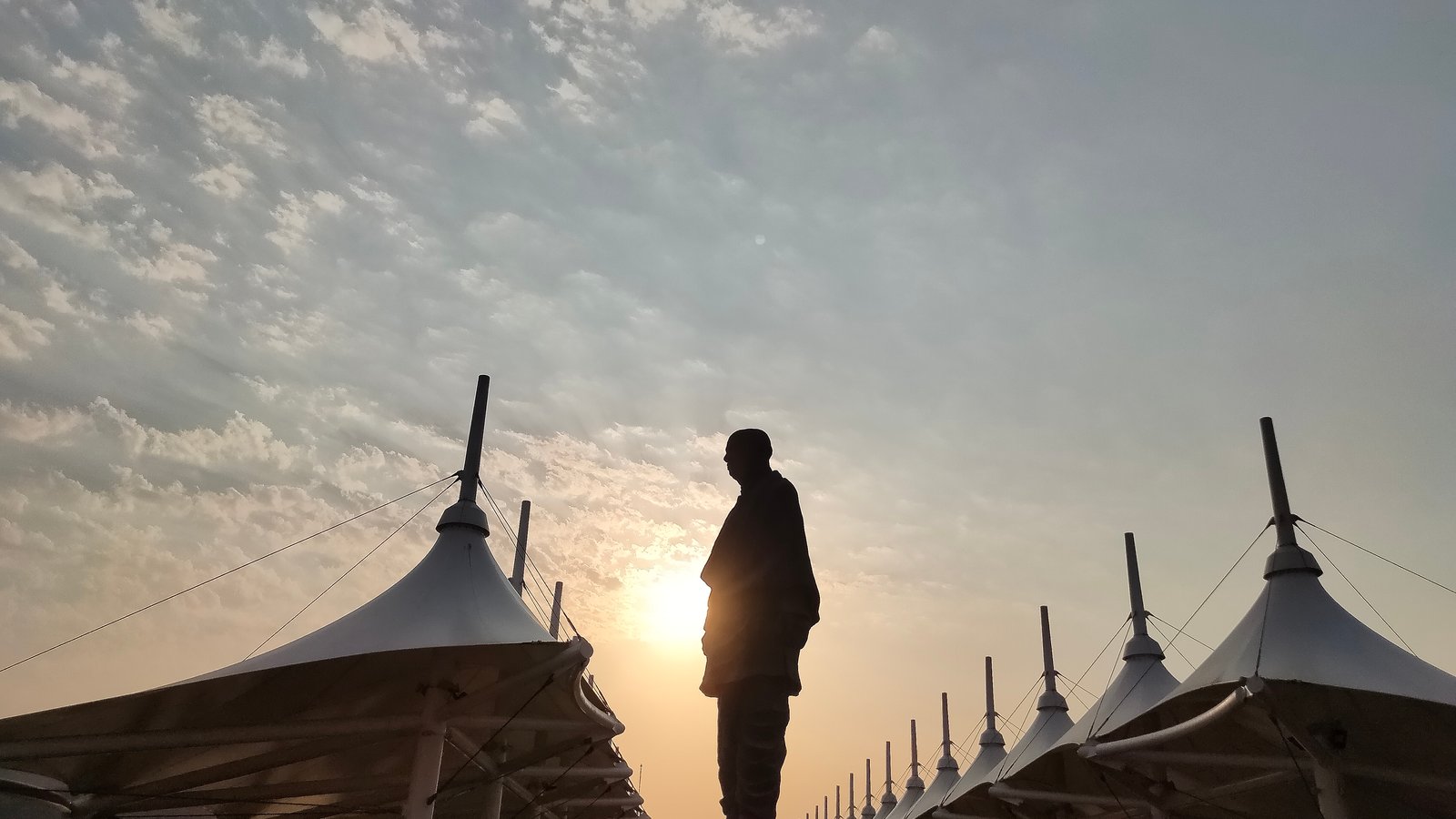
On National Unity Day, India's external affairs minister reached for a symbol that travels well. In Atlanta on 31 October, S. Jaishankar unveiled a bust of Sardar Vallabhbhai Patel at the Consulate General of India — a tribute to the man who stitched a fractured subcontinent into a single country, installed thousands of miles from the land he unified, before a crowd of the diaspora he never lived to see.
The timing was deliberate. Rashtriya Ekta Diwas, National Unity Day, falls on Patel's birthday, and this year it landed inside the commemorations marking the 150th anniversary of his birth.
The bust, and the diaspora that raised it
The installation was a joint effort of the Consulate and the Federation of Gujarati Associations — fitting, since Patel was himself a son of Gujarat. The bust is a substantial thing: a brass casting weighing some 327 kilograms, reported to have taken about a week to make and driven overnight to Atlanta so it would be ready to unveil on the day itself. Jaishankar also planted a sapling under the government's "Ek Ped Maa Ke Naam" programme, laid floral tributes, and spent time with a diaspora crowd that, by the accounts of the day, turned out in large numbers. A statue of Mahatma Gandhi already stands at the venue; Patel now keeps him company.
The minister was joined by India's ambassador to the United States, Vinay Mohan Kwatra, and the Consul General in Atlanta — a level of representation that signalled how much weight Delhi places on these diaspora rites.
Why Patel, and why abroad
To Indians at home, Sardar Patel needs no introduction. Born in Gujarat in 1875, a lawyer turned independence leader, he became free India's first deputy prime minister and home minister, and earned the title that outlived him: the Iron Man of India. His signature achievement was administrative rather than rhetorical — the integration, through a mix of persuasion and pressure, of more than five hundred princely states into the new republic, the work that made India a country rather than a patchwork. The hardest cases he handled in turn: the contested accession of Junagadh, and, in 1948, the reluctant nizam of Hyderabad, brought into the union by the police action known as Operation Polo. Within a few years of independence, even the holdouts were folded in. The colossal Statue of Unity in Gujarat, the tallest statue in the world, was built in his image precisely because that act of unification is the thing modern India most wants to remember him for.
For the diaspora, that is a useful kind of hero. A figure defined by unity rather than by any one region, faith or faction is a figure a scattered people can gather around without friction. It is no accident that National Unity Day, instituted in 2014, has become one of the fixtures of the diaspora calendar, marked at consulates and community centres from Atlanta to Sydney. Patel's legacy asks little and offers much: a story of holding things together, carried out by communities whose own lives are an exercise in holding two worlds together at once.
The quiet diplomacy of a bust
There is a strategy in these gestures, and it is not hidden. India has spent the past decade turning its diaspora into an asset of statecraft — a source of remittances, investment, soft power and, increasingly, political voice in the countries where it has settled. Unveiling a national hero at a consulate, on a national day, with the ambassador present, is a way of keeping that relationship warm: a reminder to overseas Indians that the homeland is paying attention, and an invitation to stay connected to it.
Whether such symbols deepen that bond or merely decorate it is a fair question. But the diaspora that gathered in Atlanta did not come under instruction; the Gujarati associations that paid for the bust did so because Patel means something to them. The sentiment is real even when the diplomacy around it is deliberate.
A hundred and fifty years on
A century and a half after Patel's birth, the country he assembled is unrecognisable in scale and reach, and so is the diaspora it has sent into the world — now numbering in the tens of millions, with its own members in foreign parliaments and boardrooms. That both the nation and its scattered children were marked, this National Unity Day, by the unveiling of one man's likeness in a southern American city says something about what endures. Empires and governments change. The idea Patel stood for — that a people, however various, can choose to be one — is portable enough to cross an ocean, and durable enough to be worth casting in brass.
Sources: reporting on External Affairs Minister S. Jaishankar's unveiling of a bust of Sardar Vallabhbhai Patel at the Consulate General of India, Atlanta, on National Unity Day (31 October 2026) — a joint initiative of the Consulate and the Federation of Gujarati Associations, with the ~327 kg brass bust, the "Ek Ped Maa Ke Naam" sapling, and the attendance of Ambassador Vinay Mohan Kwatra and the Consul General — per The Tribune, ANI and ThePrint. Biographical detail on Patel (born Gujarat, 1875; first deputy prime minister and home minister; the integration of the princely states; the Statue of Unity) and on Rashtriya Ekta Diwas (instituted 2014) per the public record. The event fell within the commemorations marking the 150th anniversary of Patel's birth.
Related from Heritage
What was the girmit? The indenture system that built a diaspora
Noor Inayat Khan: the princess, the wireless set, and the word she took to Dachau
Kundanlal Gupta: the Indian who saved Jewish families from the Nazis