

Neem Karoli Baba: the guru behind Be Here Now
Part 11 of The Masters Who Crossed the Ocean. He never came west, gave no lectures, and left almost no record of his life — yet through the Americans who sat with him, he may have shaped Western spirituality more intimately than any guru in this series.

He left almost nothing in writing. He founded no global organisation, gave no lecture tours, and for most of his life sat wrapped in a plaid blanket on a wooden bench, handing out tea and fruit to whoever came. Yet Neem Karoli Baba — "Maharaj-ji" to his devotees — may be the most improbably influential Indian guru of the twentieth century, his fingerprints visible today on Silicon Valley itself.
Maharaj-ji
A devotee of the monkey-god Hanuman, born around 1900, he spent decades wandering northern India as an anonymous sadhu under many names before settling into the temples that grew up around him. He taught no system and no scripture — only, by example, a radical and unconditional love, and a constant repetition of Hanuman's name. He died on 11 September 1973.
The temples
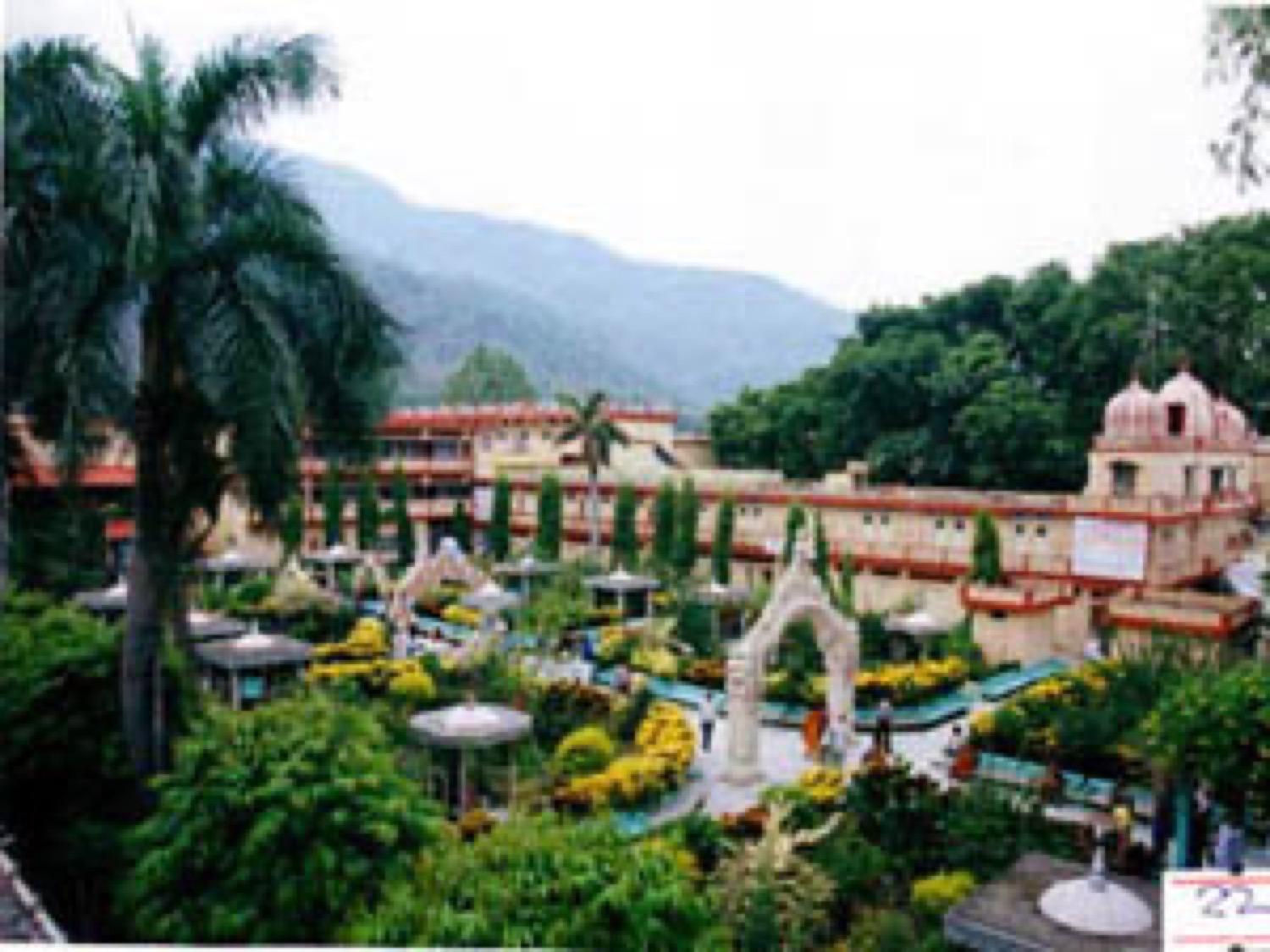
For all his refusal to build an institution, temples followed him everywhere. He established his best-known ashram at Kainchi Dham in the Kumaon hills of Uttarakhand in 1964, on the banks of the Kosi River about thirty-eight kilometres from Nainital, its first temple inaugurated that June; another major centre grew at Vrindavan. In time, more than a hundred temples were raised in his name, most of them dedicated to Hanuman. To his devotees he was Chamatkari Baba, the miracle-worker.
The legend
Around him gathered a vast body of stories — of a man who seemed to know strangers' lives before they spoke, who was reported in two places at once, who gave away whatever he was handed. His devotees never treated these as metaphors; the point, for them, was always the same lesson the miracles illustrated: love everyone, serve everyone, remember God. It was a teaching simple enough to need no translation.
The book that built a bridge
The ocean was crossed by his Western students. The most important was Richard Alpert, a Harvard psychologist sacked alongside Timothy Leary for his LSD research, who came to India broken and searching and left as Ram Dass. His 1971 book Be Here Now — part memoir, part hand-lettered spiritual primer — became a counterculture landmark and a bridge between Eastern and Western thought, introducing a whole generation of Americans to Maharaj-ji's teaching without their ever having met him. It has never gone out of print.
The guru of Silicon Valley
What is remarkable is where that bridge led. A young Steve Jobs, having read Be Here Now, travelled to India in 1974 hoping to meet Neem Karoli Baba — only to arrive months after the guru's death. Jobs later said the trip reoriented him toward intuition over intellect, an instinct he carried into Apple. Decades on, Mark Zuckerberg revealed that Jobs had advised him to visit the same ashram, which he did. Larry Brilliant, the epidemiologist who became founding director of Google.org, was a devotee — and, inspired by Maharaj-ji, played a central role in the WHO's eradication of smallpox.
The music that carried his name
The teaching travelled, too, on sound. A circle of young Westerners who had sat with Maharaj-ji became some of the best-known voices of devotional chant in the West: the kirtan singer Krishna Das, whose call-and-response albums filled Western yoga studios; Jai Uttal; and the teachers Bhagavan Das and Lama Surya Das. The actress Julia Roberts has spoken of her turn toward Hinduism after encountering his image, and a second Kainchi-style temple now sits in Taos, New Mexico, drawing a steady stream of American pilgrims.
Seva, the only teaching
Beneath the miracles and the famous devotees lay a single, plain instruction. Neem Karoli Baba was a lifelong adept of bhakti yoga, the path of devotion, and he taught that seva — selfless service to others — was the highest form of love for God. "Feed everyone, serve everyone, remember God": it was less a doctrine than a way of being in a room, and it was this, more than any teaching, that his Western students carried home.
A presence, not a system
It is a strange afterlife for a man who built no movement and wrote no doctrine. Neem Karoli Baba's "teaching" was a presence, transmitted through the people he touched and the books and songs they made — a guru who never boarded a plane, yet whose unconditional love rippled outward through his devotees until it reached the recording studios and the boardrooms that would shape the modern world. Be Here Now, the instruction he left through Ram Dass, remains in print half a century later, still doing the work he never set out to do.
Continue the series · The Masters Who Crossed the Ocean
Related from Yoga & Spiritualism
Siddheshwar Brahmrishi Gurudev: the 'Siddhguru' who built a following online

Baba Ramdev: the yoga guru who built an empire, and the controversies that trail it
Sister Shivani: the engineer who became the diaspora's calm voice