

Swami Vivekananda and the sentence that opened the West
Part 1 of The Masters Who Crossed the Ocean. On 11 September 1893, an unknown Bengali monk walked onto a Chicago stage and began, 'Sisters and brothers of America.' The ovation that followed marked the moment India's spiritual tradition went global.
The Masters Who Crossed the Ocean — Part 1 of 12.
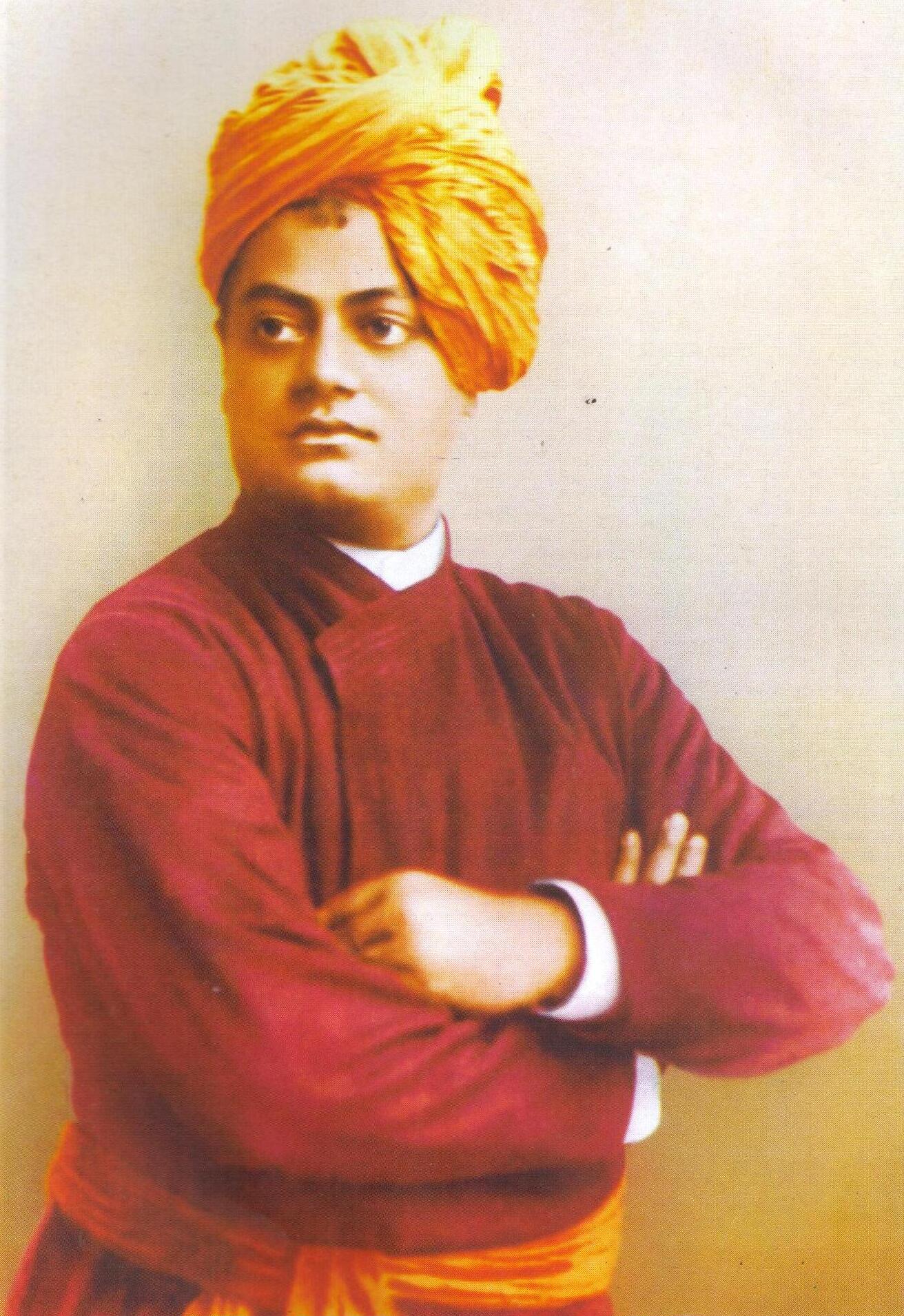
On the morning of 11 September 1893, a thirty-year-old monk from Bengal — unknown and very nearly penniless — rose to address the Parliament of the World's Religions in Chicago. He had no delegation behind him, no organisation, and almost no place on the programme at all. He opened not with doctrine but with four words — "Sisters and brothers of America" — and the hall of some seven thousand delegates rose in a standing ovation that ran, by the standard accounts, for about two minutes before he had made a single argument.
That moment is where this series begins. The globalisation of yoga and Indian spirituality is usually told as a Western discovery. It was not. It began with Indian masters who crossed the ocean and made the case for their own tradition on foreign soil — and Swami Vivekananda was the first to do it on a world stage.
The sceptic from Calcutta
He was born Narendranath Datta on 12 January 1863, into an affluent Bengali Kayastha family in Calcutta. His father, Vishwanath Datta, was an attorney at the Calcutta High Court; his mother, Bhubaneswari Devi, was devout. The son inherited both temperaments — a lawyer's appetite for argument and a seeker's hunger for the real thing.
He was, by every account, formidably bright. He took his Bachelor of Arts in 1884 and read voraciously across the Western canon — Hume, Kant, Mill, Spencer, Darwin — even translating Herbert Spencer's Education into Bengali. He joined the reformist Brahmo Samaj, with its rational, image-free theology, and for a time the modern, sceptical worldview seemed to suit him better than the religion of his birth. But the intellect could not answer the one question that gripped him: he went about Calcutta asking respected men whether they had seen God, face to face, and none of them satisfied him.
"Yes — as I see you"
The answer came from an unlikely source. In late 1881 his college literature professor, William Hastie — lecturing on Wordsworth and the idea of religious "trance" — suggested his students visit a temple priest at Dakshineswar to understand the real thing. So Narendra met Ramakrishna, the ecstatic devotee of the goddess Kali.
At first he recoiled. A Brahmo rationalist, he dismissed Ramakrishna's visions as hallucination and his idol-worship as superstition. But he kept returning, and when he finally put his question to the old mystic — have you seen God? — Ramakrishna answered without hesitation: "Yes, I see Him as I see you, only in an infinitely intenser sense." It was the first reply that did not flinch.
Two shocks completed the conversion. In 1884 his father died suddenly, leaving the family bankrupt; the once-privileged scholar became one of the poorest students in his college, tramping the city for work that never came. And as Ramakrishna lay dying of throat cancer, he named the young man the leader of his small band of disciples. Ramakrishna died on 16 August 1886; Narendra was twenty-three.
The wandering years
What followed was not a career but a disappearance. The disciples gathered in a dilapidated house at Baranagar — the first Ramakrishna monastery, its rent paid by begging — and on Christmas Eve 1886 took formal monastic vows. Then, in 1888, Narendra walked out into India as a parivrajaka, a wandering monk with no fixed home, carrying only a water pot, a staff, and two books: the Bhagavad Gita and Thomas à Kempis's The Imitation of Christ.
For five years he crossed the subcontinent on foot and by rail, living on alms, sleeping in palaces and in huts, among Brahmins and untouchables, Hindus and Muslims and Christians. It was in these years that the abstract seeker became something else — a man seized by the poverty of his country, convinced that its spiritual genius had to be made to work, for the starving as much as for the saintly. In Rajasthan he found a patron in Raja Ajit Singh of Khetri, who urged him to carry India's message to the West, helped pay his passage, and gave him the name by which the world would know him: Vivekananda — from viveka, discernment, and ananda, bliss.
Chicago
He sailed from Bombay on 31 May 1893, travelling via Japan, China and Canada, and reached Chicago that July. Then came the near-disaster: only credentialed delegates of recognised bodies could address the Parliament, and Vivekananda had none. Stranded and short of money, he was rescued by Professor John Henry Wright of Harvard, who had heard him and was unequivocal. To ask this man for his credentials, Wright said, was "like asking the sun to state its right to shine in the heavens." Wright secured him a place.
What he offered the Parliament was not a bid for converts but a defence of tolerance itself — the idea that the religions of the world were not rivals but rivers. He quoted an old Sanskrit hymn: "As the different streams having their sources in different places all mingle their water in the sea, so… the different paths which men take… all lead to Thee." The American press made him a sensation; the New York Herald called him "undoubtedly the greatest figure in the Parliament of Religions," and the Harvard psychologist William James judged him "an honour to humanity."
Three years in the West
He stayed nearly three years, lecturing across the American Midwest and East and then in England, in halls packed with the curious and the converted. His pitch was unusual for a missionary: he wanted no one's conversion. "I want to make the Methodist a better Methodist," he said, "the Presbyterian a better Presbyterian, the Unitarian a better Unitarian." In 1894 he founded the Vedanta Society of New York, the first lasting institutional home for Indian philosophy in America; he declined chairs in Eastern philosophy at Harvard and Columbia because his vows forbade them.
In England, in November 1895, he met Margaret Noble, the Irish teacher he would later name Sister Nivedita, who followed him to India and gave her life to women's education there. He met the Indologists Max Müller and Paul Deussen. And in 1896 he published Raja Yoga, his interpretation of Patanjali's Yoga Sutras for a Western readership — a book many scholars mark as the beginning of modern yoga as a global practice. The idea it planted now seems obvious and was then radical: that yoga was a practical discipline available to anyone, not the sealed inheritance of one culture.
Home, and the Mission
He came home a hero. Landing at Colombo on 15 January 1897, he travelled north through a country that received him like a returning king — crowds, it was said, sat on the railway tracks to force his train to stop so they could hear him. The speeches of that journey, the Lectures from Colombo to Almora, turned outward to the West's audiences and inward to India's own failings: against caste cruelty, against the neglect of the poor, and for science, self-respect and nationhood.
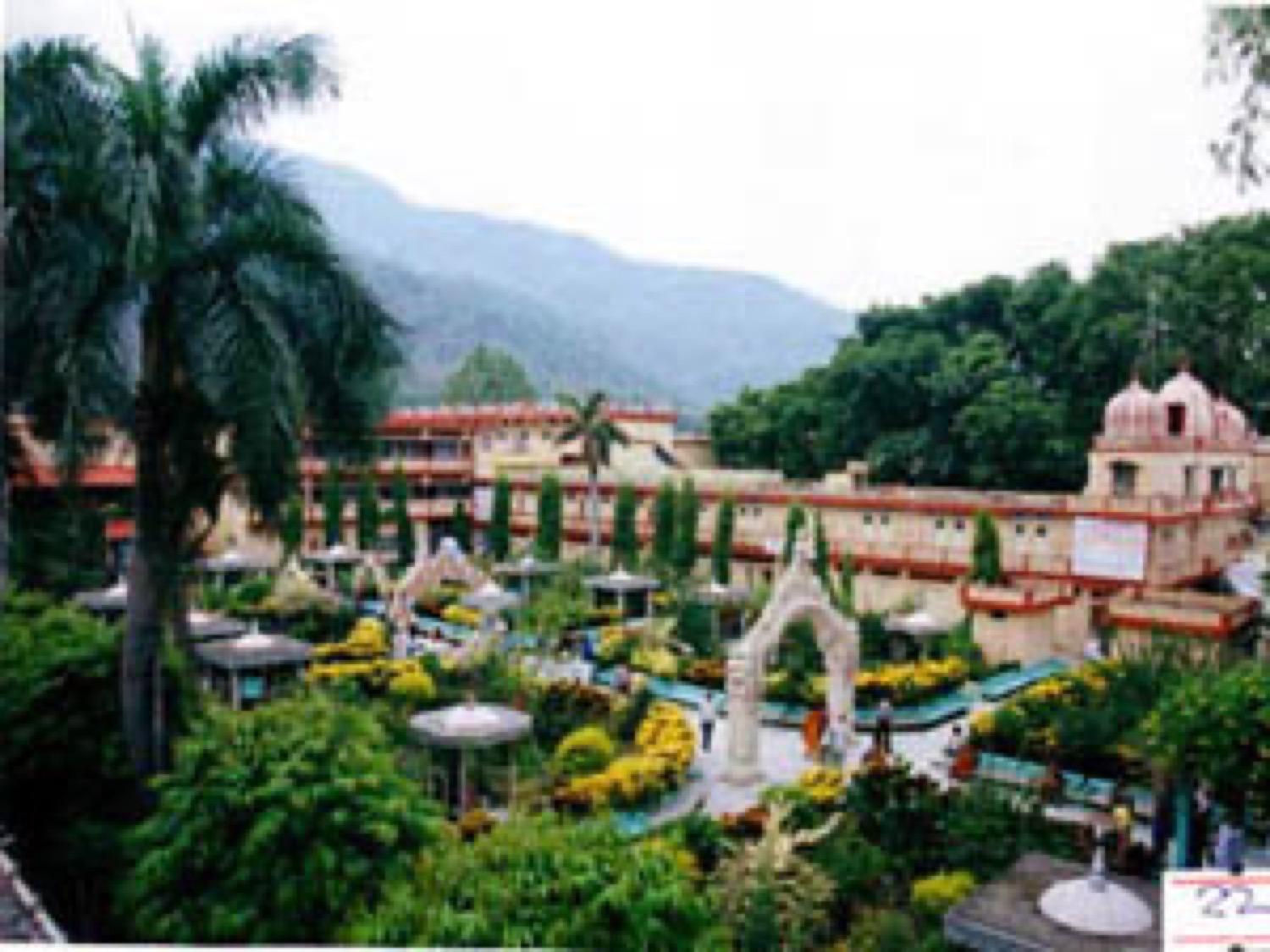
On 1 May 1897 he founded the Ramakrishna Mission, binding spiritual practice to hard social service — schools, hospitals, famine relief — under the banner of karma yoga, the yoga of selfless work. He built its headquarters at Belur Math on the bank of the Ganga, where the order remains today. (Years earlier, on the ship to Chicago, he had fallen into conversation with the industrialist Jamsetji Tata; their talk is credited with helping inspire the institute that became the Indian Institute of Science.)
A short life, by design
He had never been strong, and the work consumed what strength he had — asthma, diabetes, insomnia. A second Western tour in 1899–1900 took him again to America and to the Paris Congress of Religions before he settled at Belur Math.
On 4 July 1902 he rose early, meditated for hours, taught Sanskrit grammar and yoga philosophy to his pupils, and spoke of his plans for a Vedic college. At nine that evening he went to his room and asked not to be disturbed; he died around 9:20 p.m., aged thirty-nine — fulfilling his own repeated prediction that he would not live to see forty. His disciples held that the blood vessel that burst in his brain marked a conscious mahasamadhi. He was cremated on the bank of the Ganga, across the water from where Ramakrishna had burned sixteen years before.
In nine years of public life he had done what no Indian had managed: he made his country's spiritual inheritance legible, and respectable, to the West — and opened the door that Yogananda, the Maharishi, Prabhupada and the others in this series would walk through. India keeps his birthday, 12 January, as National Youth Day.
Next in the series: Paramahansa Yogananda, whose_ Autobiography of a Yogi _turned a Himalayan lineage into an American bestseller.
Sources: Encyclopaedia Britannica · Wikipedia: Swami Vivekananda · Ramakrishna Math and Mission, Belur Math.
Continue the series · The Masters Who Crossed the Ocean
Related from Yoga & Spiritualism
Siddheshwar Brahmrishi Gurudev: the 'Siddhguru' who built a following online
Baba Ramdev: the yoga guru who built an empire, and the controversies that trail it
Sister Shivani: the engineer who became the diaspora's calm voice