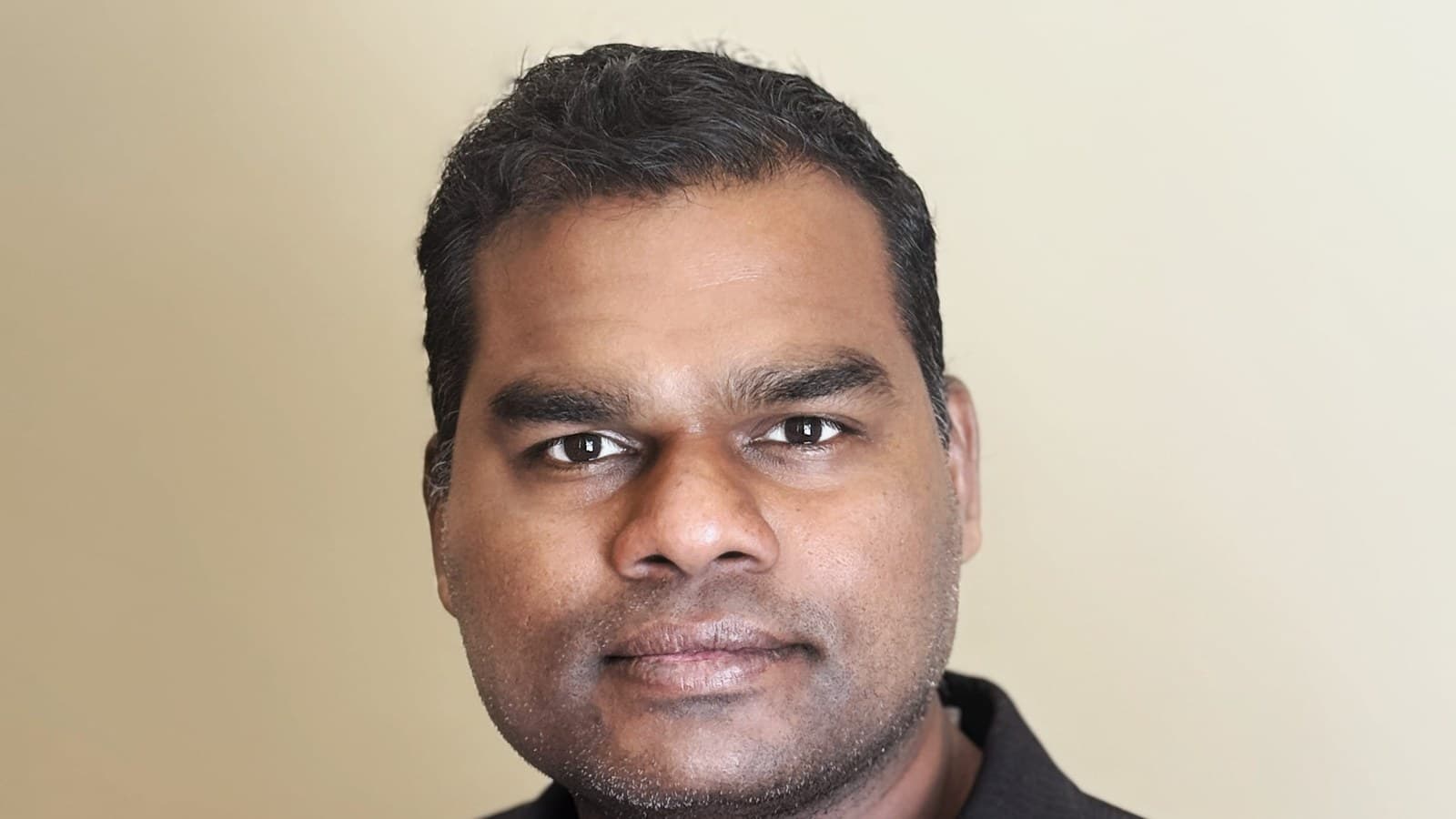


From a Mandi classroom to the mayor's chair: the student who came to Bendigo and stayed to lead it
Abhishek Awasthi arrived in regional Australia in 2008 as an international student from Himachal Pradesh. This month his fellow councillors made him mayor of Greater Bendigo — the first person of Indian origin to hold the city's top office.


Eighteen years ago, Abhishek Awasthi landed in a regional Australian city of gold-rush brick and wide empty streets, a student from the Himalayan foothills who knew almost no one. On the evening of 10 November, in the Capital Theatre in the middle of that same city, his fellow councillors elected him mayor of Greater Bendigo.
He is, by the reckoning of the Indian press and of the community association he founded, the first person of Indian origin to hold the city's top civic office — and he reached it the long way, through the bottom rungs of local government that most migrants never bother to climb. Awasthi had already been Greater Bendigo's first Indian-origin councillor, and its deputy mayor in the 2024–25 term. The mayoralty, for the 2026–27 year, completes the set.
"I am grateful for the support of my family and fellow Councillors as I take on this role," he said after the vote, in which Councillor Andrea Metcalf was elected deputy. "Listening to our community will remain at the heart of my approach." The council thanked the outgoing mayor, Thomas Prince, and deputy, Karen Corr, for the previous twelve months.
The long way round
Awasthi's story is the one the Indian diaspora tells about itself, stripped of the usual glamour. There is no Ivy League, no cabinet, no tech fortune. There is a young man from Mandi, in Himachal Pradesh, who moved to Bendigo in 2008 to study at La Trobe University, took Australian citizenship in 2015, and then did the unfashionable work of belonging to a place: joining things, starting things, turning up.
He founded the Indian Association of Bendigo and built a name locally as an advocate of multiculturalism and community engagement — the kind of civic scaffolding that lets a migrant community become visible to the city around it. Bendigo is not a metropolis where an Indian face in public life goes unremarked. It is a regional city of more than 100,000 people in central Victoria, grown out of a nineteenth-century gold rush, the sort of place where leadership has traditionally passed between old local families. That a man born in Mandi now chairs its council is a small revolution conducted entirely through committee meetings.
His stated priorities are unglamorous too, and all the more credible for it. He has pushed consistently for the council to take a larger role in increasing the supply of affordable housing, the issue bearing down hardest on regional Australia, and has spoken up on mental health. These are not diaspora issues. They are Bendigo's issues, which is precisely the point: he was not elected to represent Indians in Bendigo, but to run Bendigo.
The bridge back to Mandi
And yet he has not let the first place go. On a visit home, where the Mandi Municipal Corporation honoured him for his public service, Awasthi proposed a formal Sister City partnership between Mandi and Bendigo — a working relationship rather than a ceremonial one. He sketched out exchanges of students and educators, tourism promotion that would put Mandi's Himalayan heritage in front of Australian visitors, collaboration on waste management and renewable energy, and vocational training modelled on Bendigo's programmes to attack youth unemployment at home. He suggested Mandi might borrow Bendigo's participatory-governance methods to improve transparency.
He went further than the usual homecoming pleasantries. He raised the problem of drug abuse in Mandi directly, calling for helplines, dedicated enforcement and community backing to break supply chains — the candour of someone who still considers the place his own rather than a backdrop for photographs. Mandi's mayor, Virender Bhatt, backed the sister-city idea. "The importance of giving back to his roots" is how Awasthi framed the whole exercise.
This is the part of the diaspora story that rarely makes the front page: not the migrant who rises and forgets, but the one who rises and turns the ladder around. A sister-city tie between a Himachal town and a Victorian one is a modest thing on paper. In practice it is a channel — for students, for ideas, for money — opened by one person who happened to live at both ends of it.
A widening bench
Awasthi's election lands in a season of diaspora political firsts, and it is worth seeing where it fits. The headlines this autumn have gone to the marquee names: Indian-origin members returned to the US Congress, an India-born minister in the British cabinet. Those are the summit. Awasthi is the base of the mountain — the local councils and school boards and planning committees where migrant political power is actually built, one unglamorous office at a time, and from which the summit is eventually supplied.
It also quietly rewrites a stereotype. The Indian diaspora in Australia is among the country's fastest-growing communities, concentrated in the big cities and often typecast as students and skilled workers passing through. A first-generation migrant running a regional council for a full term is a different kind of fact. It says the community is not only in Australia but of it — staying, standing for office, and winning in places far from the diaspora's usual strongholds.
There is a further distinction worth drawing. Much of the diaspora's political rise in the West has come from its second generation — the children of migrants, born and schooled in their new countries, fluent in that politics from the start. Awasthi is first-generation. He arrived as a young adult, formed in Mandi, and learned Australian civic life from the outside in, the way the first in any family must. That a newcomer, rather than a native-born child of the community, now holds the mayoralty is the harder and rarer version of the story.
Eighteen years after he arrived to study, Abhishek Awasthi will spend the next year signing off on Bendigo's budgets and chairing its meetings. The international student's visa has become a mayoral chain. Somewhere between the two lies the whole quiet argument the diaspora has always made about itself — that given a place to stand, it does not merely settle. It serves.
Related from Politics
India opens the road to its biggest diaspora homecoming — and it runs through Kolkata
A Hanuman Chalisa in the Oval Office: the diaspora at Trump's White House Diwali
A wave of firsts, and two defeats: the Indian diaspora's 2026 US midterm