


British Asian cinema: from My Beautiful Laundrette to Blinded by the Light
From a Wandsworth launderette to a Springsteen-loving teenager in Luton, British Asian film built a body of work about the second generation — made by the British-born children of South Asian migrants.

Bollywood made films for the diaspora, and the auteurs made films about it for the world. In Britain, a third cinema grew — made by the British-born children of South Asian migrants, about the specific experience of growing up brown in Britain, and it produced some of the most-loved films the diaspora has.
The door that opened in a launderette
The first British Asian feature is usually dated to A Private Enterprise (1974), but the film that kicked the door open came a decade later. My Beautiful Laundrette (1985), directed by Stephen Frears and written by Hanif Kureishi, was a gay love story between a young British-Pakistani man and his white ex-skinhead lover, set in the hard light of Thatcher's London. It was frank about race, sex and class in ways no British film about Asians had been, and its success, as the British Film Institute records, opened a path for the film-makers who followed.
The women, and the comedy
Two of those film-makers reshaped the scene. Gurinder Chadha's Bhaji on the Beach (1993), written by Meera Syal, followed a group of Punjabi women of three generations on a day trip to Blackpool — the first feature film directed by a British Asian woman. Syal then helped make British Asian comedy mainstream with Goodness Gracious Me (BBC, 1998), the sketch show whose "going for an English" routine — a gang of drunk Asians mangling a waiter's name and demanding the blandest thing on the menu — turned the immigrant experience inside out and made the whole country laugh with, not at.
The father at the chip shop
Then came East Is East (1999), directed by Damien O'Donnell from Ayub Khan-Din's autobiographical play. Set in 1970s Salford, it followed a Pakistani father running a chip shop and raising seven half-English children who wanted nothing of the marriages and traditions he was trying to impose. It was funny and painful in equal measure, a box-office hit, and a BAFTA winner — and it named a tension every second-generation household knew: the immigrant parent and the British child, at war across the same kitchen table. A 2010 sequel, West Is West, followed the same family to Pakistan, where the British-born son found he was as much a foreigner there as his father had been in Salford.
Bend It Like Beckham (2002) took that tension to the multiplex and the world (its director, Gurinder Chadha, we profiled in Part 2). And nearly two decades on, Chadha's Blinded by the Light (2019), adapted from the journalist Sarfraz Manzoor's memoir, found a British-Pakistani teenager in 1987 Luton discovering himself through the songs of Bruce Springsteen — proof the genre still had life, and still turned on the same question: how to be your parents' child and your own person at once.
A shared South Asian screen
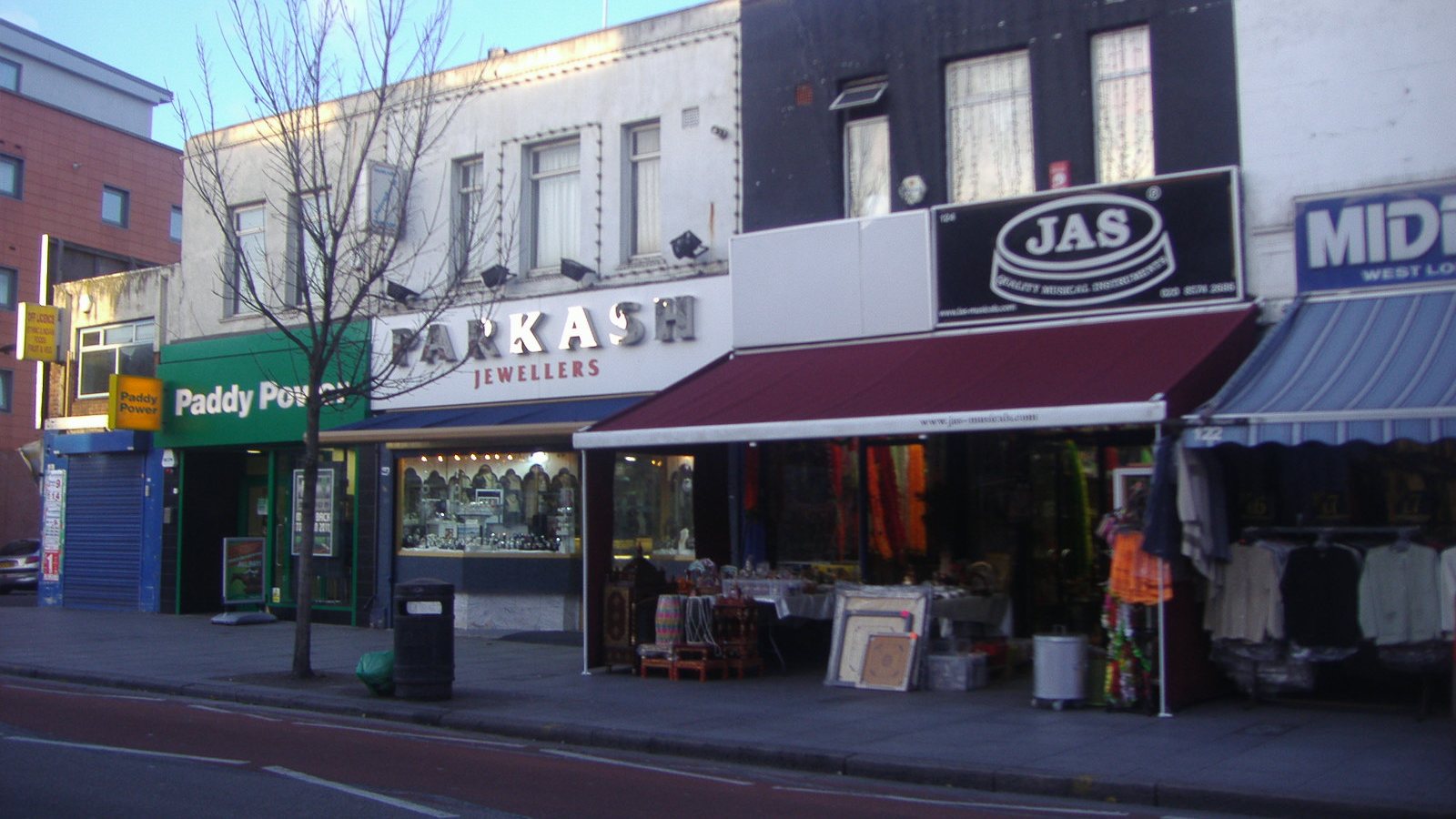
One honest note runs through all of it. British Asian cinema has never respected the India–Pakistan border the way politics does. Kureishi, Khan-Din and Manzoor are of Pakistani heritage; Chadha and Syal of Indian, Punjabi, East-African-Asian roots. On screen, in Southall and Bradford and Salford, those distinctions blur into a single "British Asian" experience — the corner shop, the arranged marriage, the clash of the mosque or mandir with the disco, the accent that belongs to nowhere but here. For the second generation, the shared condition of being brown in Britain often mattered more than which side of Partition a grandparent came from.
Channel 4, and filming yourself
None of it would have happened without a broadcaster willing to pay. Channel 4, launched in 1982 with a remit to serve Britain's minorities, helped bankroll My Beautiful Laundrette and much of what came after, and it was British television as much as cinema that carried the scene. Goodness Gracious Me moved from BBC radio to television; its stars Meera Syal and Sanjeev Bhaskar went on to The Kumars at No. 42, a chat show wrapped inside a sitcom about a Wembley family, whose format was sold around the world. For a community Britain had spent decades filming from the outside, the 1990s and 2000s were the moment it began filming itself, on channels the whole country watched.
The new wave
The scene did not stop with Bend It Like Beckham. A younger generation of British South Asian creators has carried the story onto streaming and into genre: Nida Manzoor's We Are Lady Parts (2021), a comedy about an all-female British Muslim punk band, won acclaim on Channel 4 and abroad, while British Asian writers and performers now shape prestige drama, animation and blockbusters alike. Riz Ahmed, a British-Pakistani rapper turned actor from Wembley, became the first Muslim man to win an acting Emmy — for The Night Of (2016) — and was Oscar-nominated for Sound of Metal (2021). The tone has shifted with the generation. The films of the 1980s and 1990s were about the pain of not fitting in; the newest work is more often about the ease of belonging — the difference between a generation that asked permission to exist on screen and one that simply assumes it does.
What it gave the second generation
That is the achievement. Bollywood offered the British Asian child nostalgia for a country he had never lived in; the West offered him the corner-shop stereotype or the terrorist. British Asian cinema offered him himself — the comedy and the loneliness of dual heritage, told by people who had lived it. It did not make him choose between Southall and Britain. It told him he was both, and that both was a story worth putting on a screen. And in the streaming age, that story travels: a British Asian comedy or drama now reaches Toronto and Sydney and Johannesburg, the whole English-speaking diaspora recognising a Wembley front room as its own. The cinema that began by explaining Britain's Asians to Britain has ended up explaining the diaspora to itself.
Part 3 of The Diaspora Screen*. See also Part 1: the NRI film and Part 2: the diaspora auteurs.*
Continue the series · The Diaspora Screen
Related from Culture

Robin Leo Hoffmann: the German who went looking for an Aghori — and found a way to live

Captain Smit Machchhar: the Mumbai pilot who saved 174 on a Tel Aviv flight

Ashina Singh: three countries, one crown