

Gujarati in Britain: the tongue that came the long way round
Part 4 of Mother Tongues. Most of Britain's Gujarati speakers did not come from Gujarat. They came from East Africa, expelled or pushed out a generation after their grandparents first left India — and the language they carried has been holding on in Leicester and north-west London ever since.

Mother Tongues — Part 4.
In August 1972, Uganda's president Idi Amin ordered the country's Asian population — some 90,000 people, most of them Gujarati — to leave within 90 days. Families who had run shops and businesses in Kampala and Jinja for decades sold what they could, or abandoned it, and boarded planes with a single suitcase each. Many of them landed in Britain. A large share ended up in one city: Leicester.
That is the first thing to understand about Gujarati in Britain. Unlike Punjabi or Sylheti, the language did not arrive by a straight line from the subcontinent. Much of it came the long way round — carried by people the sociologist Parminder Bhachu called "twice migrants", whose grandparents had left Gujarat for East Africa in the colonial decades, and who were then expelled or squeezed out of Uganda, Kenya and Tanzania in the 1960s and 70s.
The Golden Mile
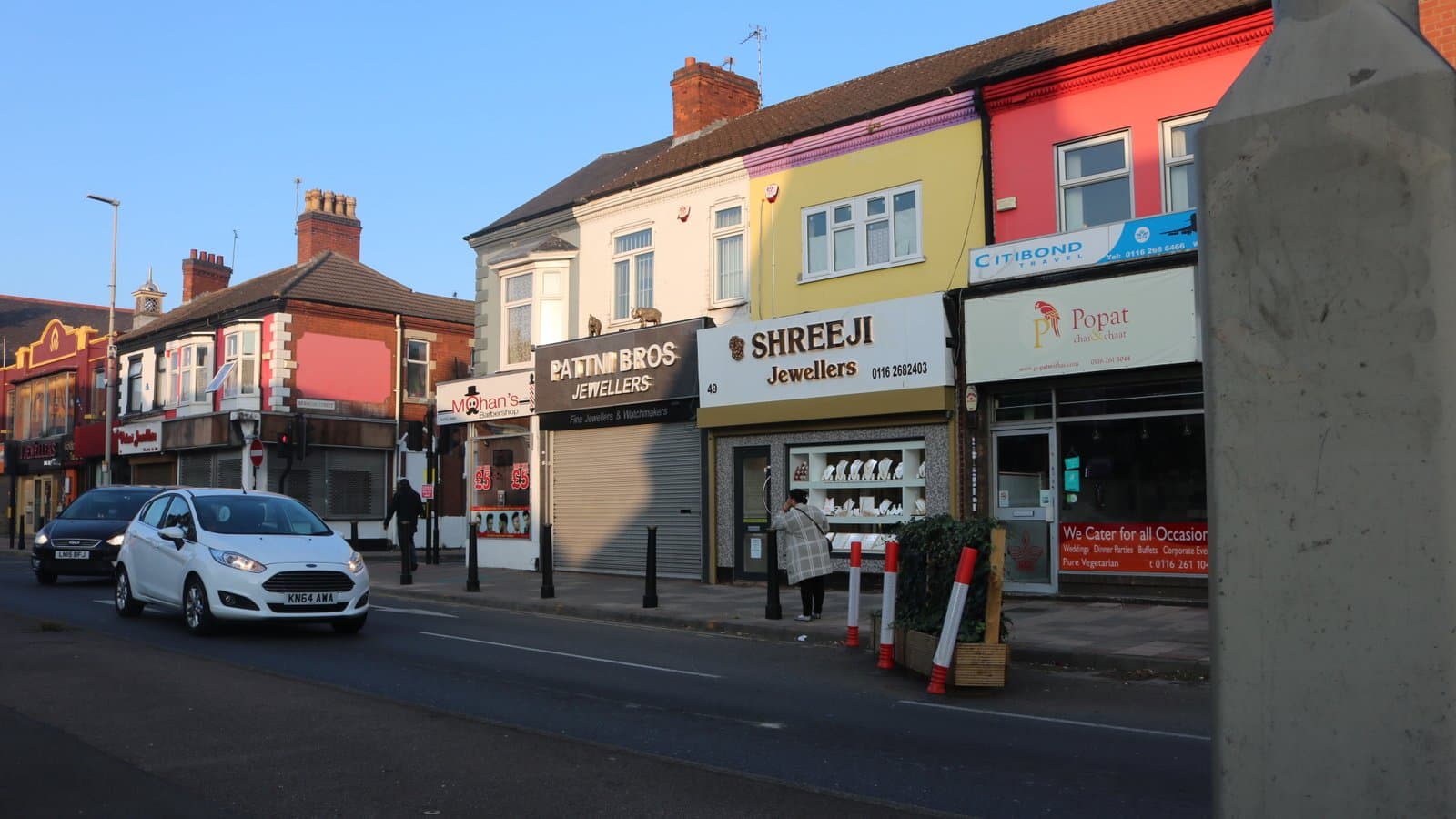
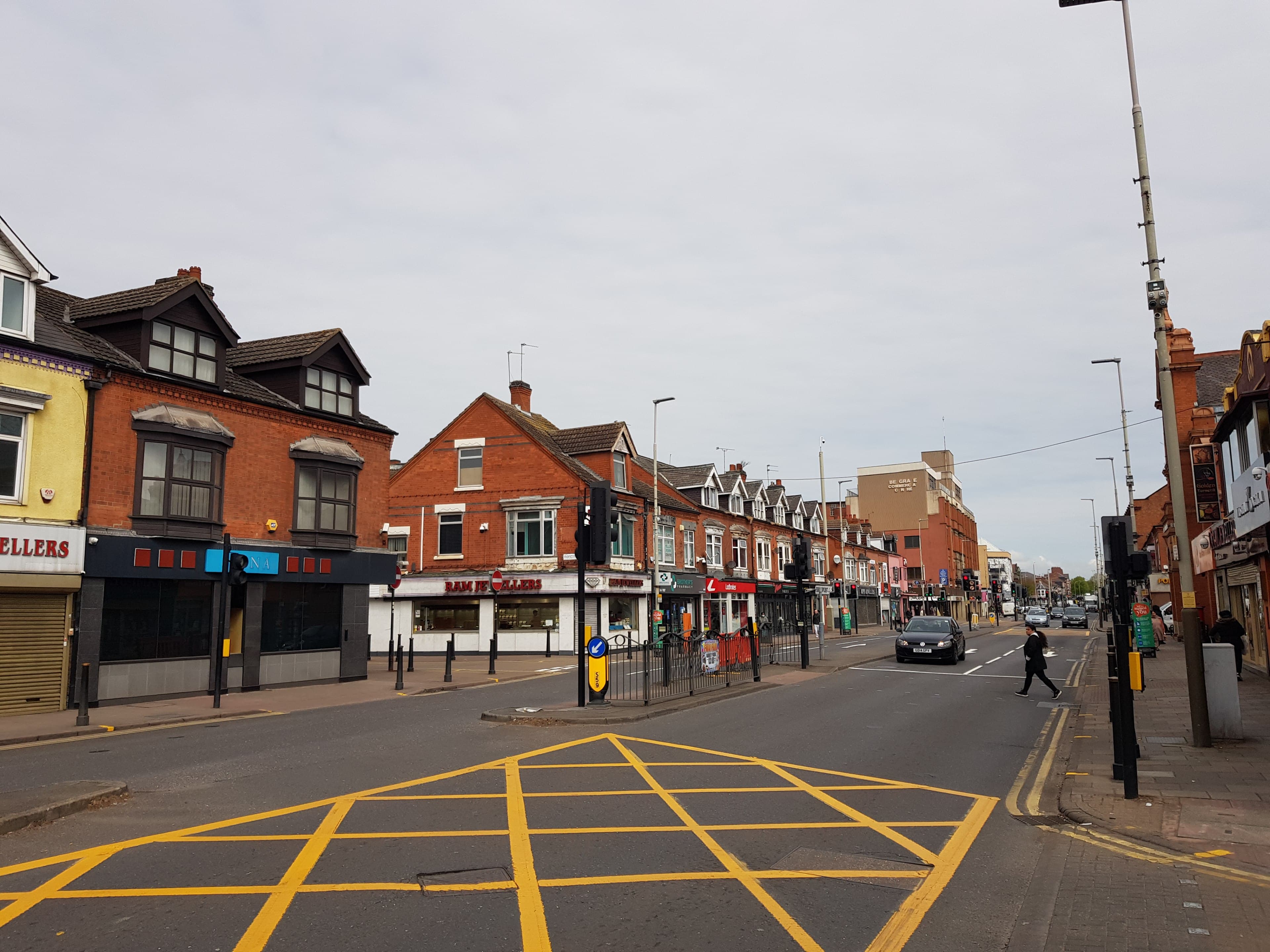
Leicester is where that history is most visible. Gujarati is the main language of roughly 16 per cent of the city's residents, and Belgrave Road — the stretch of sari shops, jewellers and sweet centres known as the Golden Mile — became the commercial and cultural spine of British Gujarati life. By 1978, Leicester's Community Relations Council estimated more than 10,000 Ugandan Asians had settled in the city, a figure that kept climbing through the decade.
It happened despite an official attempt to stop it. Leicester City Council famously took out advertisements in the Ugandan Argus in 1972 warning Asians not to come — the schools were full, the housing was short. They came anyway, drew relatives after them, and over fifty years rebuilt the city's economy around themselves. In 2022 Leicester marked half a century since the expulsion with exhibitions and civic events, a milestone the city now treats as part of its own founding story rather than a footnote to someone else's.
Not one Gujarati, but several
The other centre of gravity is north-west London — Harrow, Wembley, Brent — along with sizeable communities in Birmingham and Manchester. Across England and Wales, the 2021 census counted Gujarati among the ten most common main languages after English, with the community widely estimated at over 200,000 speakers.
But "Gujarati" in Britain has never been a single thing. It carries the fault lines of the region it came from and the diaspora it passed through — Hindu and Muslim speakers, Kutchi and Kathiawadi variants, the Jain merchant families, the Patel farming lineages, the Ismaili and Bohra Muslim traders who took Gujarati across the Indian Ocean and then to the English Midlands. The East African route left its own residue: many older speakers move between Gujarati, Swahili and English in a single conversation, a linguistic map of two migrations laid on top of each other.
The third-generation problem
What every mother tongue in this series eventually runs into is the grandchild. Gujarati has held on in Britain better than most South Asian languages. It is sustained by faith networks that run free supplementary classes — the Swaminarayan temple in Willesden has taught Gujarati every Saturday since 1977, and the Indian Education Society in Leicester teaches children from the age of four up to GCSE level. That Gujarati can still be sat as a GCSE at all says something about the community's weight. A merchant culture in which the language carried commercial as well as sentimental value helped too.
Even so, the familiar pattern is visible. The first generation ran their households in Gujarati. The second grew up bilingual, often more comfortable in English by adulthood. The third frequently understands the language without speaking it fluently — the food, the festivals and the surnames outlast the grammar. This is not decline unique to Gujarati; it is what happens to almost every immigrant language by the third generation in an English-speaking country.
What the language remembers
There is a reason to tell this story now. The community that built the Golden Mile is passing into its fourth generation in Britain, and the people who actually stepped off the planes in 1972 are growing old. The language they brought is itself a record of a double journey — Gujarat to East Africa, East Africa to England — that no other British South Asian community made in quite the same way.
Gujarati in Britain is not, in the end, an Indian language transplanted. It is the sound of a diaspora that had already been a diaspora once before it arrived, and kept its tongue through both crossings. How much of it the fourth generation chooses to keep is the open question the Golden Mile is living out now.
Next in the series: Telugu in America — the language of the newest, and fastest-growing, wave of Indian migration.
Sources: ONS, Language in England and Wales: Census 2021 · Wikipedia: Gujarati people · Wikipedia: Demographics of Leicester · Middle East Eye — Leicester and the Ugandan Asians · The New Arab — Leicester marks 50 years · Curve Theatre — Why did Ugandan Asians settle in Leicester? · Shree Swaminarayan Temple Willesden — Gujarati School · Indian Education Society, Leicester.
Continue the series · Mother Tongues
Related from Heritage
The Lunatic Line: the Indians who built East Africa's railway
‘Girmitiyalogy’: an online symposium on India's indentured migration (10–12 September 2026)
The ship that was turned away: how Indians came to Canada