

Swami Sivananda: the teacher whose students taught the world
Part 9 of The Masters Who Crossed the Ocean. A doctor who renounced medicine to write 200 books and train the teachers who carried yoga across the world — the hidden hub of the whole story.

He was a doctor before he was a saint. Born Kuppuswami in 1887 in the Tamil village of Pattamadai, he trained in medicine and spent a decade practising in British Malaya before he gave it all up, returned to India, and took sannyasa on the banks of the Ganges. As Swami Sivananda Saraswati he would become one of the most quietly consequential figures in the global spread of yoga — not because he travelled, but because of who he sent.
From Pattamadai to a Malayan estate
Sivananda's early life gave no obvious hint of the renunciate to come. He studied medicine at Tanjore, where he excelled and even ran a small medical journal called Ambrosia, then sailed for British Malaya, working there as a doctor for ten years and earning a reputation for treating the poor for free. But a sense grew in him that medicine healed only the surface of a person, and in 1923 he left his practice and his salary behind, returning to India to search for something deeper. The following year he was initiated into the monastic order on the Ganges at Rishikesh.
The ashram at Muni Ki Reti
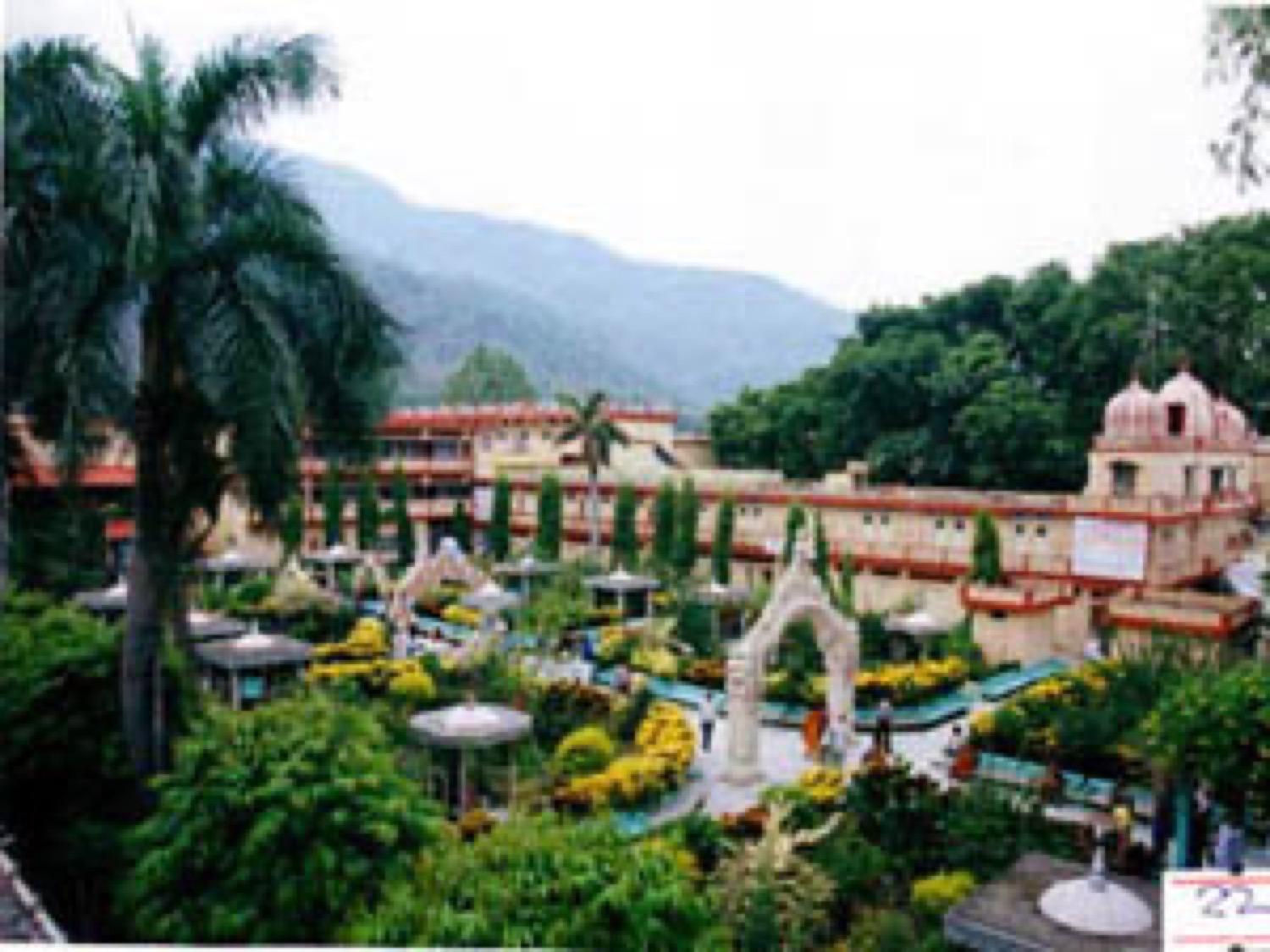
Sivananda settled at Muni Ki Reti, a few kilometres upriver from Rishikesh, and in 1936 founded the Divine Life Society on the river's bank. In 1948 he added the Yoga-Vedanta Forest Academy to train students systematically. The ashram became a destination for seekers from across India and, increasingly, from abroad — a working laboratory of sadhana where the Himalayas meet the plains.
The books and the method
He was astonishingly prolific, the author of more than 200 books on yoga, Vedanta, health and the spiritual life, written in plain, practical English for ordinary people rather than scholars. He distilled his whole teaching into a single formula: Serve, Love, Give, Purify, Meditate, Realise. His was a gentle, accessible synthesis — hatha yoga, devotion, selfless service and Vedanta woven into one path, stripped of obscurity and offered to householders and renunciates alike. Much of modern, mainstream yoga unknowingly inherited that blend.
The masters he sent across the ocean
Sivananda himself never crossed the ocean. His genius was for producing disciples who did, and the roster is extraordinary. Swami Vishnudevananda carried "Sivananda Yoga" to the West and built the worldwide Sivananda Yoga Vedanta Centres. Swami Satchidananda founded Integral Yoga in the United States and opened the Woodstock festival. Swami Chinmayananda built the global Chinmaya Mission. Swami Satyananda founded the influential Bihar School of Yoga at Munger. Swami Venkateshananda planted the Society in Mauritius, Australia and New Zealand. And a German-Canadian woman, Sylvia Hellman, became Swami Sivananda Radha — one of the first Western women initiated into the order — and founded an ashram in British Columbia.
Sivananda Yoga and the studio age
Vishnudevananda's work is felt in almost every modern yoga studio. He distilled his teacher's vast system into "five points of yoga" and, in 1969, launched one of the first formal yoga teacher-training courses in the West — the template for the now-ubiquitous "200-hour" certification. His Complete Illustrated Book of Yoga became a standard manual for a generation of Western practitioners. The studios, the trainings, the asana-and-Vedanta blend taught from Toronto to Cape Town: much of it runs back through Vishnudevananda to his teacher on the riverbank.
A lineage that circled the globe
Through these students, Sivananda's disciples started independent organisations in the United States, Canada, Australia, Mauritius, Malaysia, South Africa, South America and across Europe. Few twentieth-century figures seeded so many separate, lasting institutions; the modern transnational yoga movement is, to a remarkable degree, the spreading branches of one tree.
The teacher of teachers
Sivananda entered mahasamadhi on 14 July 1963, dying beside the Ganges at the ashram he had built. The Divine Life Society still runs that ashram at Rishikesh, and the organisations his disciples founded have long outlived him. He belongs in this series not as a master who himself sailed west, but as the master who taught the masters who did — the still point at the centre of a lineage that reached almost every continent. Few people in the modern era did more to make Indian spirituality a genuinely global inheritance, and fewer still did it so deliberately, by raising others to carry it across the water.
Continue the series · The Masters Who Crossed the Ocean
Related from Yoga & Spiritualism
Siddheshwar Brahmrishi Gurudev: the 'Siddhguru' who built a following online
Baba Ramdev: the yoga guru who built an empire, and the controversies that trail it
Sister Shivani: the engineer who became the diaspora's calm voice