

Anandamayi Ma: the joy-permeated mother
Part 8 of The Masters Who Crossed the Ocean. She wrote no books, founded no method, and refused to be called a guru — yet she drew the century's great seekers to her, and reached the West through the pages of Autobiography of a Yogi.

She is the great exception in this series — a master who never founded a movement, trained no successor, wrote no book, and barely left her own region of India, yet whose fame reached the West all the same. Anandamayi Ma, the "Bliss-Permeated Mother," was carried across the ocean not by her own effort but by the people who could not stop talking about her.
Nirmala Sundari
She was born Nirmala Sundari Devi on 30 April 1896, to an orthodox Brahmin family in the village of Kheora in what is now Bangladesh. Married young, as was the custom, she never entered an ordinary married life; her husband became, in time, her disciple. From her teens she displayed states of spontaneous absorption — samadhi without any teacher, ritual performed without instruction — that convinced those around her they were in the presence of something extraordinary.
A saint without a guru
What made her unusual even among India's saints was that she had no teacher at all. She described herself as prakriti-siddha — perfected by nature, enlightened from birth — and her practices, rituals and teachings appeared to arise wholly from within, with no lineage behind them. She acted, she said, only on kheyala, a spontaneous divine prompting. She gave no fixed doctrine and demanded no creed; she answered questions, sang kirtan, slipped into ecstatic states, and let those around her draw their own conclusions.
The name
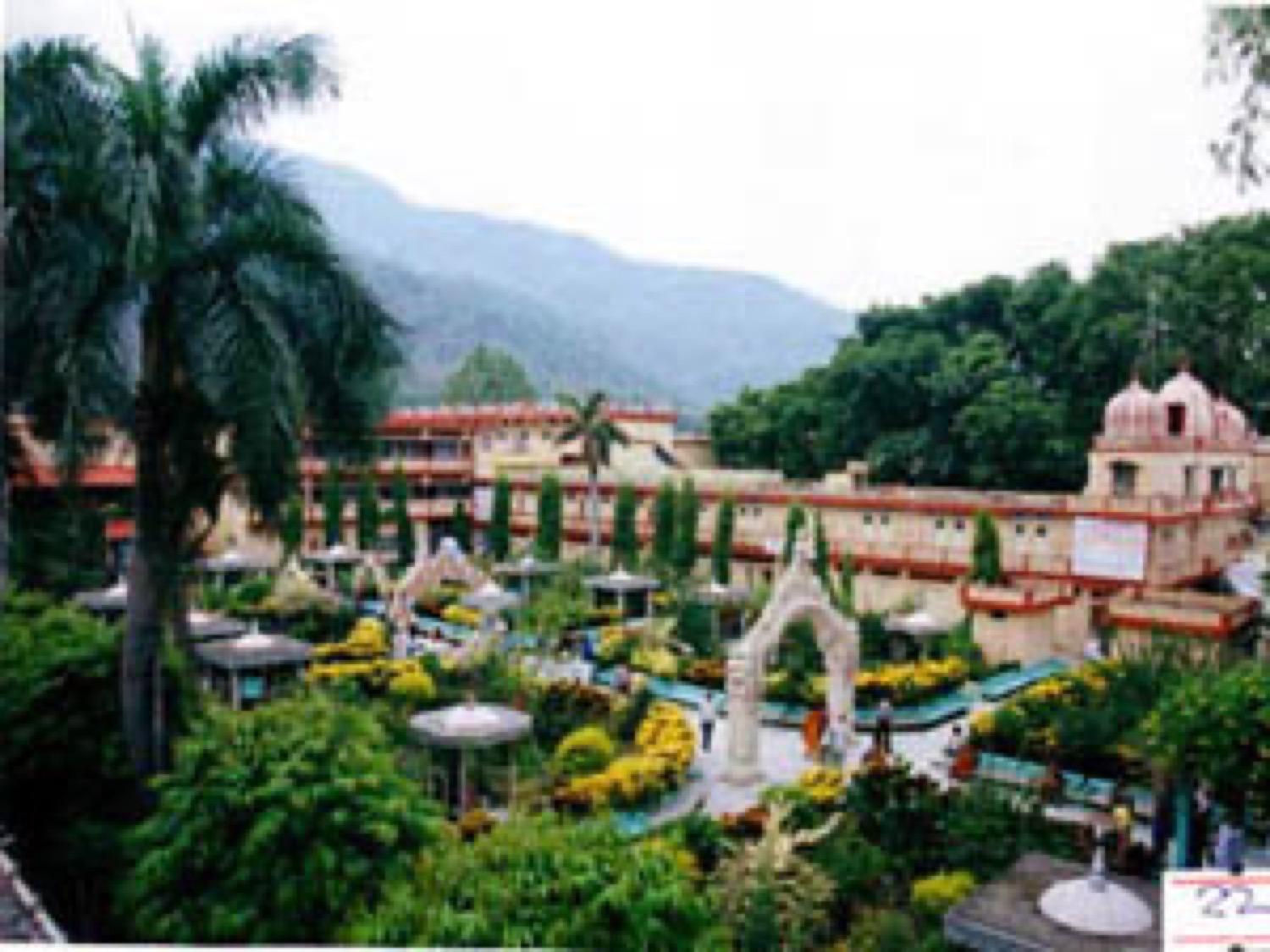
The name came in the 1920s: an early devotee, Jyotiscandra Ray, known as "Bhaiji," was the first to call her Anandamayi Ma — the Mother permeated with bliss. It stuck because it described what people saw. Ashrams grew up wherever she stayed; Bhaiji built the first for her in 1929 at Ramna in Dhaka, and others followed in Varanasi, Haridwar, Dehradun and Calcutta. But she remained an itinerant presence, moving among them, owning nothing, attaching herself to no single place.
A rare thing: a woman guru
In an age when India's public spiritual life was almost entirely male, Anandamayi Ma was something rare — a woman revered as a guru by men and women alike, by scholars, peasants and the powerful. Among her devotees were figures as eminent as Kamala Nehru, wife of independent India's first prime minister; Prime Minister Indira Gandhi was among those who sought her out. That a barely-schooled village woman from East Bengal commanded such reverence, on her own spiritual authority, made her a quietly radical figure.
The Westerners who carried her
A small circle of Europeans found their way to her and became her interpreters to the world. The first Western disciple to join her ashram, in 1943, was the Austrian concert pianist Blanca Schlamm, who took the name Atmananda and devoted herself to translating Ma's teachings into English and other European languages. The French filmmaker Arnaud Desjardins, whose documentaries on Indian and Asian teachers were shown on French television in the 1960s and 70s, brought her image to a European audience; the English photographer Richard Lannoy and the German writer Melita Maschmann recorded her in books. Through them, a saint who never learned English reached readers and viewers across the West.
The book that carried her west
But what made her truly known beyond India was a single chapter in another saint's autobiography. Paramahansa Yogananda, whose Autobiography of a Yogi (1946) introduced millions of Westerners to Indian spirituality, devoted a chapter — "The Bengali 'Joy-Permeated Mother'" — to his meeting with her, and it was through his translation of her epithet as "joy-permeated" that her name entered the Western spiritual vocabulary. Decades later Ram Dass and other Western teachers would point their students toward her example.
Bliss as the only teaching
Anandamayi Ma died on 27 August 1982 in Dehradun, and a samadhi shrine was raised over her resting place at Kankhal, near Haridwar on the Ganges. She left no organisation to speak of and no method to follow — only the memory of a woman who appeared, to everyone who met her, to be perpetually and inexplicably joyful. In a series about masters who exported a technique, she stands for something subtler: the idea that the teaching could simply be the state itself, and that even this, with no effort to spread it, could cross the ocean on the strength of the people it left transformed.
Continue the series · The Masters Who Crossed the Ocean
Related from Yoga & Spiritualism
Siddheshwar Brahmrishi Gurudev: the 'Siddhguru' who built a following online
Baba Ramdev: the yoga guru who built an empire, and the controversies that trail it
Sister Shivani: the engineer who became the diaspora's calm voice