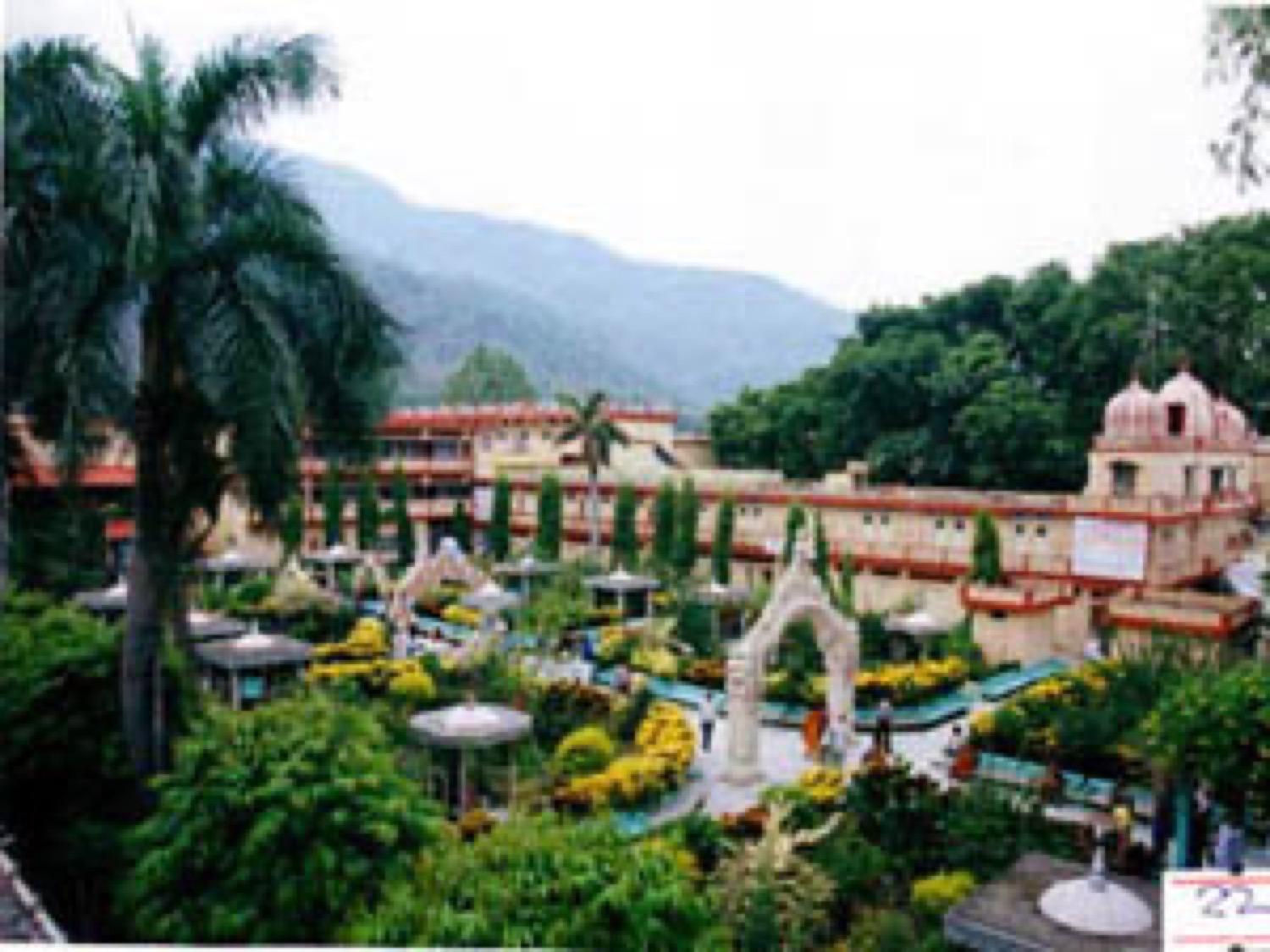


Sri Aurobindo: the revolutionary who became a yogi
Part 7 of The Masters Who Crossed the Ocean. Raised English from boyhood, he came home a stranger, became a revolutionary the British jailed — and emerged from prison one of the most ambitious philosophers India produced.

Before he was a yogi, he was the most wanted revolutionary in British India. Sri Aurobindo — born Aurobindo Ghose in Calcutta in 1872 — would end his life as one of modern India's most ambitious spiritual philosophers. He began it as a firebrand who wanted the British gone.
An English education
Sent to England as a boy, Aurobindo was schooled entirely in the West — at St Paul's School in London and then King's College, Cambridge, which he entered in 1890. He passed the famously brutal Indian Civil Service examination but, by most accounts, deliberately let himself fail the horse-riding test, slipping out of the colonial service he had no wish to enter. He returned to India in 1893 and took up work under the Maharaja of the princely state of Baroda, immersing himself in the Sanskrit and Indian culture his English education had denied him.
From bomb plots to a prison cell
In the first decade of the twentieth century, Aurobindo became one of the fiercest voices of Bengal's revolutionary nationalism, editing the firebrand journal Bande Mataram and demanding complete independence when most of Congress still wanted reform. In 1908 he was arrested in the Alipore Bomb Case and held for a year awaiting trial. It was in that prison cell, he later said, that his life turned: he underwent a series of overwhelming spiritual experiences that convinced him his real work was not political but inner.
The Uttarpara speech
Acquitted in 1909, Aurobindo gave a now-famous address at Uttarpara in which he declared that India's freedom was certain, but that his own mission had become something larger — the spiritual upliftment of humanity. It was his public farewell to politics, delivered to a movement that had hoped he would lead it.
Pondicherry, and a new yoga
With the British still watching him, Aurobindo slipped in 1910 into the French enclave of Pondicherry, beyond the reach of the Raj, and never returned to politics. There he developed what he called Integral Yoga — the "yoga of transformation." Unlike traditional paths aimed at escaping the world into liberation, his was radically world-affirming: he taught that a higher "supramental" consciousness could descend into matter and transform earthly life itself, and that the human being was only a "transitional being," a stage on the way to something greater.
The Life Divine
He poured this vision into an immense body of writing. The Life Divine set out the philosophy; The Synthesis of Yoga the method; and Savitri, a 24,000-line epic he revised until his death, the vision in verse. Integral Yoga, he argued, was a "rapid and concentrated conscious evolution" — an attempt to accelerate in a single lifetime what unaided nature might take ages to achieve. It makes him one of the most systematic spiritual philosophers India produced in the modern era, dense and demanding, far from the simplified yoga marketed elsewhere.
The Mother
His work would not have reached the world without Mirra Alfassa, a French painter and mystic born in Paris in 1878, who first met him in 1914 and settled permanently in Pondicherry in 1920. He regarded her as his spiritual equal and called her simply "the Mother." After 24 November 1926, Aurobindo withdrew into seclusion to concentrate on his inner work and left the Mother to build and run the Sri Aurobindo Ashram, which she managed for nearly half a century.
Auroville
The Mother's boldest act came in 1968, after Aurobindo's death, when she founded Auroville — the "City of Dawn" — an experimental township near Pondicherry dedicated to human unity, endorsed by UNESCO and intended to belong to "humanity as a whole." It still stands, home to thousands of residents from dozens of countries, perhaps the most concrete attempt anywhere to turn a spiritual philosophy into a functioning society.
The Western legacy
Aurobindo never returned to the West after 1893, yet his evolutionary spiritualism travelled far. Michael Murphy, co-founder of California's Esalen Institute — the seedbed of America's human-potential movement — spent a year living at the Sri Aurobindo Ashram, and built his "Integral Transformative Practice" partly on Aurobindo's ideas. The philosopher Ken Wilber called him "India's greatest modern philosopher sage" and folded his evolutionary vision into the field of transpersonal psychology. Through such channels, a Cambridge-educated revolutionary's metaphysics quietly shaped the West's own search for transformation.
The ocean he crossed without moving
Sri Aurobindo died on 5 December 1950; Prime Minister Nehru and President Rajendra Prasad both paid tribute to a man who had been, in turn, freedom fighter and sage. He had not left Pondicherry in forty years, yet he had exported one of the most ambitious spiritual systems of the age — and a city, still standing, built to test it.
Continue the series · The Masters Who Crossed the Ocean
Related from Yoga & Spiritualism
Siddheshwar Brahmrishi Gurudev: the 'Siddhguru' who built a following online
Baba Ramdev: the yoga guru who built an empire, and the controversies that trail it
Sister Shivani: the engineer who became the diaspora's calm voice