

‘Girmitiyalogy’: an online symposium on India's indentured migration (10–12 September 2026)
Scholars from India, Mauritius and the Netherlands convene online, 10–12 September 2026, for an international symposium on India's indentured migration — under a banner they call 'Girmitiyalogy: Text, Theory and Literature.' What the field is, and how to attend.
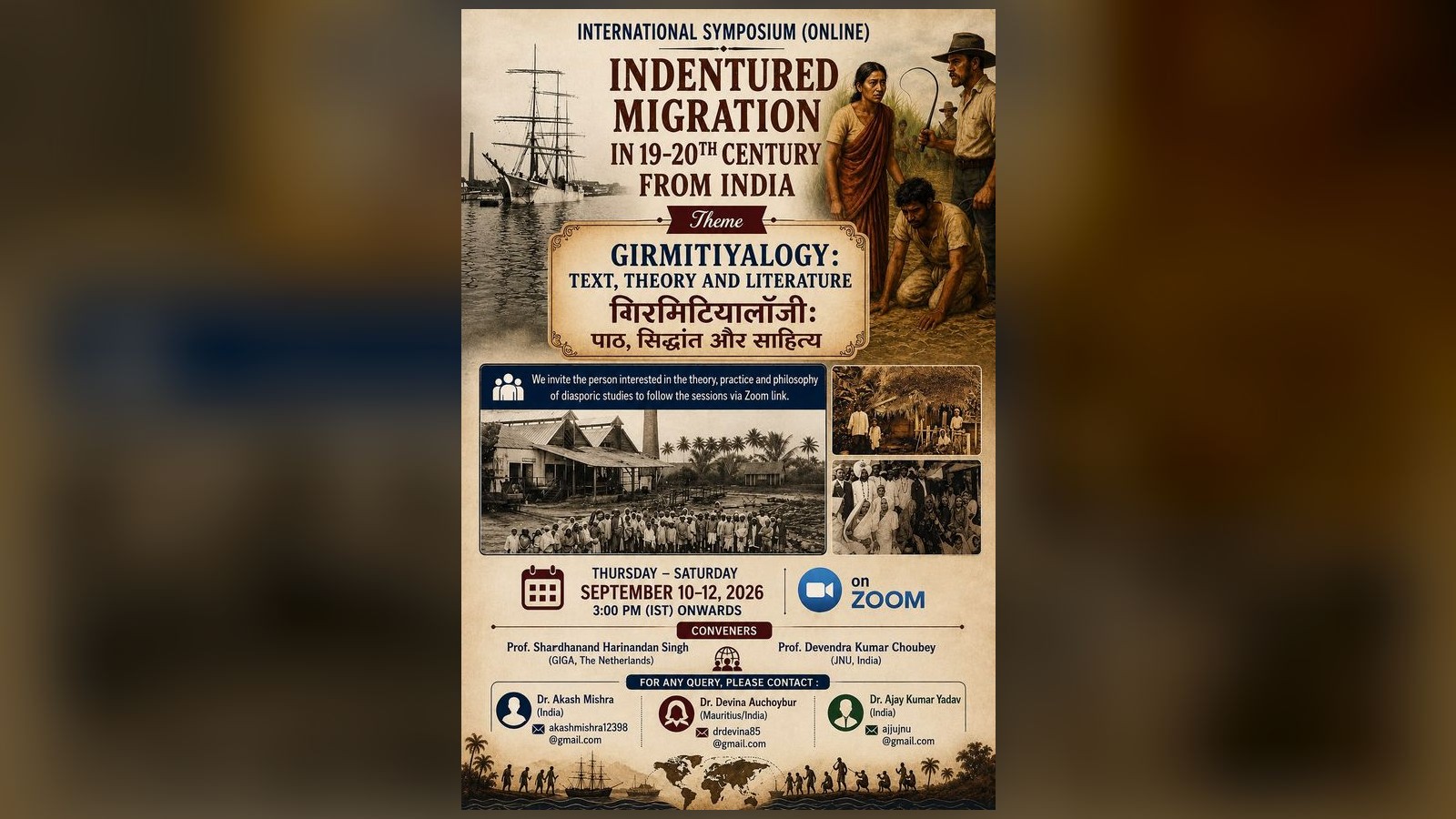
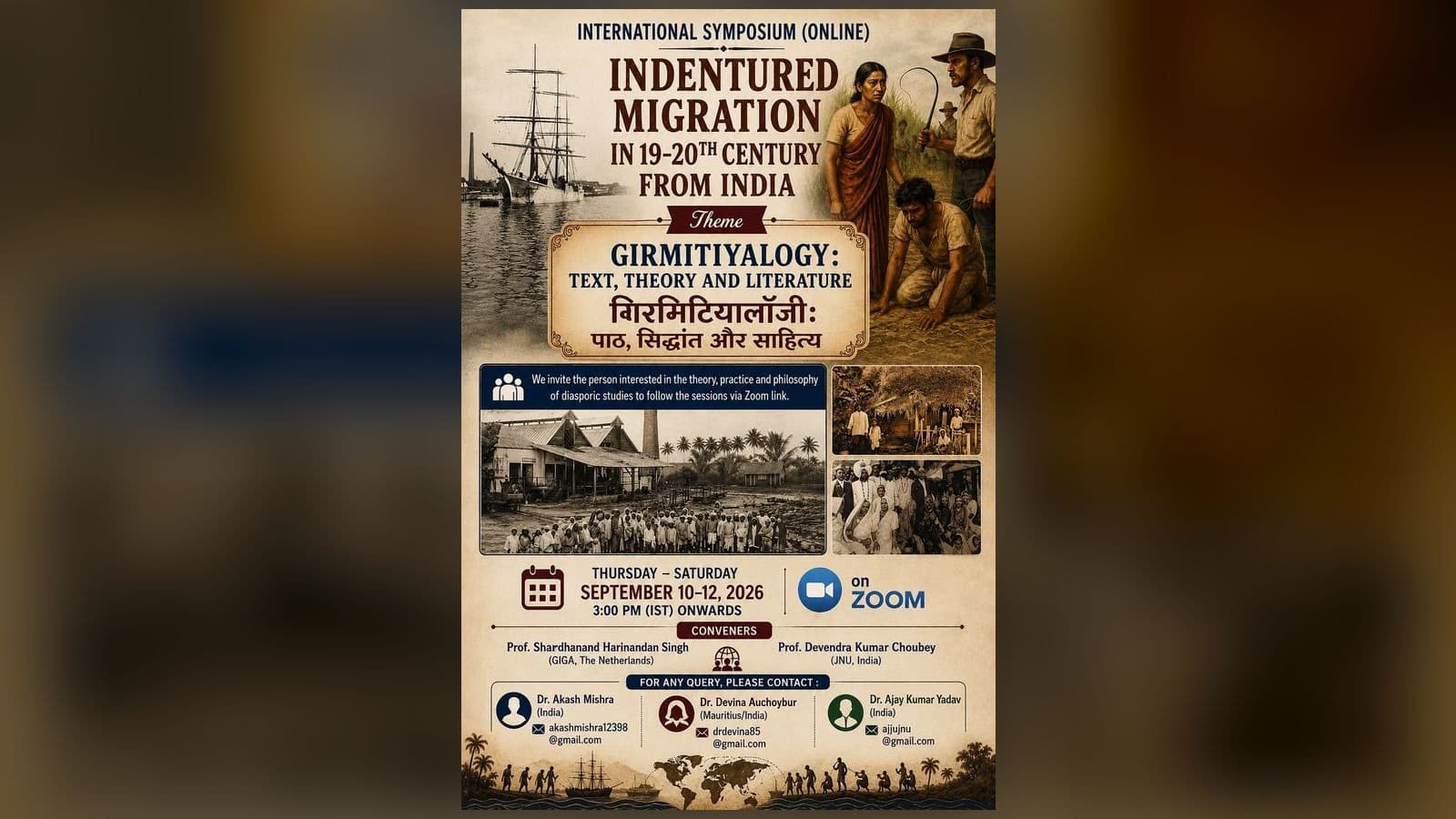
Over three days this September, scholars from India, Mauritius, the Netherlands and beyond will gather online to argue that the story of India's indentured labourers is not merely a chapter of history but a field of study in its own right. The occasion is an international symposium, held on Zoom from 10 to 12 September 2026, under a title its organisers have coined for the discipline they want to build: Girmitiyalogy.
The symposium, "Indentured Migration in 19–20th Century from India," takes as its theme Girmitiyalogy: Text, Theory and Literature — गिरमिटियालॉजी: पाठ, सिद्धांत और साहित्य. Sessions run each afternoon from Thursday to Saturday, beginning at 3 p.m. Indian Standard Time, and the conveners have issued an open invitation: anyone interested in the theory, practice and philosophy of diaspora studies is welcome to follow along.
What "Girmitiyalogy" means
The word repays unpacking, because it carries the whole argument of the event. Girmit was how indentured labourers pronounced the English word "agreement" — the contract that bound them to five years of plantation work overseas. Those who signed it, and their descendants, became girmitiyas. To append -logy, the suffix of a discipline, is to make a claim: that the girmitiya experience has produced a body of texts, a set of theoretical problems and a literature substantial enough to be studied as a field, rather than treated as a footnote to the history of empire or of migration.
It is a claim with a growing weight of material behind it. Between 1834, when Britain abolished slavery, and the system's end around 1917, more than a million Indians were shipped as indentured labour to the sugar colonies of the empire — to Mauritius and Fiji, to Trinidad, Guyana and Suriname, to Natal and beyond. Their descendants now number in the millions, scattered across the Caribbean, the Indian Ocean and the Pacific, and over the past century they have produced memoirs, novels, poetry and scholarship that a symposium like this one seeks to read together as a single tradition.
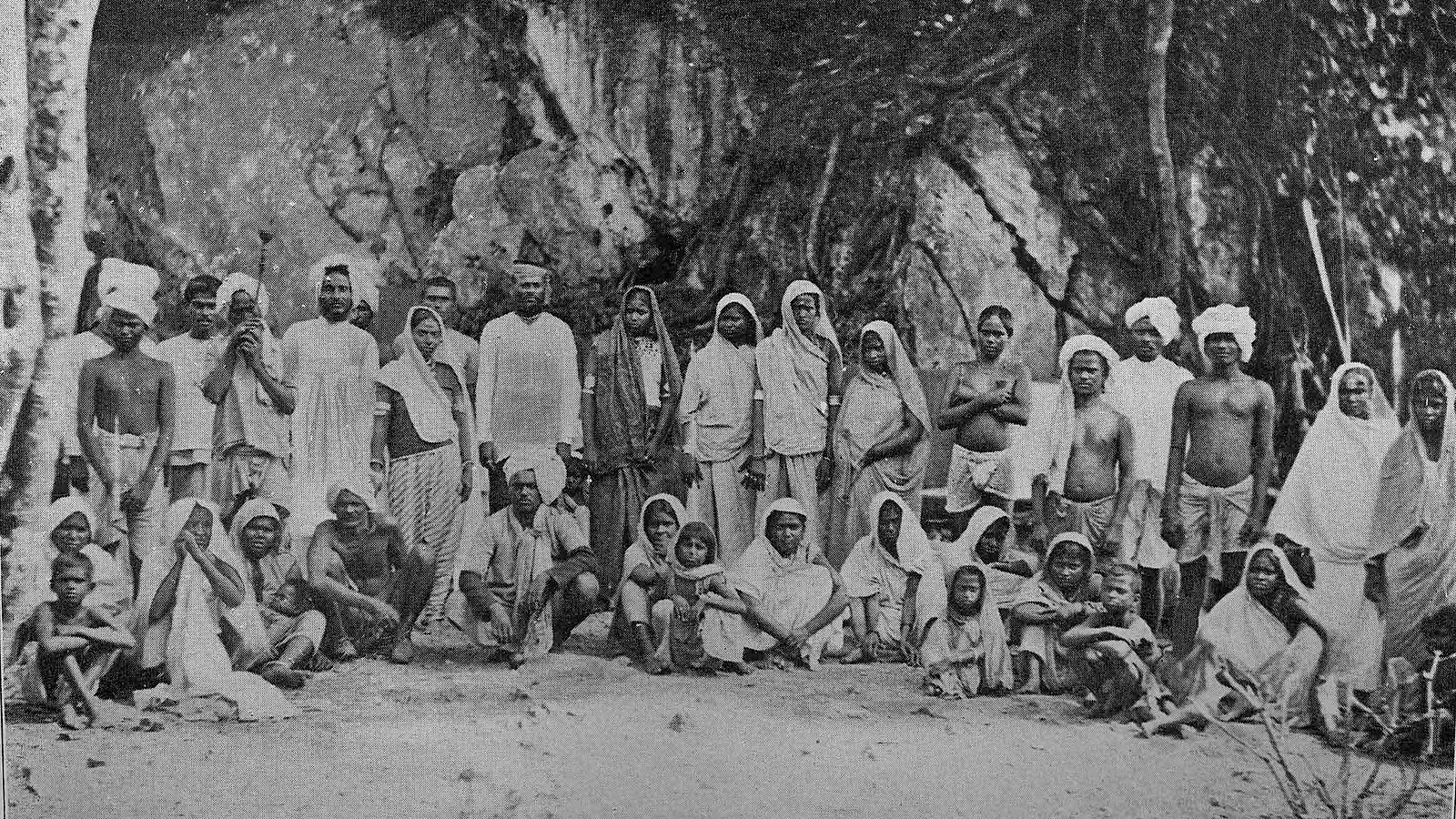
A literature already there
The field the symposium proposes is not being built from nothing. The indenture experience has a canon, even if it has rarely been taught as one. It begins with the labourers' own accounts — most famously Totaram Sanadhya's My Twenty-One Years in the Fiji Islands, published in 1914, among the first testimonies of the plantation written by a girmitiya himself. It runs through the oral culture the labourers carried across the ocean and remade on the far shore: the folk songs, the Ramlila, the Bhojpuri retentions and the chutney music of the Caribbean, a transplanted world that survived the crossing.
And it reaches into the literary mainstream. V.S. Naipaul, descended from indentured labourers in Trinidad, won the Nobel Prize for a body of work that began with the Indian world of his island. Amitav Ghosh built his Ibis trilogy around a ship carrying indentured migrants across the Indian Ocean, restoring the crossing to fiction in a Bhojpuri-inflected English. Sites of memory have followed the writing: the Aapravasi Ghat in Mauritius, the depot where the first indentured labourers came ashore in 1834, is today a UNESCO World Heritage Site.
What a symposium under the banner of Girmitiyalogy proposes is to read these together — the memoir and the folk song, the Nobel novel and the ship's manifest — as one tradition, with its own texts, its own theory and its own place on the literary map. It is the difference between scattered works about a people and a discipline that belongs to them.
The conveners, and a familiar name
The symposium is convened by Prof. Shardhanand Harinandan Singh of GIGA in the Netherlands and Prof. Devendra Kumar Choubey of Jawaharlal Nehru University in Delhi.
Readers of this publication will know the second name. Prof. Choubey is a Hindi scholar of the diaspora whose own work we have covered: his Mauritius travelogue Yah, Vah Desh To Nahin and the co-edited volume Itihaas ki Sarhadein both sit within exactly the tradition this symposium sets out to map — the writing back, in Hindi and in the creole tongues of the plantation, of a people the archive recorded only as numbers on a ship's manifest.
Why it matters for the diaspora
For the girmitiya diaspora, the stakes of an event like this are not only academic. Indenture has long been the quieter half of the Indian migration story — less discussed at home than the professionals who went to America and Britain, and for generations barely taught at all in the countries the labourers built. To name a discipline after it, and to convene scholars across three continents to give it texts and theory, is a form of recovery: an insistence that the descendants of the jahaji — the ship-brothers and ship-sisters of the crossing — have an intellectual inheritance as well as a genealogical one. Those descendants have risen to lead nations: prime ministers and presidents in Trinidad, Guyana, Mauritius, Fiji and Suriname all trace their line back to the indenture ships, even as the history that carried them there stayed, for generations, half-told.
That recovery is the same work this publication's own Girmitiya pages set out to do, and the symposium is a marker of how far the field has travelled — from family memory to an international discipline with a name.
How to attend
The sessions are online. They run Thursday to Saturday, 10–12 September 2026, from 3 p.m. IST, on Zoom, with details posted on the JNU website. The conveners have asked that anyone wishing to take part, or seeking the joining link, contact the organising team:
- Dr. Akash Mishra (India) — akashmishra12398@gmail.com
- Dr. Devina Auchoybur (Mauritius / India) — drdevina85@gmail.com
- Dr. Ajay Kumar Yadav (India) — ajjujnu@gmail.com
Diaspora Dreams covers the history and literature of the indentured diaspora on our Girmitiya pages. This is an announcement of a third-party academic event; session details are set by the organisers.