

Navi Pillay: the granddaughter of indentured labourers who won the 2026 Nobel Peace Prize
Her grandparents were shipped from India to Natal's sugar plantations as indentured labourers in the 1890s. On 9 October 2026, Navi Pillay — the bus driver's daughter from Clairwood — won the Nobel Peace Prize. The girmitiya who rose from apartheid Durban to the summit of international law.
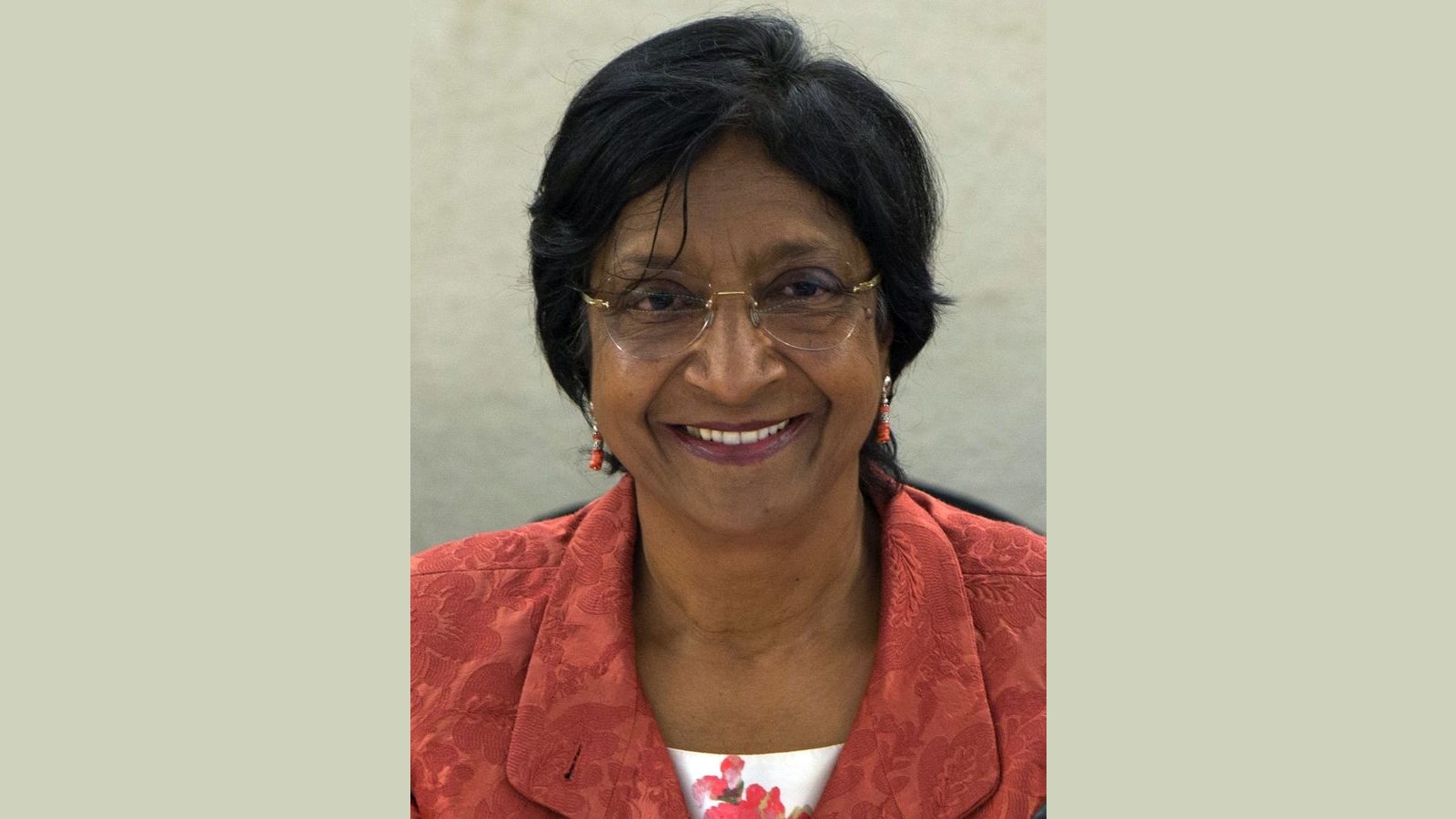
In the 1890s, a young couple boarded a ship in a South Indian port, bound for a place they had never seen, under a contract most of them could not read. They were girmitiyas — from girmit, the labourer's broken-English rendering of the English word "agreement" — among the hundreds of thousands of indentured Indians shipped across the Indian Ocean to cut cane on the sugar plantations of Natal. They traded one poverty for another, indenture for indenture, on the promise of wages and a passage home that many never took. They could not have imagined that, four generations on, their granddaughter would stand in Oslo as a Nobel laureate.
On 9 October 2026, the Norwegian Nobel Committee awarded the 125th Nobel Peace Prize to Navanethem "Navi" Pillay — "for her efforts to promote peace and international law." She is a South African, a jurist, one of the most consequential figures in the modern law of human rights. She is also, precisely and proudly, what this publication exists to document: a daughter of the girmit, the indentured diaspora, raised to the highest honour the world gives for peace.
From Clairwood to Harvard
Pillay was born on 23 September 1941 in Clairwood, a cramped quarter of Durban that apartheid would later zone for Indians only, the fifth of eight children. Her grandparents were the indentured labourers; her father, Narrainsamy Naidoo, drove a municipal bus and fished to feed the family; her mother, Santhama, kept the home and insisted, against every pressure of money and custom, that her daughters be schooled exactly as her sons were. The community that raised her was built by indenture — the Tamil-speaking working class of Natal, descendants of the plantation workers — and it was poor, segregated and, in the law's eyes, barely a people at all.
She climbed anyway, on the one ladder available: education. A BA and then a law degree from the University of Natal; later, a master's and a doctorate from Harvard Law School, where she became the first South African to earn that doctorate. In 1967, she opened the first law practice ever run by a non-white woman in Natal province — because no white firm would hire her, and the law said a woman of her colour could not quite be trusted with the full business of justice.
The lawyer the apartheid state could not ignore
For 28 years she practised in a country designed to crush clients like hers. She defended anti-apartheid activists — ANC members, Black Consciousness organisers — in courtrooms rigged against them. In 1973, arguing on behalf of political prisoners, she won a ruling that forced the state to grant the men on Robben Island, Nelson Mandela among them, the right to see their lawyers. It was the kind of victory that does not make headlines and changes everything: a crack of daylight into the regime's darkest cell.
When apartheid fell, the world came looking for exactly her combination — legal brilliance forged under injustice — and she went global. From 1995 she served as a judge on the International Criminal Tribunal for Rwanda, and from 1999 as its president. There, in 1998, she presided over the Akayesu judgment, which established for the first time in international law that rape and sexual violence can constitute acts of genocide — a ruling that rewrote how the world prosecutes atrocity. She went on to the bench of the International Criminal Court, and then, from 2008 to 2014, served as the United Nations High Commissioner for Human Rights, the world's senior human-rights official.
The prize, and the storm around it
Pillay's recent work placed her at the centre of the decade's most bitter argument. From 2021 she chaired the UN Commission of Inquiry on the Occupied Palestinian Territory, which in 2025 concluded that Israel had committed genocide in Gaza — a finding Israel angrily rejected and which made Pillay, at 84, simultaneously one of the most honoured and most attacked jurists alive. The Nobel Committee's citation reached past that single controversy to the whole arc: six decades of insisting that war crimes, crimes against humanity and genocide must be named and prosecuted, no matter who commits them.
That is the Nobel's own framing, and it is not ours to adjudicate. What belongs here is the lineage.
What the girmit carried
There is a straight, improbable line from the hold of an indenture ship to the Nobel stage, and Navi Pillay is now its clearest expression. The system that brought her grandparents to Natal was one of the great engines of the Indian diaspora — the same indenture that peopled Fiji, Mauritius, Trinidad, Guyana and South Africa with Indians, and whose descendants, a hundred and sixty years on, are presidents, prime ministers, scholars and now a Peace laureate. The girmitiyas were brought precisely because they were considered expendable — cheap, replaceable labour for an empire's sugar. Their great-grandchildren have spent the generations since proving the opposite.
For the millions across the girmitiya diaspora — in the cane belts of the Caribbean and the Pacific, in the old Indian quarters of Durban and Port Louis — Pillay's prize is a particular kind of vindication. The indentured who came to Natal were told, by contract and by law, exactly how small their lives were meant to be. This month, one of their own was told, by the highest authority the world has for such things, that she had helped keep its conscience.
She remains, in the words of a South African headline that captured it best, the bus driver's daughter who refused to back down. The girmit was an agreement to labour. What her family did with it, across four generations, was something no contract could have promised.
Sources: Norwegian Nobel Committee announcement and citation, 9 October 2026; biographical detail from the University of Natal and UN records and reporting by CNN, Al Jazeera, UN News and others; family and indenture background as reported by GlobalIndian and South African outlets. The findings of the UN Commission of Inquiry on the Occupied Palestinian Territory are the commission's own and have been contested by the Government of Israel.