


Nila Vikhe Patil: the Indian-origin MP elected to Sweden's parliament
A Green Party accountant of Maharashtrian descent, Nila Vikhe Patil has been elected to Sweden's Riksdag from Stockholm at the 13 September 2026 election — among the first of Indian descent to reach the Swedish parliament.
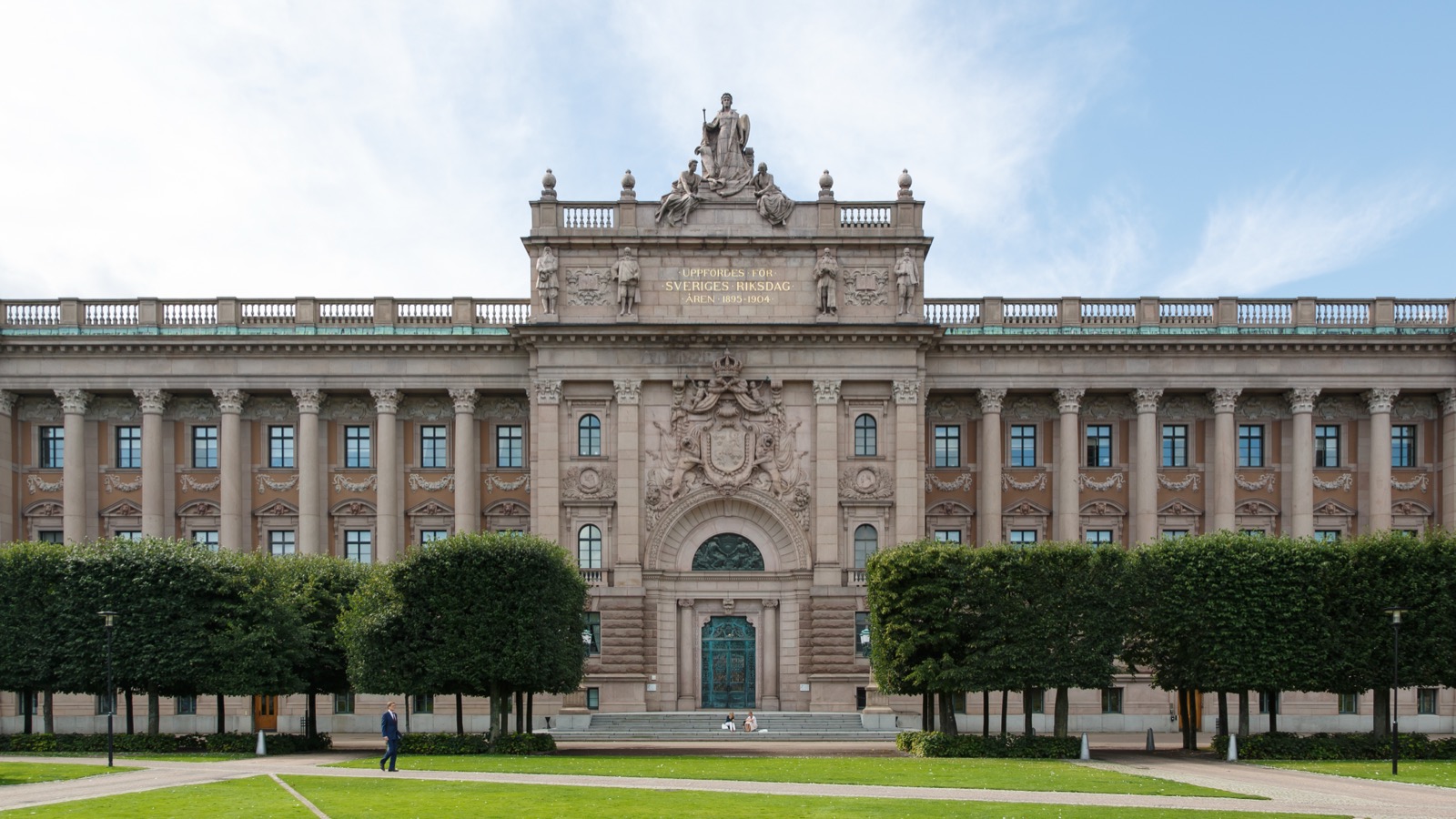
Three generations ago, the family name meant sugar. Vitthalrao Vikhe Patil, a farmer from the parched interior of what was then Bombay Presidency, built Asia's first cooperative sugar factory in Pravaranagar in 1950 — an experiment in pooling the resources of small farmers that would reshape rural Maharashtra and turn the Vikhe Patils into one of the state's enduring political houses. This month, a great-granddaughter carried the name somewhere it had never been: into a European national parliament.
Nila Vikhe Patil was elected to Sweden's Riksdag at the general election held on September 13, 2026, winning a seat for the Green Party (Miljöpartiet de gröna) from the Stockholm constituency. When the new 349-member parliament convenes at the end of the month, a 41-year-old accountant whose forebears organised sugarcane farmers on the Deccan plateau will take her place among Sweden's lawmakers.
Swedish-born, Maharashtrian-rooted
It is worth being precise about who she is, because the story travelled fast and picked up embellishments on the way. Nila Vikhe Patil was born in Sweden — in Lidköping, in 1985 — and is a Swedish citizen. She is not an India-born migrant who crossed an ocean to win office, as some breathless headlines implied. She is a daughter of the diaspora: Swedish by birth and nationality, Maharashtrian by descent, with reported childhood ties to Ahmednagar, the district her family has represented in Indian politics for decades.
That distinction matters, and it makes the achievement more interesting rather than less. This is the second generation of a migration story reaching the top of public life in its adopted country — the point at which a diaspora stops being visitors and becomes part of how a nation governs itself.
Her Indian lineage is, even so, unusually storied. According to Indian press reporting, she is the daughter of Ashok Vikhe Patil, an educationist from Maharashtra; the granddaughter of Balasaheb Vikhe Patil, a former Union minister; and the niece of Radhakrishna Vikhe Patil, currently a minister in the Maharashtra government. The family that gave India a pioneer of the cooperative movement and a line of parliamentarians has now, through her, put a name on the rolls of the Swedish Riksdag.
An accountant's route into politics
There is nothing dynastic-looking about how she got there. Vikhe Patil built a conventional Swedish professional life first. She earned a bachelor's degree and an MBA from the Gothenburg School of Business, Economics and Law, and a further MBA from the Complutense University of Madrid. She has worked at the accountancy firm PwC since 2020 and qualified as a certified public accountant in 2025.
Politics ran alongside the career rather than instead of it. She came up through the Green movement's training grounds — the Young Greens, the Gröna studenter student wing, and the party's branches in Gothenburg and Stockholm — before serving on Stockholm City Council. She also spent time inside the machinery of national government as an adviser in the Prime Minister's Office during the tenure of Social Democrat premier Stefan Löfven, working, by her own account, on questions of finance, taxation and housing. It is the CV of someone who understands budgets, which is not the most common background for a Green politician and may prove a useful one.
What she says she wants to do
Asked about her priorities, Vikhe Patil has named the environment and children's welfare, and framed her role in a phrase that travels well: she wants to be "a voice for those who cannot vote" — a line that reads, depending on where you stand, as being about children, about the climate, or about the many residents of a modern European country who live there without a ballot.
For the Green Party, her arrival is a modest bright spot in a Swedish political landscape that has tilted rightward over the past decade, with immigration and integration dominating the national conversation. For an Indian-origin candidate to win a Riksdag seat in that climate — on an environmental platform, no less — cuts against the easy assumption that diaspora politics in Europe is only ever about identity and immigration.
A wider pattern
She joins a growing roll of people of Indian descent entering the front rank of politics across the West, a story this publication has tracked from several angles — from the 26 MPs of Indian descent now sitting in the British House of Commons, to figures like Kanishka Narayan, the Bihar-born British minister, and the run of diaspora leaders who have reached the very top in Ireland, Portugal, Britain and beyond that we profiled in our Power Abroad series.
Sweden, with its comparatively small but well-established Indian community, has not featured much in that narrative until now. There are roughly a few tens of thousands of people of Indian origin in the country, many of them professionals in engineering, medicine and technology drawn by Swedish industry and universities. Vikhe Patil is, by most reckonings, among the first of clear Indian descent to reach its national legislature — a first that says as much about the maturing of that community as about her.
The long arc
It is tempting, and not entirely wrong, to draw a straight line from the sugar cooperative in Pravaranagar to the chamber in Stockholm — from a grandfather's politics of the soil to a granddaughter's politics of the climate. The through-line is not sugar or ideology but the family habit of public life, carried across a continent and a language and reinvented in a Nordic key.
Nila Vikhe Patil will be one of 349 members of a parliament far from the district her name is famous in, working in Swedish on Swedish problems. But for the Maharashtrian diaspora in particular, and the Indian diaspora in Europe more broadly, her election is one of those quiet markers worth noting: the moment a community's story stops being told only in the language of arrival, and starts being written into the statute books of the place it now calls home.
Facts drawn from official Swedish parliamentary records of the 2026 general election and reporting in the Indian press, including Business Today. Diaspora Dreams does not fabricate biographical detail; where sources differed on Nila Vikhe Patil's early life, we have stated what the record supports.
Related from Politics
Kanishka Narayan: from Muzaffarpur to Britain's first Minister for AI

India targets migration fraud with a new safe-migration drive in Rajasthan
Four more Indian-origin peers join the UK House of Lords