


The temples of Trinidad: one man, the sea, and a faith that would not be moved
Part 5 of Temples of the Diaspora. Denied land to build his temple, an indentured labourer named Sewdass Sadhu built one in the sea instead, by hand, over decades. Trinidad's Hindu temples are monuments to a stubborn refusal to disappear - and to a diaspora that made an island its own.
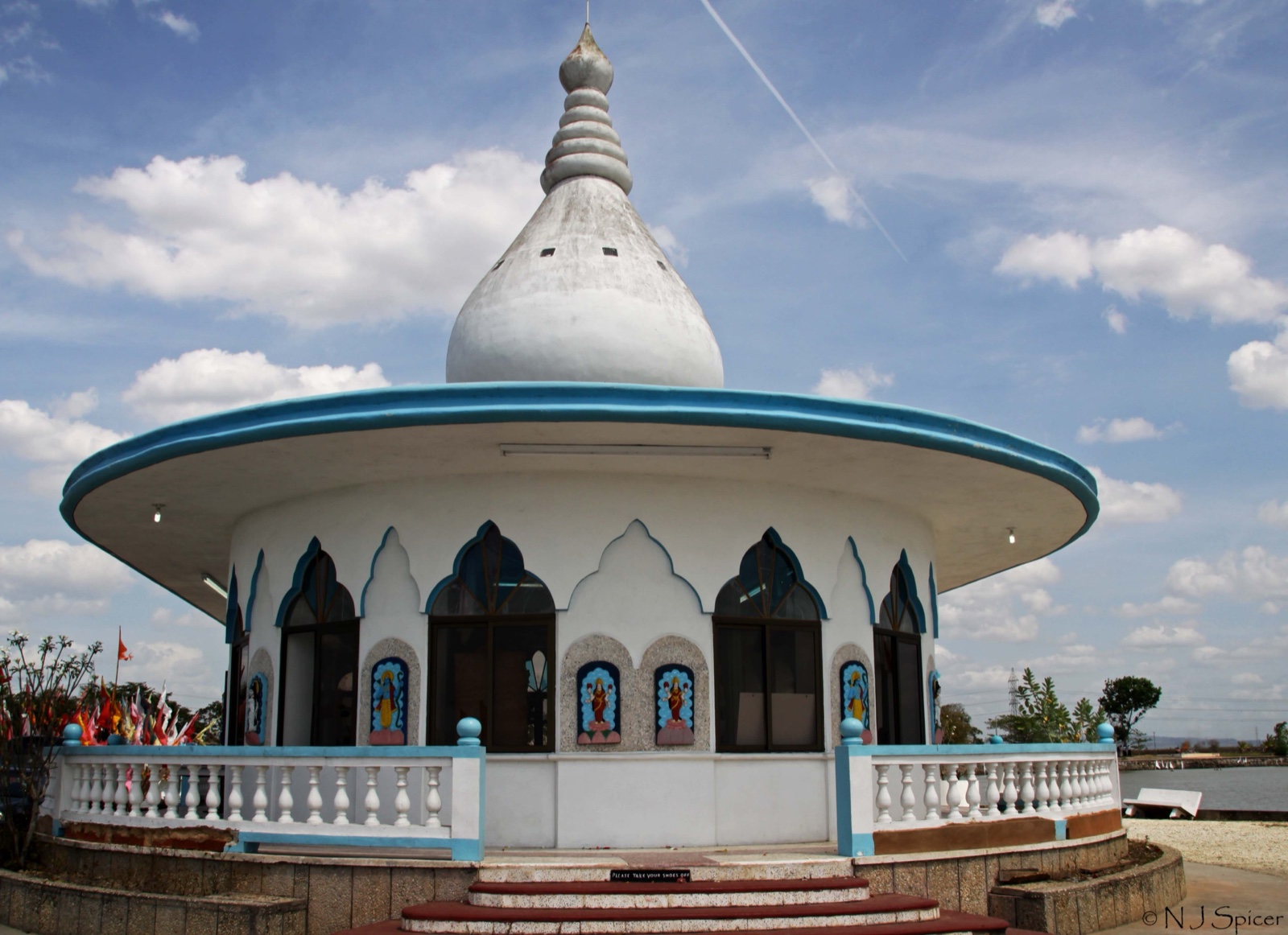
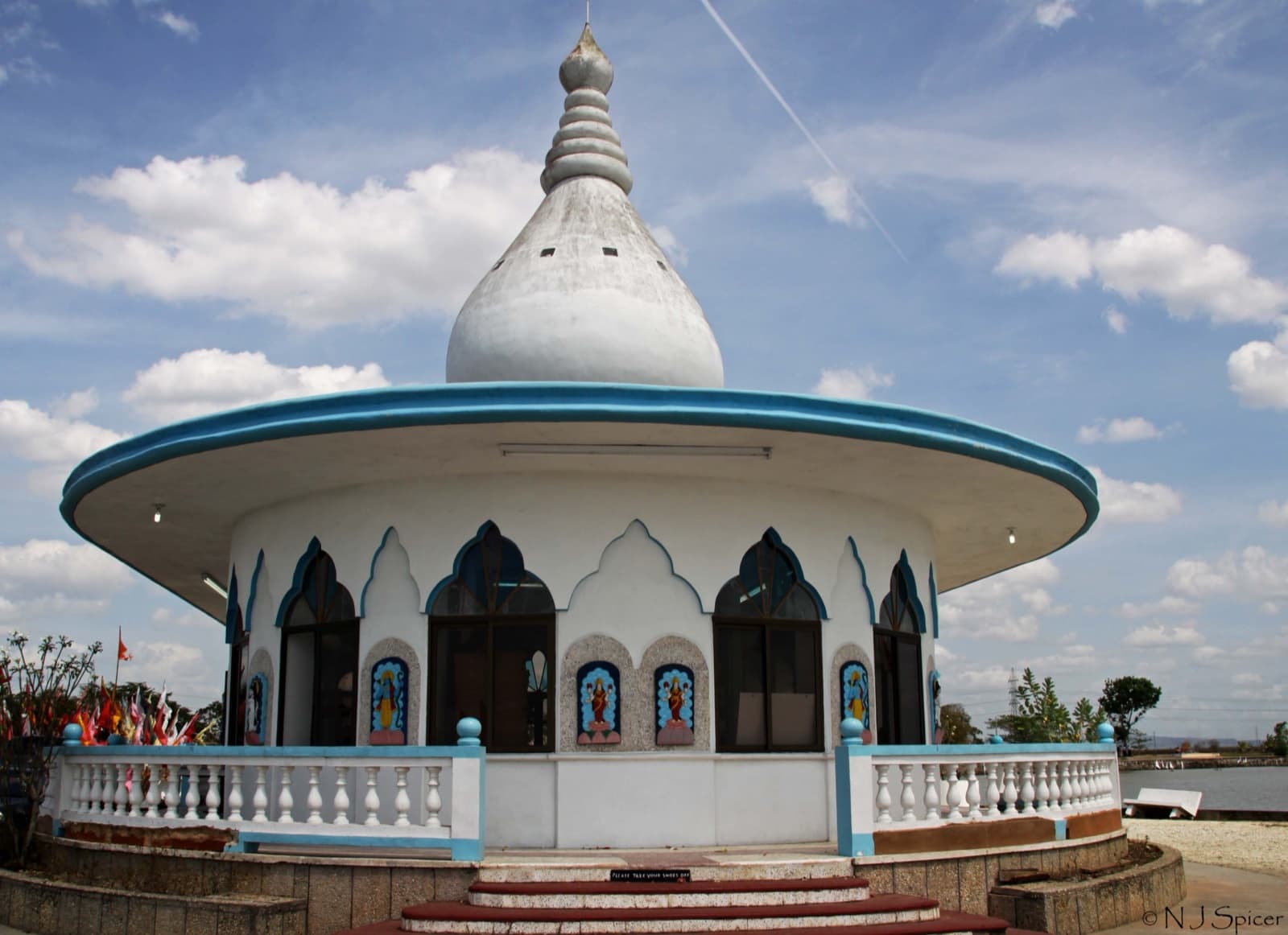
The most famous Hindu temple in the Caribbean stands not on land but in the water, a short causeway out into the Gulf of Paria on Trinidad's west coast. The story of how it got there is the story of Indo-Trinidadian Hinduism in miniature: an act of stubbornness against a system that would rather the faith stayed invisible.
The temple in the sea
Its builder was Sewdass Sadhu, a man descended from the indentured labourers who had been shipped to Trinidad to cut cane after the Fatel Razack first brought Indians to the island in 1845. Sadhu built a temple on estate land, and the authorities demolished it and, by some accounts, jailed him for building on property that was not his to build on. His response has become legend. If he could not build on the colony's land, he would build on ground no one owned. He began carrying stones and concrete out into the sea by hand, load by load, at low tide, constructing the foundations of a temple in the Gulf of Paria itself. It took him decades. He was an old man before it stood.
The Temple in the Sea at Waterloo became, in time, a national landmark, and the government of an independent Trinidad and Tobago eventually rebuilt it properly - the octagonal mandir now reached by a causeway, prayer flags snapping in the sea wind, the water lapping at a place of worship that a colonial administration had tried to deny into non-existence. It is impossible to stand there and not read it as a parable. A people told they did not belong built, with their own hands, on the one ground that could not be taken from them, and made it holy.
A faith that crossed the ocean
Hinduism came to Trinidad the way it came to Fiji, Mauritius and Guyana: in the memories and the small brass icons of indentured labourers, most of them from the Bhojpuri-speaking north of India, who arrived from 1845 onward. Cut off from India's temples, priests and caste structures, they rebuilt the religion from what they carried - the Ramayana above all, recited and sung, which became the spiritual spine of the Indo-Caribbean world. For generations the faith survived in humble village mandirs and household shrines, practised by a labouring community with little money and less official encouragement.
That it not only survived but flourished is one of the quiet triumphs of the diaspora. Today Hindus are a major religious community in Trinidad and Tobago, Diwali is a national celebration marked by the vast Divali Nagar festival, and the island's Hindu temples have grown from cane-field shrines into confident public monuments.
The giant at Carapichaima
Nowhere is that confidence more literal than at the Dattatreya Yoga Centre in Carapichaima, where an 85-foot statue of Hanuman rises over the central Trinidadian plain - for years the tallest such murti outside India. Painted in vivid colour, visible across the flat cane country, it is the exact opposite of the hidden household shrine the faith once survived in. Where Sewdass Sadhu had to smuggle his temple into the sea to keep it from being torn down, the Hanuman of Carapichaima announces itself for miles: the diaspora no longer asking permission to exist, but towering over the landscape it has made its home.
This is the arc every temple in this series traces, and Trinidad traces it most dramatically. The community that arrives with nothing worships in secret; the community that has arrived worships in stone, in scale, in public. The distance between Sadhu's hand-carried temple and the eighty-five-foot god is the distance the Indo-Trinidadians travelled in a century and a half - from indentured labourers on someone else's estate to co-owners of a nation.
The organising of a faith
Behind the temples stands an institution that fought to make them possible. The Sanatan Dharma Maha Sabha, the largest Hindu body in Trinidad and Tobago, grew in the mid-twentieth century into the organised voice of Indo-Trinidadian Hinduism - running a network of Hindu primary schools, training pundits, and pressing a often-indifferent state to recognise the community's rights. Those battles were real and hard-won: the legal recognition of Hindu marriages, the right to cremate the dead according to rite, the eventual granting of Diwali as a national public holiday. Each was a step in the same long campaign the temples embody in stone - the insistence that a people brought over as labour would be acknowledged as citizens, with a faith the nation was obliged to respect.
It is worth remembering that history when standing at Waterloo or beneath the Hanuman at Carapichaima. The temples did not simply appear as the community grew comfortable. They were won, building by building and law by law, by people who refused the colony's verdict that their religion was a private embarrassment to be practised out of sight.
Temples as belonging
For the Indo-Caribbean diaspora, the temple has always been more than a religious building. It was, from the start, the institution around which a scattered, exploited people organised itself - the place where the Ramayana was sung, where weddings were held, where a community battered by the plantation kept its dignity and its calendar. To build a temple was to plant a flag: to say that this people intended to stay, and to remain itself.
Trinidad's temples say it more powerfully than most because of how hard they were fought for. The Temple in the Sea is not beautiful because it is grand - it is modest, even plain. It is beautiful because of what it cost, and what it defied. A man built it in the ocean rather than let his faith be demolished, and an island that once tried to stop him now counts it among its treasures. In the long story of the Indian diaspora asserting its permanence in stone, few chapters are as moving as the one an old man wrote, by hand, in the Gulf of Paria, one tide at a time.
Continue the series · Temples of the Diaspora