


From the camel trains to the classroom: how Indians came to Australia
Indians opened the Australian outback on the backs of camels — and then a nation founded on keeping them out spent seventy years trying to shut the door. From the 'Ghans' and the dictation test to a country where India is now the fastest-growing source of migrants.
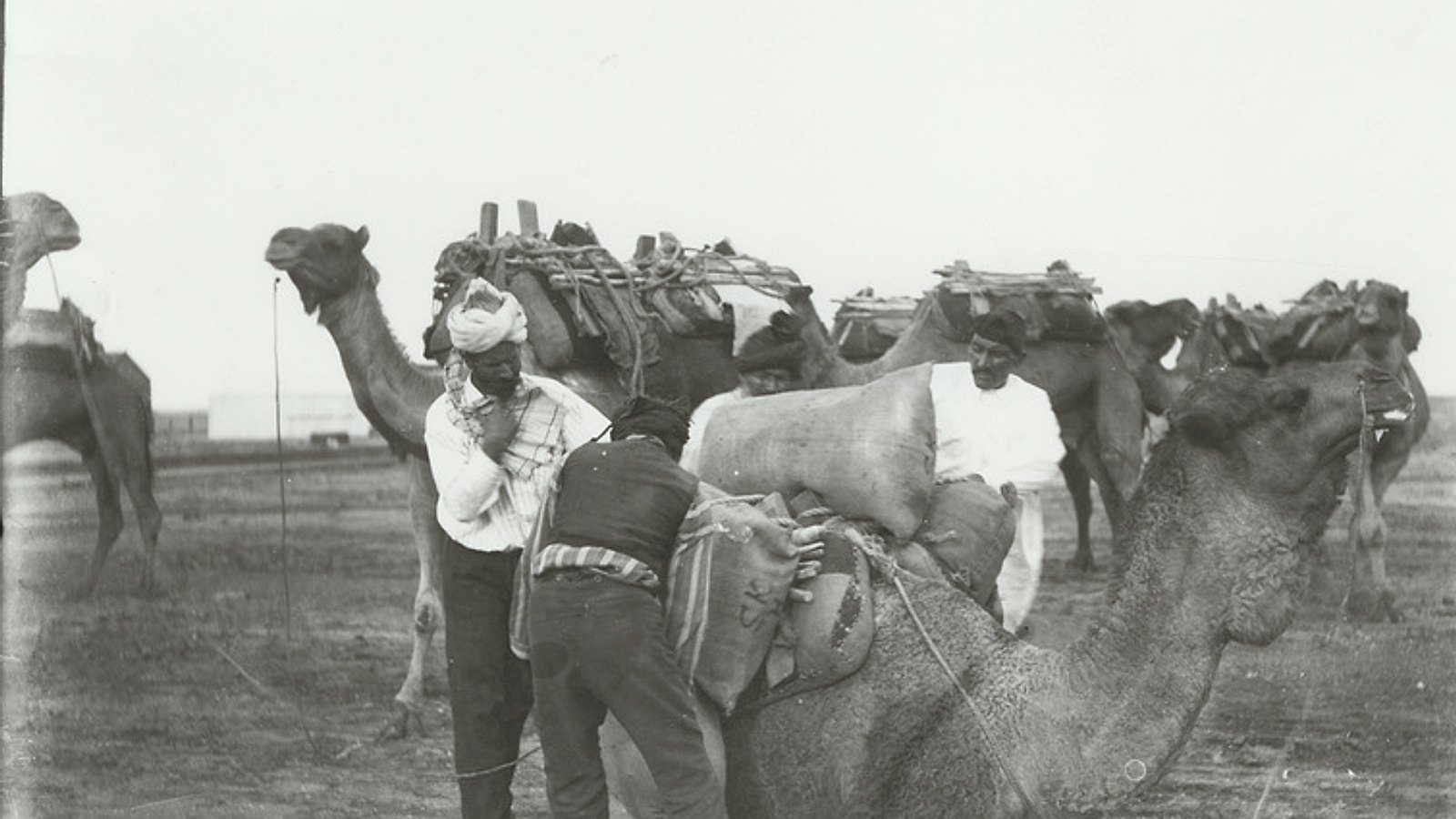
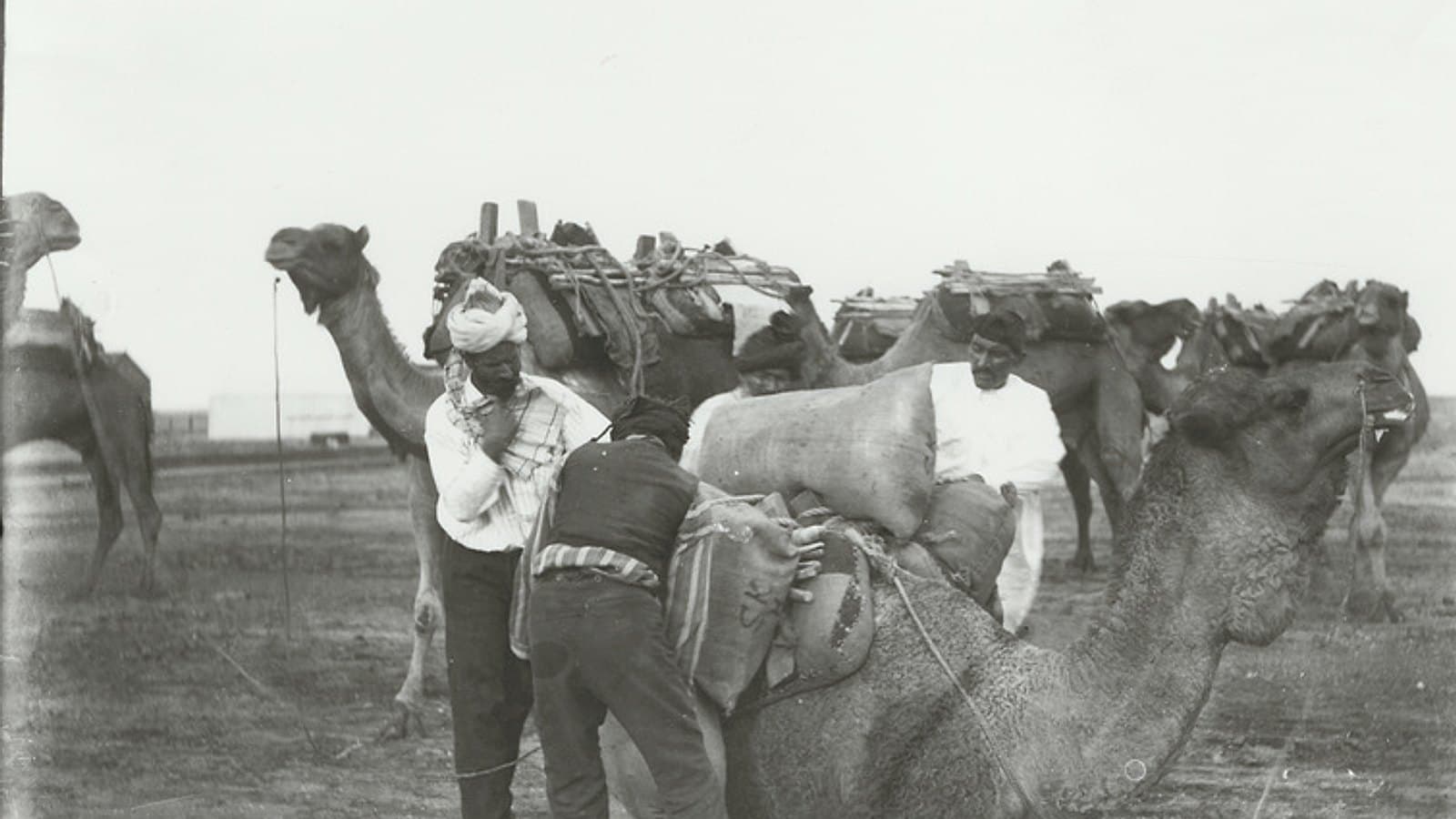
The story of Indians in Australia begins in the most improbable place imaginable: in the red heart of the continent, on the back of a camel. Long before the skilled-visa boom that has made India the fastest-growing source of migrants to Australia, Punjabi and Pathan cameleers were the men who opened the outback — and then a nation founded, quite explicitly, on the idea of keeping them out spent seventy years trying to shut the door. That it eventually flung the door wide is one of the more complete reversals in the whole diaspora story.
The Ghans
From the 1860s, as European settlers pushed into an interior too dry and vast for horses, they imported camels — and with them the men who knew how to handle them. These cameleers came largely from the north-west of British India and Afghanistan: Punjabis, Pathans, Baluchis and Sindhis, Sikhs and Muslims, lumped together by Australians under the single, inaccurate label "Afghans," soon shortened to "Ghans." By 1901 some four thousand cameleers had come, and their camel trains were the arteries of inland Australia — carrying supplies to remote stations and mines, hauling the materials for the overland telegraph and the railways, sustaining settlements that could not otherwise have survived. The great inland railway line, the Ghan, still carries their name.
Alongside the cameleers came Punjabi hawkers — men who walked the rural districts with packs and, later, carts, selling cloth and goods to isolated farms — and small numbers of Sikh settlers who took up land. They were a tiny population, overwhelmingly male, scattered across an enormous country. And they arrived just in time to be legislated against.
A nation built on a colour line
When the Australian colonies federated into a single Commonwealth in 1901, one of the very first laws the new parliament passed was the Immigration Restriction Act, the legal foundation of what everyone came to call the White Australia policy. Its purpose was to keep Australia European, and its chief instrument was a piece of calculated cynicism: the dictation test. An immigration officer could require any arrival to write out fifty words in any European language of the officer's choosing. A Punjabi who spoke fluent English could be — and was — failed in Gaelic or Italian. The test was not designed to measure anything; it was designed to be failed by the people the government wished to exclude.
For Indians this was a particular affront. They were, like white Australians, subjects of the same King and members of the same Empire — and they were being turned away on grounds of race by a fellow British dominion. The cameleers and hawkers already in the country found themselves frozen in place: many could stay, but bringing wives or relatives from India became all but impossible, and the community that might have grown around them was quietly strangled by law. As motor transport replaced the camel trains through the early twentieth century, the cameleers' world faded; some returned to India, some stayed and married locally, some released their camels into the desert, where their descendants run wild to this day.
The door reopens
The White Australia policy held, in one form or another, for most of the twentieth century. It was dismantled slowly — chipped away through the 1950s and 1960s as a modern, trade-focused Australia found the racial bar an embarrassment and a diplomatic liability — and then abolished outright in 1973, when the Whitlam government swept away the last of the race-based provisions and made non-discrimination the basis of immigration law. For the first time since Federation, an Indian could apply to settle in Australia on the same terms as anyone else.
The change, at first, was gradual. But from the 1990s, as Australia reoriented its economy and its immigration around skills, Indians began to arrive in earnest — students, IT professionals, doctors, engineers, accountants — drawn by universities, by skilled-visa pathways, and by a country that had decisively turned to face Asia.
From four thousand to a million
The scale of what followed would have been unimaginable to the men on the camel trains. At the 2021 census there were 710,380 Indian-born people in Australia — the second-largest migrant group in the country after the English, and the fastest-growing of any size. Since then the numbers have climbed past 900,000, and India has become one of the largest single sources of new permanent migrants to Australia year after year. Across the Tasman, New Zealand has its own long-settled Indian community — Gujarati pioneers from the early twentieth century, later joined by Indo-Fijians who came as the descendants of indentured labourers making a second migration — that has grown into one of the country's most significant minorities.
The Indian communities of Sydney, Melbourne, Perth and Auckland today are prosperous, young and highly educated: a world away from the isolated, all-male world of the hawkers and cameleers. Diwali is marked in city squares; Punjabi is among the fastest-growing languages in Australia; gurdwaras and temples anchor entire suburbs.
The wheel comes round
It is worth sitting with the size of the turn. A country that in 1901 wrote the exclusion of non-Europeans into one of its founding laws — and used a rigged language test to keep Indians out for the better part of a century — now counts Indians among its largest, youngest and most successful migrant communities, and treats India as one of its most important sources of talent and one of its key strategic partners. The camels the "Ghans" turned loose still roam the deserts they once crossed. Their human counterparts, so long kept out, have come back in numbers no dictation test could ever have imagined.
This is part of Diaspora Dreams' series on how Indian migration began, country by country. See also how Indian migration to America began, Canada and the Komagata Maru, Britain, from Windrush to Uganda, and the Gulf and the oil boom; and, for the older migration of the indentured, our Girmitiya pages.
Related from Heritage
The Lunatic Line: the Indians who built East Africa's railway
‘Girmitiyalogy’: an online symposium on India's indentured migration (10–12 September 2026)
The ship that was turned away: how Indians came to Canada